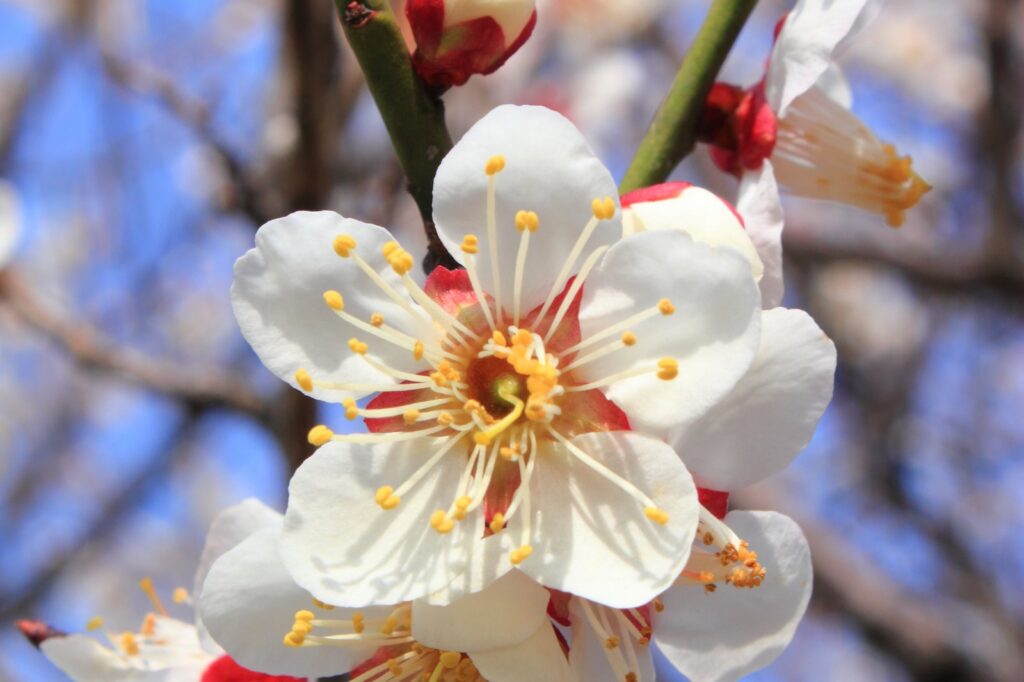
Japan’s apricot tree has been tied to medicine for a very long time. A 2020 review in the Journal of Ethnopharmacology says extracts of the fruit, Prunus mume, have featured in traditional Chinese and Japanese remedies for more than 2,000 years, and that the flesh of the fruit appears in a Japanese text from 1817. The tree came from southern China and spread to Japan, Korea and Vietnam. MK615 is a modern extract of that fruit. What it can and cannot do against pancreatic cancer is a narrower question, and the evidence is thin where it matters most.
What the laboratory work shows
MK615 contains several cyclic triterpenes, among them oleanolic and ursolic acids. A 2008 study in the World Journal of Gastroenterology tested it on three human pancreatic cancer cell lines. At 600 micrograms per mL, growth fell by 67.1% in PANC-1 cells, 45.7% in PK-1 cells and 52.1% in PK45H cells. At lower doses the effect was small, under 10%. The researchers linked the result to a dual blockade of Aurora A and B kinases, which help control cell division, and saw cells pile up in the G2/M phase of the cycle.
A 2013 paper in Tumori went further. MK615 slowed the growth of several human cancer cell lines, and pancreatic MIAPaCa-2 cells were especially sensitive. Healthy cells, including human umbilical vein endothelial cells and mouse bone marrow cells, were spared. When an antioxidant was added, the growth-inhibiting effect shrank significantly. That points to reactive oxygen species as the mechanism, and the extract raised those molecules in cancer cells but not in the healthy ones. In mice carrying human pancreatic tumors, MK615 curbed growth with or without gemcitabine, without obvious side effects. The same team noted it had earlier suppressed spread of a melanoma in one patient.
The human trial
The human data is a phase I trial, run by the same research group, in advanced or metastatic pancreatic cancer. Five patients took part. Their median age was 72, and three had already had chemotherapy, two with FOLFIRINOX and one with S-1. Each 28-day cycle combined weekly gemcitabine for three weeks with three packets of MK615 by mouth daily.
No patient had an objective response. Two of the five, or 40%, achieved disease control, meaning their cancer stopped progressing. One patient developed grade 4 neutropenia, a severe drop in a type of white blood cell, and two received granulocyte colony-stimulating factor. There was no febrile neutropenia and no treatment-related death. Relative dose intensity was 96.6% for MK615 and 69.8% for gemcitabine. The authors called the combination well tolerated and said it showed antitumor activity. They are planning phase II trials in elderly or frail patients.
Five people cannot settle anything. The 2020 reviewers described the human signs as very limited and said more robust evidence of anticancer activity in people is still awaited. They did say the pool of lab data and the mouse results support further work, especially on gastrointestinal tumors. They also pointed to a possible use in easing gut damage caused by chemotherapy, such as mucositis.
Anyone with pancreatic cancer who is considering MK615 should speak to an oncologist first. Neutropenia in the trial is a reminder that the combination with chemotherapy is not free of risk.
Sources
- MK615 inhibits pancreatic cancer cell growth by dual inhibition of Aurora A and B kinases.
- Antitumor effect of Japanese apricot extract (MK615) on human cancer cells in vitro and in vivo through a reactive oxygen species-dependent mechanism.
- A phase I fixed-dose feasibility study of MK615 and gemcitabine in patients with advanced or metastatic pancreatic cancer – Lifeboat News: The Blog
- Anticancer properties of Prunus mume extracts (Chinese plum, Japanese apricot).
Photo: Kakidai (CC BY-SA 3.0)