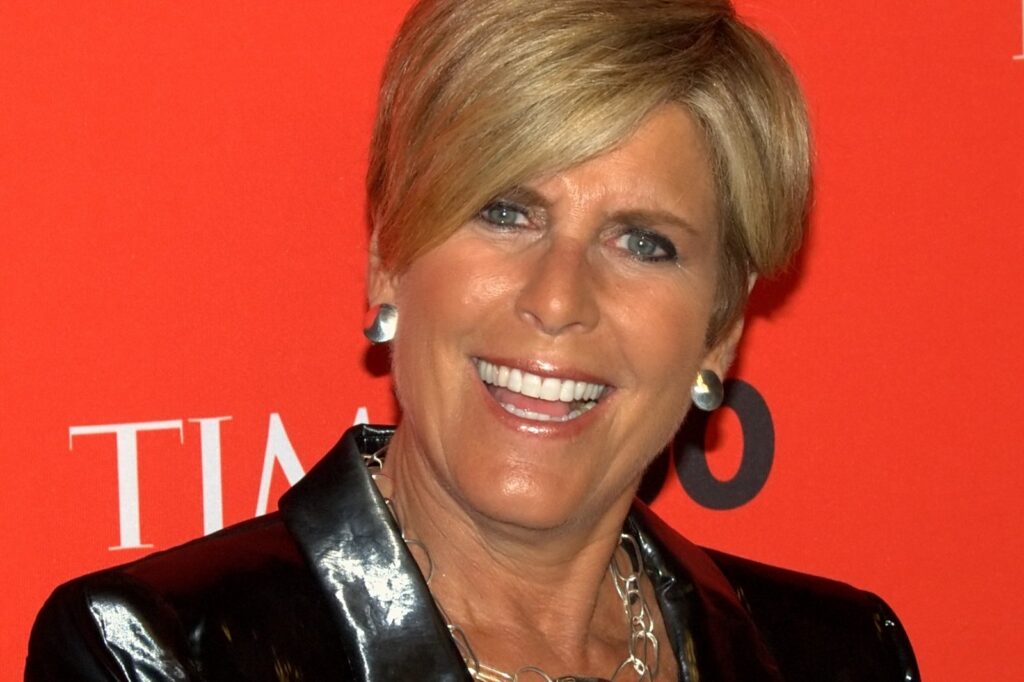
Eight months. That is how much living-expense cash Suze Orman wants a household to hold before a parent or grandparent puts a personal dollar into a child’s Trump Account. Her rule has two halves, and the second is the one families will not expect.
The federal government has opened these accounts for nearly 70 million children. Orman’s post says take the free money: the $1,000 the government deposits for an eligible child, plus up to $2,500 a year an employer is allowed to add. “You should never turn down free money,” she wrote in an Aug. 27 post titled “Who Should and Shouldn’t Open a Trump Account.” The government’s seed, she added, is “free money no one should pass up.” Then she says stop. “In other words: until your financial life is in great shape, I don’t want you to contribute to a Trump Account for a child. Period.”
The five conditions
Orman does not want anyone adding their own money “beyond any free contributions from the government or their employer” if any one of these applies:
The emergency fund cannot cover at least eight months of living expenses. There is credit card debt. There is student loan debt. There are car loans. Retirement savings are not on track.
By that test, anyone with a car payment or a card balance is not yet a candidate. Her quarrel is not with the account. It is with what parents do once the free money has landed.
Why the tax rules matter
She points to the tax treatment. “Contributions to a Trump Account are made with after-tax money, so they will not be taxed again when withdrawn,” she wrote, “but 100% of earnings withdrawn will be taxed as ordinary income.”
That matches the structure the IRS set out in Notice 2025-68. Contributions earn no deduction. Nothing can come out during the growth period, which ends in the year the child turns 18. After that the account generally follows traditional IRA rules, so anything above the after-tax basis is taxable on the way out. In short, money a family puts in is locked away for years and partly taxed again later.
The rest of her playbook
Orman, who has written ten consecutive New York Times bestsellers and founded the Suze Orman Financial Group in 1987, has long argued that going broke is a string of small mistakes rather than one big one. Her tips on that front:
If you are in good health, wait until 70 to claim Social Security. The benefit at 70 is much higher than at a full retirement age of 66 or 67, she told AARP. Live below your means, because even rich athletes and celebrities go broke by spending more than they earn. Track spending and apply the 50/30/20 rule: 50 percent on needs, 30 percent on wants, 20 percent on savings and debt.
She also warns against reverse mortgages. “If you’re broke while you’re still working, how are you going to pay for the home-ownership expenses you’ll still have to cover in retirement?” she asked. For a tight budget she would rather see a family sell and downsize. On borrowing, she wrote for Oprah.com: “Yes, debt is necessary. It’s how you own a home or get a college degree, but the trick is to respect it. Take on only what you can afford.”
Sources
- Suze Orman
- ‘I Don’t Want You to Contribute to a Trump Account for a Child. Period’: Suze Orman Says Take the Free $1,000 and Your Employer’s $2,500, Then Stop.
- Suze Orman Shares 4 Strategies To Avoid Running Out of Money – AOL
Photo: User:David Shankbone (CC BY 3.0)