
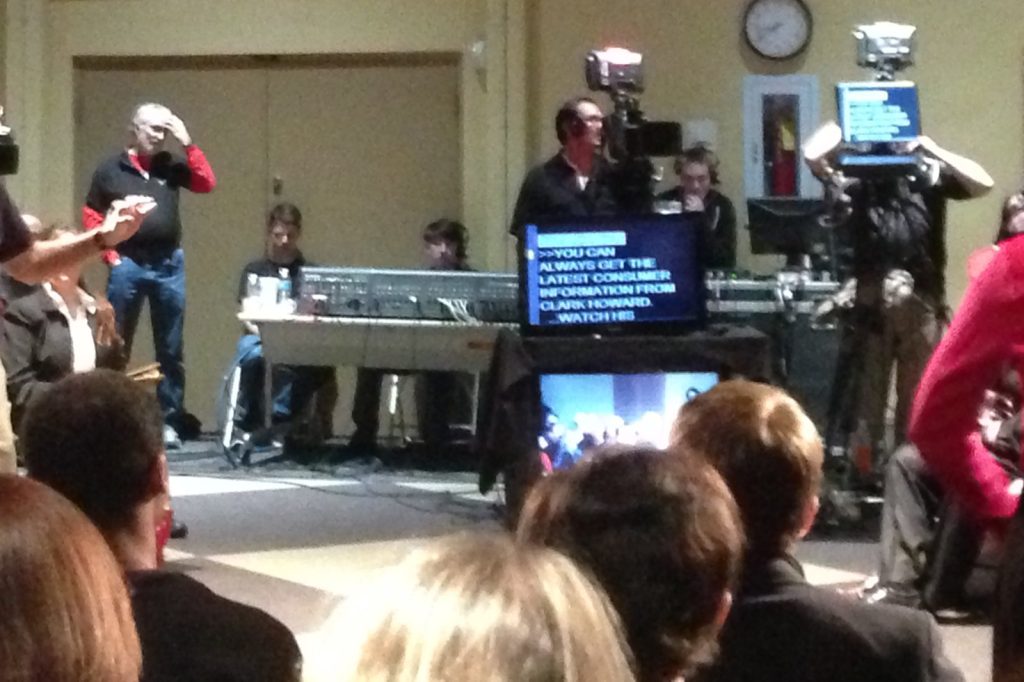
A caller named Robert phoned The Clark Howard Show with a problem most savers would welcome. The IRS was forcing him to pull money out of his retirement accounts, and he did not need a dime of it for his bills.
Robert was past 70.5. He was splitting his required minimum distribution, or RMD, across three accounts that held roughly $500,000 in total.
Howard’s answer, from the February 7, 2018 broadcast, was short. “If you don’t want to give it away to family or charity or you don’t want to do something fun for yourself and you don’t need the money. This is going to sound weird. I would put it into an investment account and I would buy like a total stock market index fund or something like that with it. There would be ultimately a great inheritance asset for somebody to get way down the road.”
A 247WallSt columnist who says he has covered retirement-income planning for more than 15 years called that mostly right, with one giant blind spot. The column argues that money an RMD frees up should go back to work instead of losing ground to inflation in a checking account.
The tax step
The columnist’s point is that the RMD links a tax-deferred account to a taxable one. Money pulled from a traditional IRA or 401(k) counts as ordinary income. For a married couple filing jointly in 2026, he writes, that income stacks on top of Social Security and pension money and hits the 22% bracket. The tax is due whether the cash goes to groceries or sits in a savings account earning 4%.
He gives an example. Say Robert’s combined RMD is $20,000. At 22% he owes about $4,400 in federal tax regardless. The remaining $15,600, put into a total market index fund, could compound for years. Heirs would get it with a stepped-up cost basis at death, which wipes out the unrealized gains.
The same $15,600 in a high-yield savings account would be taxed as ordinary income every year on the interest. Over a decade, the columnist says, the gap on a single year’s RMD can run into five figures.
Where Howard left something out
If Robert gives to a church, a university or any 501(c)(3), a Qualified Charitable Distribution would let him send up to $108,000 (the 2025 limit, indexed annually) straight from his IRA to the charity. It satisfies the RMD and never appears on his tax return. The columnist notes the 2026 standard deduction is $29,200, so most retirees no longer itemize and an ordinary donation earns no tax benefit.
Gifts to family still work. The 2026 annual gift exclusion is $19,000, so Robert and his spouse can give $38,000 to each adult child or grandchild without gift tax paperwork. But he pays income tax on the RMD first.
One detail is out of date. The 70.5 age from Robert’s 2018 call no longer applies. Under SECURE 2.0 the trigger is 73, rising to 75 in 2033, and a first RMD is due by April 1 of the year after someone turns 73.
The columnist also relays Howard’s advice to take the distribution from the lower-volatility part of the portfolio so the stock holdings keep compounding. He suggests asking an IRA custodian to send any charitable check directly, before December, and says Schwab, Fidelity and Vanguard will set up monthly automatic RMDs.




