
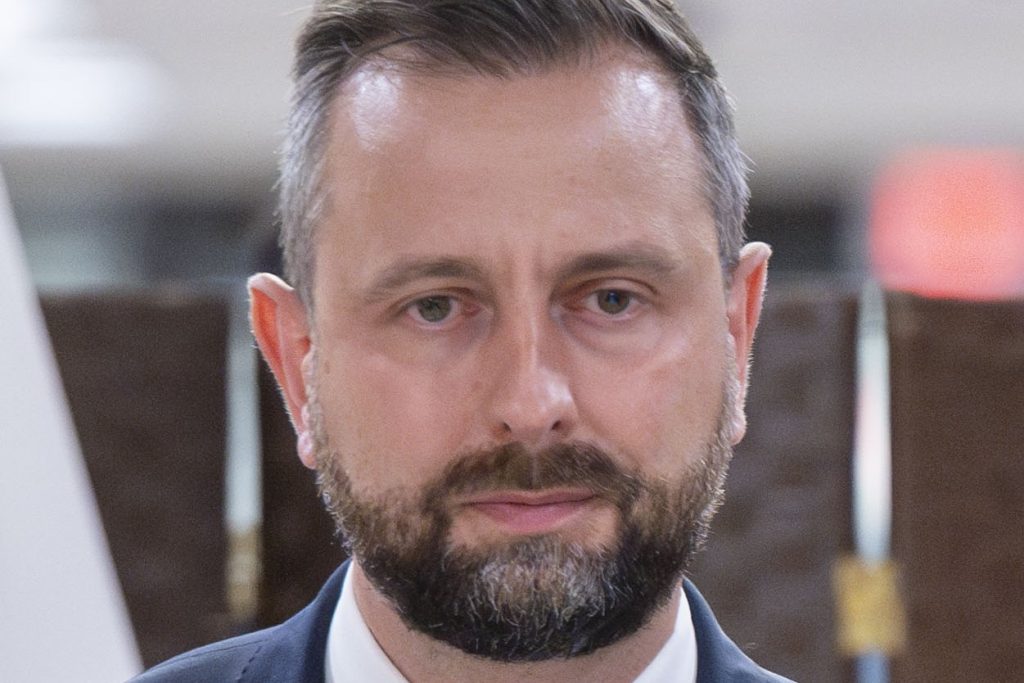
On the day Poland’s top soldier admitted that Patriot interceptors will arrive late, Poland’s defence minister stood up in Warsaw and asked American arms makers to move production closer to the customers.
Władysław Kosiniak-Kamysz, who is also deputy prime minister, spoke on Monday, October 12, 2026, at the Warsaw Security Forum. He wants “a lasting, predictable alliance” with the United States, he said, and not only in intelligence sharing or military capability. The defence industry belongs in it too. In his view the plans for what he called NATO 3.0 should put that industrial strategy up front: production lines and service centres relocated to Europe, with Patriot missiles as the obvious example.
The delay behind the speech
The timing was not subtle. Gen. Ireneusz Nowak, the Polish army’s operational commander, told a panel at the same forum that deliveries of some U.S. weapons to Poland would slip. “At this point it looks like we are going to be affected as well,” he said. PAC-3 MSE Patriot missiles, he added, “they’re going to be delayed for sure.”
In April, Reuters reported that American officials had warned several European counterparts that previously contracted deliveries were likely to run late because the Iran war is eating into weapons stocks. Nowak’s remark suggests Poland’s turn has come. As ever, the detail that matters is the word “contracted”: a signed order is no guarantee of a delivered missile.
Paying for independence
Kosiniak-Kamysz put the point in terms of money Europe has already committed. Since the NATO decision at The Hague in 2025 to spend 5% of GDP on defence by 2035, he said, European countries can no longer treat greater responsibility as a slogan. Poland is the biggest user of the SAFE programme, taking almost a third of the 44 billion euros. Two thirds of Poland’s share has already gone to Polish defence firms.
His first demand was that Europe make its own defence supply chains independent. His second was about something less glamorous: troop movement. The European Union has struggled with military mobility for years, he said, and no decision yet lets troops cross internal borders without approval from every region involved. “This needs to end as soon as possible,” he said.
He tied the argument to American troops, too. The more U.S. soldiers Poland hosts, ideally with a permanent base, the more responsibility it can take for NATO’s eastern flank. And he pointed to history. Poland, he recalled, learned in the Second World War that alliances, deliveries and supplies all have limits, and it does not want a repeat of that lesson.
He also met Matthew Whitaker, the U.S. permanent representative to NATO, on the sidelines, and held talks with defence ministers from five other countries, Norway and Belgium among them. “I believe that this is the moment when the US government and companies will agree to co-production with Europe,” he said.
Sources
- Patriot interceptor deliveries to Poland will be delayed, top general says (Reuters via Defense News)
- Warsaw Security Forum on the theory of victory, security, the future of NATO and the war in Ukraine (Polish Ministry of National Defence)




