
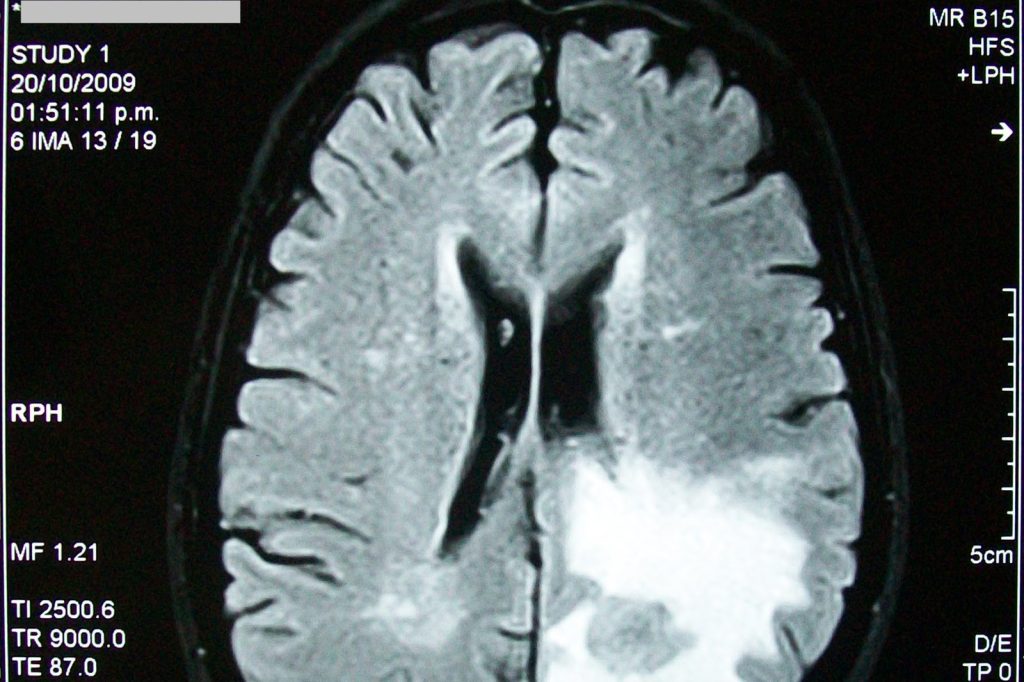
Researchers at King’s College London and McMaster University in Canada have published findings in the journal Nature showing that a novel version of CAR-T cell therapy eliminated tumors in the majority of mice treated in a preclinical study, offering a potential path forward against glioblastoma, the deadliest form of brain cancer. The disease, which kills 95 percent of patients within five years of diagnosis and affects about 3,200 Britons annually, has long resisted treatment because its cells spread through the brain via tiny, thread-like extensions that invade healthy tissue, making complete surgical removal nearly impossible.
Glioblastoma was first described by medical researchers in the early twentieth century and has remained among the most difficult tumors to control. Surgery became the initial approach, later joined by radiation and systemic drugs, yet the growth pattern limited what those methods could achieve.
The disease sends narrow projections into nearby tissue, making clean removal unlikely, and remaining cells often resist chemotherapy and radiotherapy. Decades of searching for a management strategy have yielded little, and short survival remains the norm after diagnosis.
A New Approach to an Old Problem
Standard CAR-T therapy works by instructing a patient’s own immune cells to recognize and destroy cancer cells. It is already used on the U.K. National Health Service for about 2,500 patients a year, often for blood cancers, after receiving regulatory approval in the 2010s. However, its application to solid brain tumors had been constrained by the brain’s protective barriers and the invasive nature of glioblastoma. The new version tested in this study was designed to overcome those obstacles, using animal models that mimic the human disease.
Cell-based immunotherapy emerged in the late twentieth century with efforts to direct immune cells against tumors. The development of CAR-T therapy represented a major advance, but translating it to solid tumors has proven difficult.
The current finding matters because glioblastoma still lacks a cure, and a treatment that clears tumors in preclinical models could alter a field where progress has been slow. Both King’s College London and McMaster University have invested in this line of research.
How the Therapy Works and What It Achieved
The study was conducted on mice, not people. But the numbers are striking: in two of the main experiments, the therapy completely eliminated tumors in 12 out of 13 mice treated. The fact that the findings appear in Nature suggests the peer reviewers found the data credible.
The researchers are careful not to overstate the results, though the headline figure—12 of 13 mice becoming tumor-free—is hard to ignore. The study marks a potential shift in how scientists think about tackling the disease.
CAR-T therapy, if it translates to humans, could change the outlook for glioblastoma patients. The disease currently kills 95 percent of those diagnosed within five years, a statistic that has not budged despite decades of research. For the roughly 3,200 Britons diagnosed each year, and the families watching them face that mortality rate, this is a glimmer of hope—but for now, it remains a laboratory result.
The Long Road Ahead
The history of cancer research is littered with promising animal studies that failed in human trials. The road from mouse to patient is long, and the researchers acknowledge that extensive further testing is required before any conclusions can be drawn about effectiveness in humans.
Readers should understand that the path from animal results to approved brain cancer drugs requires rigorous clinical trials, regulatory review, and years of additional work. Despite these cautions, the results are notable even at the preclinical stage. Glioblastoma has resisted nearly every treatment attempted since it was first described in the early twentieth century.
Surgery, radiation, and systemic drugs have all been tried, but the tumor’s invasive nature and the brain’s protective barriers have limited their success. A therapy that can clear tumors in animal models designed to mimic the human condition represents a significant step, even if the ultimate destination remains uncertain.
For now, the finding stands as a scientific observation published in a peer-reviewed journal. The researchers at King’s College London and McMaster University are not making clinical claims. Patients and families are advised to consult their doctors for medical advice. The work continues, and the next steps will involve determining whether the same approach can be safely and effectively applied to human patients, a process that could take years.
Consult your doctor for medical advice.
{“@context”: “https://schema.org”, “@type”: “NewsArticle”, “headline”: “CAR-T Therapy Eradicates Brain Tumors in Preclinical Study”, “description”: “LONDON, July 1 — Researchers at King’s College London and McMaster University in Canada have published findings in the journal Nature showing that a novel…”, “datePublished”: “2026-07-01T09:30:00+00:00”, “author”: {“@type”: “Person”, “name”: “Beatrice Bianchi”}, “publisher”: {“@type”: “Organization”, “name”: “InfoPulse Today”, “url”: “https://newsfeed.infopulsetoday.com/”}}




