
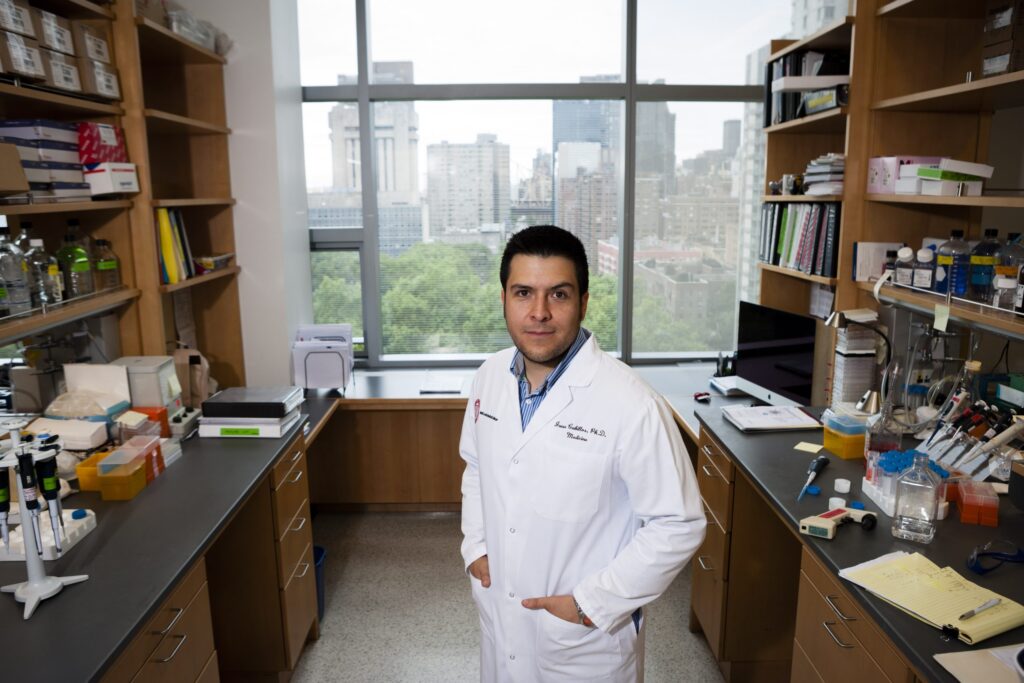
NEW YORK, July 8 — A study published June 22 in the journal *Cell Stem Cell* has identified a molecular mechanism that may explain one of the most lethal phases of colorectal cancer: the moment a tumor begins to spread. The research, a collaboration between scientists at Weill Cornell Medicine and the Massachusetts Institute of Technology, centers on the loss of a factor called GATA6. According to the study, when GATA6 expression is lost, tumor cells can shift into a primitive state that enables metastasis.
This transformation, the record shows, is a critical juncture. Colorectal cancer remains one of the leading causes of cancer death, and the vast majority of those deaths are linked to metastatic disease.
Understanding the precise sequence of events that allows a localized tumor to become invasive has been a central goal of cancer biology for decades. On the timeline of that effort, the new findings represent a concrete step. The researchers demonstrated that the loss of GATA6 is a key driver of the cellular reprogramming that permits colorectal cancer cells to break away from the primary tumor and travel to distant organs.
Sources familiar with the work described the finding as a potential entry point for intervention. The study suggests that if scientists can develop strategies to maintain GATA6 expression, or alternatively, to block the primitive cellular state that GATA6 loss triggers, they may be able to prevent or delay metastasis.
The research was conducted using both cell lines and animal models, according to the filing. The scientists traced the chain of molecular events that follows GATA6 loss, mapping how the change in gene expression alters the behavior of the cancer cells.
From the laboratory to the clinic
The path from this discovery to a treatment for patients remains long. The study’s authors were clear that further research is needed before any clinical interventions can be developed. No drug candidates have yet been identified that specifically target the GATA6 pathway.
Still, the work provides a molecular target that was not previously on the radar for colorectal cancer metastasis research. The finding narrows the field of inquiry for laboratories pursuing anti-metastatic therapies.
Colorectal cancer is a commonly diagnosed cancer, and incidence rates among younger adults have been rising for years. The disease is often treatable when caught early, but once it metastasizes, survival rates drop sharply. The researchers at Weill Cornell Medicine and MIT have added a specific mechanism to the growing body of knowledge about how that deadly transition occurs.
The study was published in a peer-reviewed journal with a strong reputation in stem cell and cancer biology.
What comes next
The next phase of this research will likely focus on identifying compounds that can either preserve GATA6 expression in colorectal cancer cells or disrupt the primitive state that enables metastasis. That work, the study’s authors noted, has not yet begun in earnest. For now, the finding stands as a piece of the larger puzzle.
It does not promise an immediate cure, but it does offer a clearer roadmap for researchers working to understand why some colorectal cancers spread and others do not. The study was published on June 22 in *Cell Stem Cell*. Consult your doctor for medical advice.




