
Old muscle goes quiet, and a team in Singapore thinks that silence may leave tumors freer to grow.
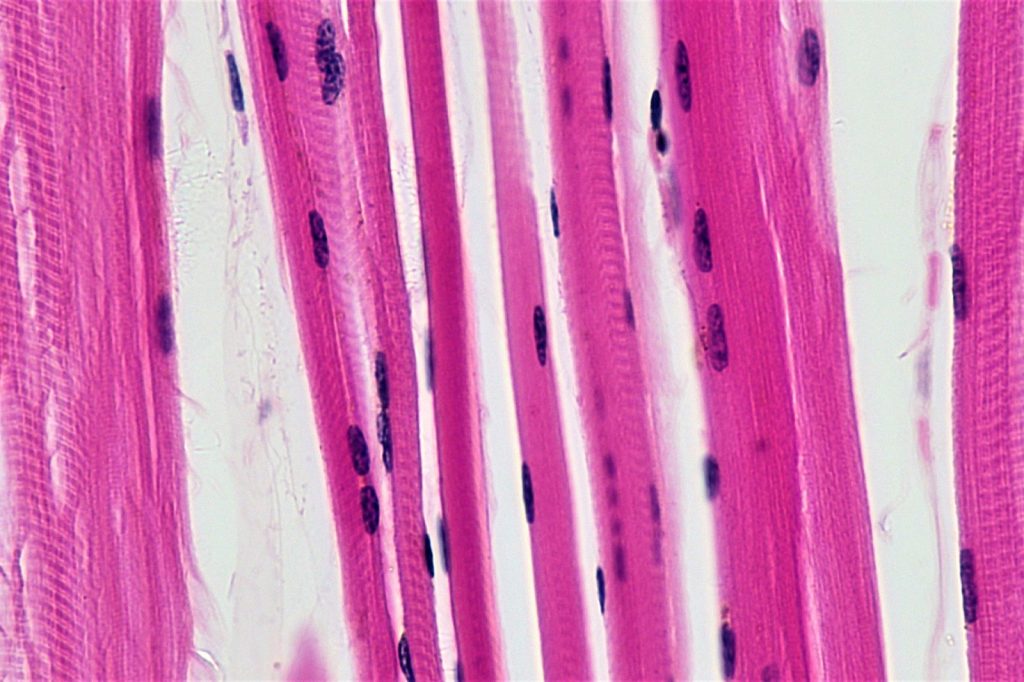
Researchers at Duke-NUS Medical School report that healthy skeletal muscle sends out tiny packages that slow tumor growth. Aging muscle sends out far fewer, and the ones it does release have lost the protective message. The study appears in the journal Nature Communications.
Parcels from young muscle
The packages are extracellular vesicles, bubble-like parcels about 100 nanometers across that cells use to pass molecular cargo to one another. Young muscle produced plenty. Old muscle produced far fewer.
The team followed the parcels in fruit flies and mice. Vesicles from young muscle reached the gut and curbed the over-proliferation of stem cells behind age-related dysplasia. Vesicles from old muscle could not do it.
The same held in mammals. Vesicles from healthy mouse muscle sharply cut the number of colorectal, lung and bile duct cancer cells in a dish. Damaged or aged muscle vesicles did nothing. Prostate and neuroblast cells took up none of them. In live mice, blocking vesicle release from young muscle let implanted tumors grow larger and faster, and restoring the vesicles undid the damage.
“Muscle cells use extracellular vesicles to send messages and influence how other cells behave, but exactly how these messages are delivered and received is not fully understood,” said Professor Tang Hong-Wen, senior author and a member of the Cancer and Stem Cell Biology Signature Research Programme at Duke-NUS. “Our research uncovers this hidden process, showing that as muscles weaken with age, these signals can change in ways that can promote tumor growth.”
One small molecule
When the researchers sequenced the cargo, one item kept turning up: miR-7a-5p, a microRNA that fine-tunes which proteins a cell makes. Young muscle vesicles carried a lot of it and old ones carried little. Added back to cancer cells, it stalled growth and raised cell death. Inside tumors it suppresses a protein called TEAD1, which normally helps cancer cells multiply.
The supply chain traces to a protein named SDC2, which is needed to build and ship the vesicles. SDC2 drops sharply in aging muscle, and it sits downstream of Notch signaling, which also declines with age.
What exercise did
Exercise switches Notch signaling back on in muscle. The team put older mice on treadmill and wheel running. The animals gained lean mass, lost fat and regained much of their Notch activity. Their muscle made more vesicles, miR-7a-5p rose, and tumors grew more slowly. Blocking Notch or removing SDC2 erased the gains.
Dr. Kenon Chua, a co-author, said doctors already see advanced cancer alongside low muscle mass. “This is a novel study which illustrates how healthy muscle can potentially inhibit tumor growth,” he said. He urged regular resistance and aerobic exercise in later life, “not only for function and mobility, but also for general health.”
Sarcopenia, the loss of muscle mass and strength with age, affects nearly one in three Singapore seniors aged 60 and above. Professor Lok Shee Mei, the school’s Interim Vice-Dean for Research, said the work “opens new avenues for therapeutic strategies to preserve muscle health and reduce cancer risk.” She hopes policymakers will back healthy aging programs and exercise-based interventions.
The team’s next step is to test whether the same signals appear in people, and whether muscle vesicles carrying miR-7a-5p could flag cancer risk tied to sarcopenia. Consult your doctor for medical advice before starting a new exercise program.




