
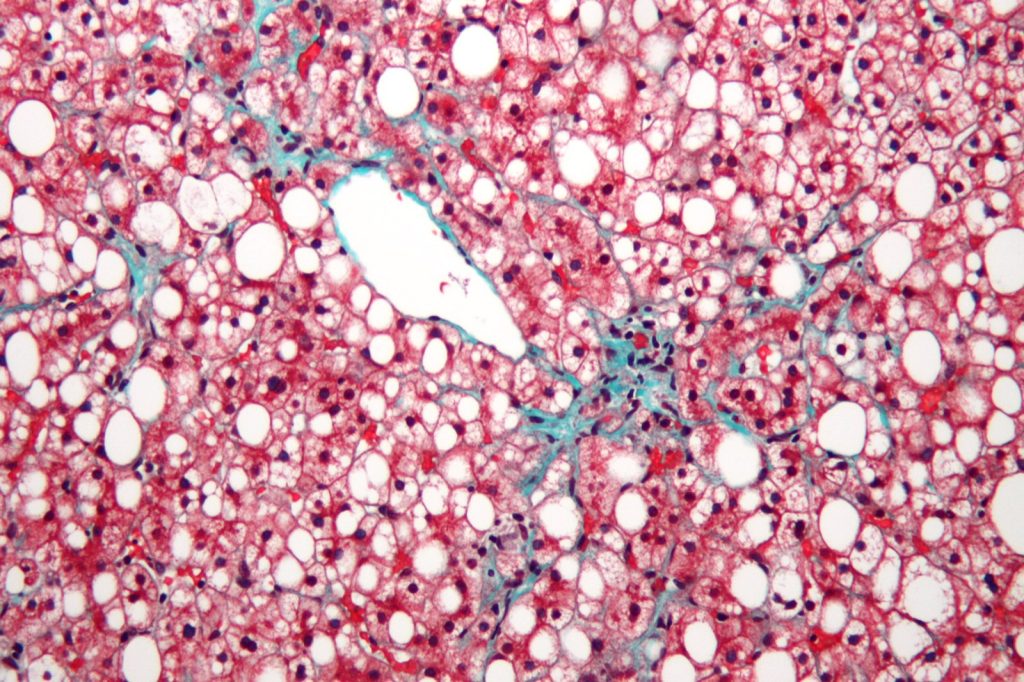
“The patient’s first reaction is alcoholic.” That is how Dr. Mazen Noureddin, who runs medical direction at the Houston Research Institute, described what happens when a clinician says “nonalcoholic fatty liver disease” out loud. You then sit down and spend time explaining that it is not alcohol, he said, “and yet it doesn’t sit well with them.”
That awkward conversation is what the field has now tried to remove. In 2023 the name NAFLD was replaced by metabolic dysfunction-associated steatotic liver disease, or MASLD. Nonalcoholic steatohepatitis, NASH, became metabolic dysfunction-associated steatohepatitis, or MASH. A new category, MetALD, was added for patients with MASLD who also drink more alcohol.
Who decided, and how
The change came out of a modified Delphi process run by three groups: the AASLD in the United States, the European association (EASL) and the Latin American one (ALEH). Three years earlier a global committee called the Nomenclature Development Initiative had started asking whether the names were accurate. In a 2020 survey, 74% of respondents felt the NAFLD name was flawed enough to need replacing. The condition is thought to reach as many as 25% of US adults, and 30% of people worldwide.
Why the old words had to go
In the Delphi survey, 61% of respondents found “nonalcoholic” stigmatizing, and 66% said the same of “fatty.” Mark Sulkowski of Johns Hopkins University told HCPLive that the word sets up an expectation tied to obesity, and that using a name that stigmatizes patients is counterproductive. Jamile Wakim-Fleming of the Cleveland Clinic added that “fat” is only a descriptive adjective and does not reflect the underlying medical disorder.
The old labels also defined the disease by what it was not. Experts argued they did not describe its cause. As Sulkowski put it, there are two causes of steatosis: metabolic and alcohol. Lumping them together hid the fact that some people have metabolic risk factors and also drink unhealthily, and that those patients may need a different approach. Researchers had also tended to leave drinkers out of NAFLD and NASH trials above a low threshold, while metabolic risk factors were rarely tracked in alcohol-related liver disease.
What the new categories mean
A diagnosis of MASLD requires fat in the liver plus at least one cardiometabolic risk factor, such as high BMI or waist circumference, raised blood sugar or diagnosed type 2 diabetes, high blood pressure, or abnormal blood fats. Steatotic liver disease is the umbrella term that now covers it all. MetALD describes MASLD plus significant alcohol use, defined as 20-50 g/day for females and 30-60 g/day for males.
Sources
- From NAFLD to MASLD: 2023 Brings New Liver Disease Nomenclature (HCPLive)
- Out with the Fatty Liver… In with the New Nomenclature (DiaPharma)




