
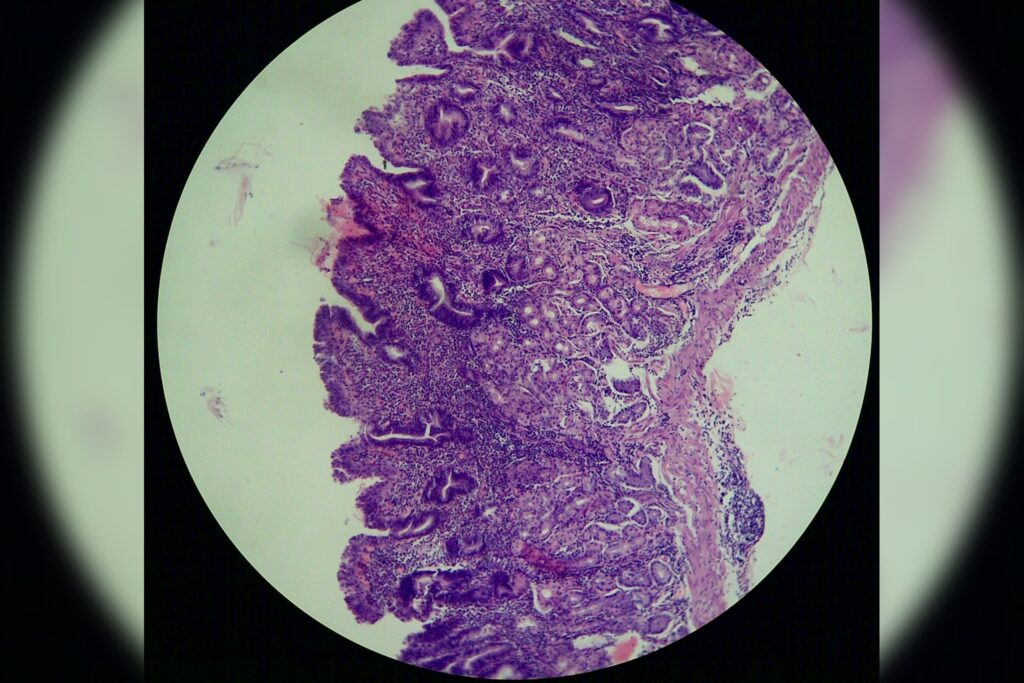
“My stomach is eating itself.” That is how Bryan Johnson, the 48-year-old behind the Blueprint anti-ageing project, described the diagnosis he revealed in a social media post: autoimmune gastritis, an incurable condition in which the immune system attacks healthy cells in the stomach lining.
He received the diagnosis in May. The path to it was slow. Johnson said his medical team struggled for years to explain persistently low ferritin levels, despite extensive testing, until further investigations pointed to the stomach.
In his post, Johnson said the disease causes irreversible damage to the stomach lining and that current care focuses on managing it rather than curing it. He plans to look for therapeutic approaches using advanced immune-cell testing, and he intends to keep analysing the immune cells attacking his stomach. “I’m going to try and solve it. Will share all,” he wrote.
What the condition does
Autoimmune gastritis can cut the production of stomach acid and of intrinsic factor. That raises the risk of iron deficiency, vitamin B12 deficiency, anaemia and, over time, stomach cancer. Experts say it tends to develop gradually and can cause few noticeable symptoms early on. The exact cause is unknown.
The plasma question
Johnson became one of the best-known advocates of longevity science through Blueprint, a programme that combines strict nutrition, exercise, sleep optimisation, biomarker testing and experimental interventions. One of its most publicised experiments came in 2023, when he underwent a blood plasma exchange with his teenage son, Talmage. Johnson later said it produced no measurable anti-ageing benefit, and he dropped it.
Medical experts have not linked that experiment to the disease. Researchers cited by Northeastern Global News said autoimmune gastritis has no established connection to plasma exchange. They described it as tied to autoimmune processes still under investigation, with genetic and environmental factors thought to play a part.
Limits of monitoring
Experts say the case shows what personalised health tracking cannot do. Ram Hariharan, director of programmes for the College of Engineering at Northeastern University’s Seattle campus, called Johnson “arguably the most measured human alive.” Even so, he said, extensive biological data cannot always catch a disease before irreversible damage starts.
Immunologist Emeka Okeke said the cause of most autoimmune diseases remains unknown. Dr Gian Corrado added that such conditions are relatively common and can strike healthy, physically active people who have regular medical monitoring.




