
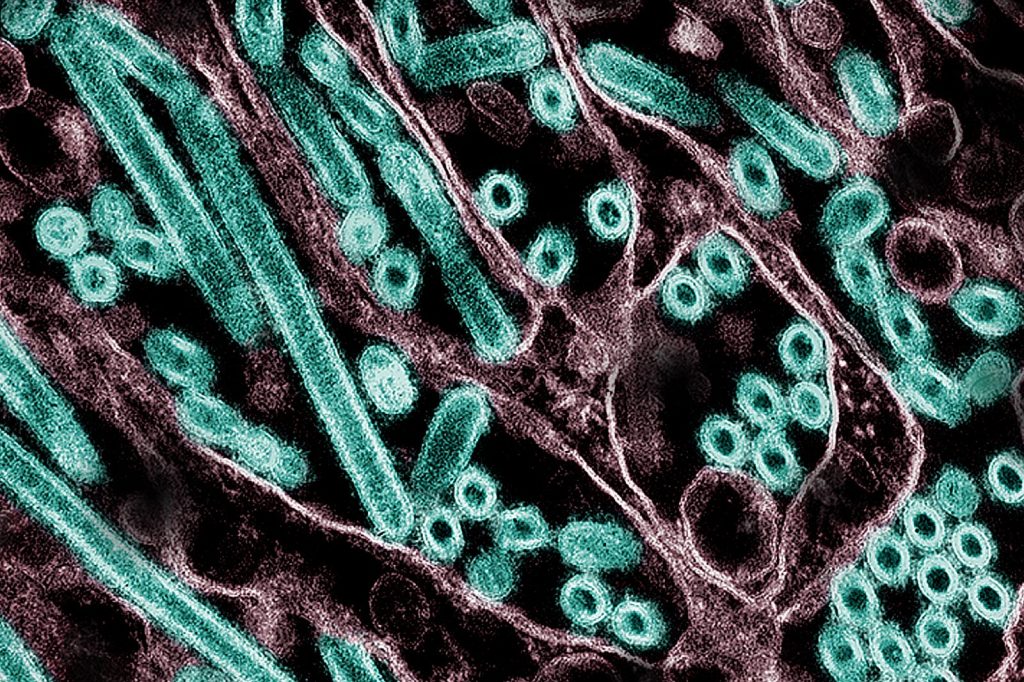
Nearly half the people known to have caught H5N1 bird flu have died. From January 1, 2003 to November 5, 2025, the World Health Organization recorded 992 human infections from 25 countries. Of those, 476 were fatal, a rate of nearly 48 per cent.
Scientists say the numbers are only part of the worry. Reporting by Down To Earth describes the virus as “just one mutation away” from spreading between people, and researchers are warning that the world is paying too little attention.
Spreading through animals
The current strain was first detected in poultry in Southern China in 1997. It later moved to wild birds in 2005, marine mammals in 2022 and cattle in 2024. Five years after the highly pathogenic form was detected in 2020, it is still spreading across wide areas and hitting poultry, wild birds and cattle.
“It’s now a global problem,” Ed Hutchinson, a professor of molecular and cellular virology at the University of Glasgow, told BBC Science Focus. “As a disease of wild animals, it’s completely out of control. It’s raging around the world, and there’s no feasible containment method other than just watching it infect huge populations of animals.”
The newest clade, 2.3.4.4b, evolved between 2018 and 2020 and had spread worldwide by 2021-2023. In the United States alone, more than 285 million birds have been affected since February 2022. Seventy-one cases of transmission from poultry or cattle to people have been found, with two deaths in the US.
What the studies suggest
No evidence yet shows the virus passing between humans, and that step is what would make it a pandemic threat. Some studies indicate one mutation could be enough. Another found that this strain infects through the air better than earlier variants. Experts fear that genome reassortment, which becomes likelier as the virus moves between more species, is the key to triggering a pandemic.
Researchers at Cambridge and Glasgow universities found that bird flu viruses resist fever. A viral gene called PB1 lets them thrive at higher temperatures, close to a bird’s body heat, so the rise in human temperature during seasonal flu may not protect people. That, the scientists noted, is why pandemic strains often carry avian genes.
In April 2025 the Global Virus Network, which includes human and animal virologists from more than 80 centres of excellence and affiliates in over 40 countries, urged governments to improve surveillance, put biosecurity measures in place and prepare for possible human-to-human transmission.
On December 17, the National Veterinary Services Laboratories finished whole genome sequencing and confirmed H5N1 clade 2.3.4.4b genotype D1.1. The USDA said analysis points to a new spillover from wildlife into dairy cattle, separate from earlier events. Indian scientists have also shown that once a pandemic strain is loose, detecting a few cases, from 2 to 10, may already be too late to contain it.
A separate flu on the rise
Unrelated to bird flu, the H3N2 subclade K is also drawing concern. It had been detected in patients in the UK, Australia, parts of Africa and Asia by July. WHO said it has drifted genetically from related J.2.4 viruses. It is not considered a pandemic strain, but it partly evades existing immunity. From May through November 2025, subclade K caused 33 per cent of all A(H3N2) cases worldwide, with Europe accounting for 47 per cent, according to the Global Initiative on Sharing All Influenza Data.




