
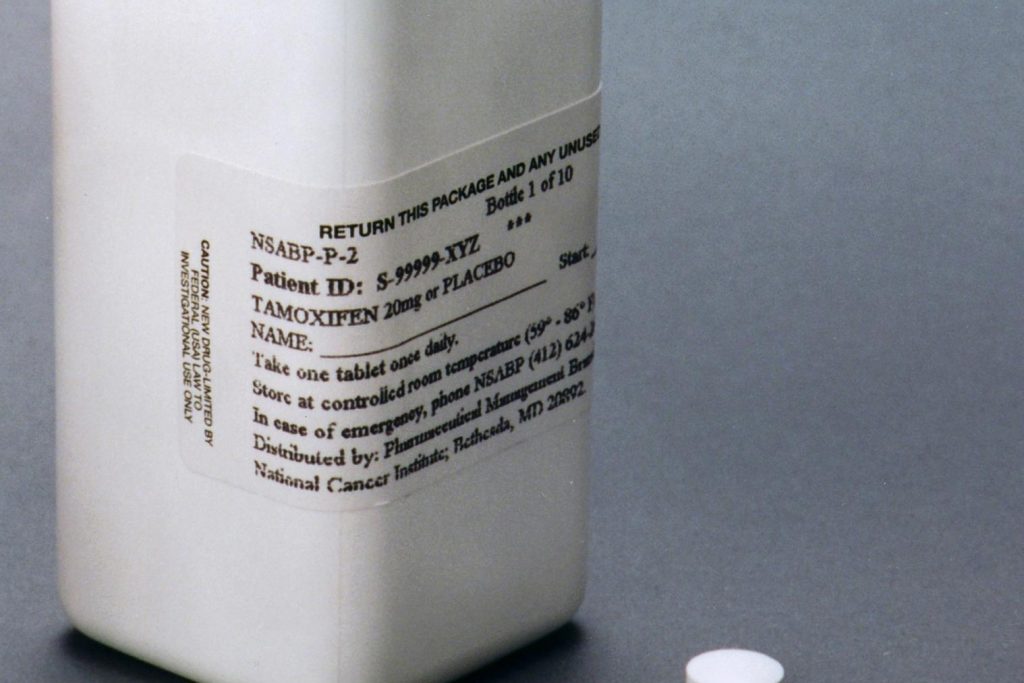
Tamoxifen works by getting to the estrogen receptor first. In hormone receptor-positive breast cancer, the tumor cells carry receptors that estrogen attaches to, and that attachment tells the cells to grow and multiply. Tamoxifen attaches to the same receptors. With the drug sitting there, estrogen cannot bind, and the growth signal never arrives.
The drug belongs to a class called selective estrogen receptor modulators, or SERMs. It does not lower the body’s estrogen. It blocks the receptor, and what it does depends on the tissue. In breast tissue it acts as an antagonist and shuts estrogen out. In bone, it does the opposite and mimics estrogen, which can help slow bone loss after menopause. In the uterine lining it also stimulates, which is the reason for one of its main risks.
Who takes it, and for how long
Doctors often choose tamoxifen first for women who have not yet gone through menopause. It can also be prescribed after menopause, and to men. People are put on it after surgery and radiation for early-stage hormone receptor-positive breast cancer or DCIS, for advanced-stage disease, or because their risk of developing breast cancer is high.
Most people take one pill a day, ideally at the same time. A liquid form exists. For early-stage cancer, the course runs at least five years after surgery. After that, patient and doctor decide whether to add five more years of tamoxifen or switch to an aromatase inhibitor, for 10 years of hormonal therapy in all. In advanced disease, treatment continues as long as the benefits outweigh the risks and side effects. A lower 5 mg dose, sometimes called “baby tam,” is an option for some people with DCIS or similar non-invasive disease, instead of the usual 20 mg.
The evidence for staying the course is fairly direct. Studies have found a lower risk of recurrence in people who take it for at least five years after an early-stage diagnosis, and a lower chance of developing breast cancer among high-risk women who take it for five years.
Side effects
The same blocking that stops the cancer also happens in healthy cells, so hormonal side effects follow. Hot flashes and joint pain are common. Tamoxifen can also change the lining of the uterus, and that can lead to endometrial cancer. Doctors ask patients to report even a small amount of vaginal bleeding, bloody or rusty brown discharge, changes in periods, or pain or pressure below the belly button.
Other serious risks are blood clots, stroke, cataracts and liver problems. Sudden weakness or numbness on one side, confusion, trouble speaking or seeing, or a sudden severe headache means going straight to an emergency room.
Research suggests up to half of women prescribed tamoxifen or other hormonal therapies stop early, often because of side effects. Stopping raises the risk that the cancer returns. Patients who cannot tolerate it should call their doctor, who may lower the dose, switch the medicine or treat the symptoms directly. Acupuncture, meditation and exercise are among the options for easing side effects.
Some medicines interfere. Tamoxifen should not be taken together with the aromatase inhibitors Arimidex, Femara or Aromasin, and strong or moderate CYP2D6 inhibitors, which include many antidepressants, may reduce how well it works. It should not be used during pregnancy or breastfeeding. Consult your doctor for medical advice.
Sources
- Tamoxifen: What to Expect, Side Effects, and More
- How Tamoxifen Works: Mechanism of Action Explained




