Patients in Jammu and Kashmir who need advanced cancer treatment often have to leave the Union Territory to get it. The administration wants that to stop. On Monday, Chief Secretary Atal Dulloo chaired a high-level meeting to review a draft Comprehensive Cancer Care Strategy, prepared by the Health and Medical Education Department with oncology experts and national institutions.
The draft covers prevention, screening, diagnosis, treatment, palliative care, rehabilitation, research, capacity building and digital health. It would expand specialised facilities, trained staff and diagnostics in phases.
In the room were the directors of SKIMS and of the Tata Memorial Centre in Chandigarh, the National Health Mission’s mission director, the principals of the Government Medical Colleges, the Directors of Health Services, and faculty and senior department officers.
Dulloo called cancer one of the fastest-emerging public health challenges. He asked for a coordinated, evidence-based approach built around patients, with measurable outcomes. “The objective is to make quality diagnostic and treatment facilities available closer to patients, significantly reducing the need for them to travel long distances for cancer care,” he said.
Orders to the department
He told the Health Department to carry out the strategy in phases and on a fixed timeline. Every Government Medical College is to have a preventive oncology framework for early detection. The department should also begin training programmes for specialist doctors and personnel certified as Radiation Safety Officers, and upgrade equipment and treatment infrastructure in the colleges.
Each expert committee set up under the strategy has to produce a detailed implementation plan for its own area. An Apex Committee chaired by Dr Sudeep Gupta, Director of the Tata Memorial Centre in Mumbai, will examine and harmonise those plans along with other oncology experts. Dulloo said the partnership with Tata Memorial would help the territory adopt national best practice and move faster.
Registries and the new notification
Akriti Sagar, the NHM mission director, told the meeting that a Steering Committee-cum-State Cancer Registry Coordination Unit already exists. Its job is to set up population-based and hospital-based cancer registries across the territory, which she said would feed disease surveillance and planning under the National Cancer Registry Programme.
Cancer has now been declared a notifiable disease in Jammu and Kashmir. After that notification, the government began the process of signing a memorandum of understanding with the ICMR-National Institute of Non-Communicable Disease Epidemiology in Bengaluru, for technical help with a modern registry.
Labs, scanners and transplants
The meeting reviewed what the territory has now: the State Cancer Institute at Government Medical College Jammu, SKIMS Soura, Government Medical College Srinagar, AIIMS Vijaypur, the newer medical colleges, and the district day-care chemotherapy centres run under the National Health Mission.
The strategy proposes molecular oncology laboratories in the medical colleges, with molecular pathology, immunohistochemistry, genomic profiling and next-generation sequencing. Officials said proposals for laboratories in selected colleges have gone to the Indian Council of Medical Research under its DiaMONDs Project, and that other funding is being explored to spread them wider.
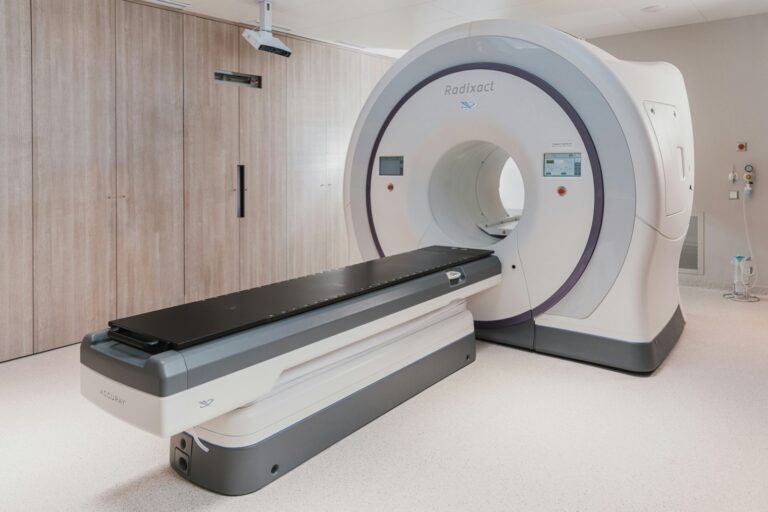
Imaging would grow in stages too, with mammography units, PET-CT scanners, MRI, gamma cameras and endoscopy services. Dulloo also looked at plans for more radiotherapy capacity, stronger surgical oncology, additional bone marrow and stem cell transplant facilities, and multidisciplinary oncology teams at the major tertiary hospitals.
On awareness, the plan calls for information and education campaigns through print, electronic and digital media, schools, Panchayati Raj Institutions, Anganwadi Centres and community platforms, covering risk factors, early warning signs and screening.
No funding figures or dates were given for the full plan.