
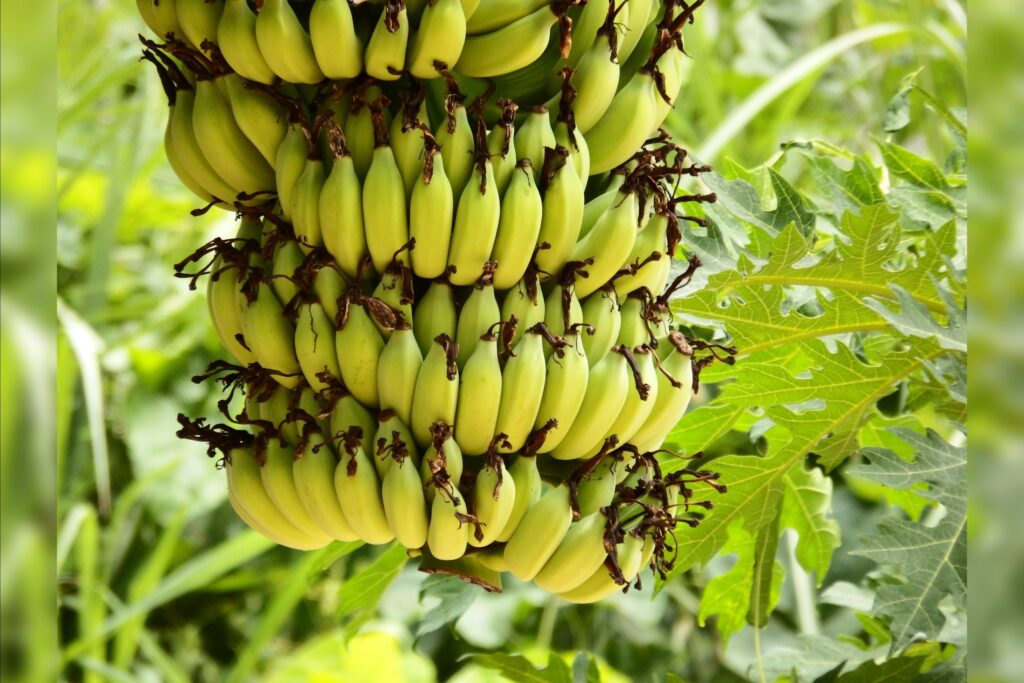
Most people wait for a banana to go yellow. The green ones have a quiet following among nutrition researchers, and the reason is a carbohydrate that behaves unlike the sugar in a ripe fruit.
Resistant starch is the term. Unlike most carbohydrates, it is not digested in the small intestine. It travels on to the large intestine, where it ferments and feeds healthy gut bacteria.
A Brazilian review of green banana studies
In 2019 researchers at the University of Brasilia published a systematic review in the journal Nutrients. They searched PubMed, EMBASE, Scopus, Science Direct and Google Scholar, turned up 732 articles and kept 18 studies from nine countries, dated between 1984 and 2019. Seven of them, 40% of the total, were from Brazil. Five were done on animals and one in a petri dish; the rest involved people, including healthy adults, overweight women, people with diabetes and rural children with diarrhea.
The authors wrote that, overall, the studies showed benefits from green banana products. Most were linked to gastrointestinal symptoms, followed by glycemic and insulin metabolism, weight control, and kidney and liver complications of diabetes. Most of the studies used green banana flour. In children, the flour pulp was associated with improvement in both diarrhea and constipation. In healthy adults it was linked to greater fullness and better blood sugar management.
They also described green bananas as a good source of fibre, vitamins C and B6, provitamin A, potassium, phosphorus, magnesium and zinc, along with phenolic compounds and resistant starch.
The review was cautious. There is no standard for dose or effect across age groups, banana varieties or ripeness. Few studies described the chemistry of the product they used. The researchers called for more work. They also admitted the obvious drawback: people rarely eat the fresh fruit green because of its hardness and the astringency from tannin, which is why growers and manufacturers are looking at flours and pulps instead.
What a 20-year cancer trial found
A separate line of evidence concerns resistant starch itself, not bananas alone. Teams from the universities of Newcastle and Leeds followed people with Lynch syndrome, an inherited condition that raises cancer risk, in a study reported in Cancer Prevention Research. From 1999 to 2005, close to 1,000 participants were put on a daily two-year course of the powder or a dummy version of it.
When the two years ended, cancer rates in the two groups looked the same. Follow-up told a different story: five new upper gastrointestinal cancers among the 463 who had taken the starch, against 21 among the 455 on placebo. The starch did not change bowel cancer, but cancers elsewhere fell by more than half.
Professor John Mathers of Newcastle said the dose was comparable to eating a banana that is not overly ripe. He and his colleagues think the starch may work by cutting levels of gut bile acids known to harm DNA, though he stressed that this needs checking. Professor Tim Bishop of Leeds called the results exciting but unexpected in size, and said they must be replicated.
Sources
- Brazilian review: Body of science so far supports green banana's health benefits, but more standardized research needed (FoodNavigator)
- Starch in green bananas can slash risk of some cancers by over 60%, study finds (Euronews)




