
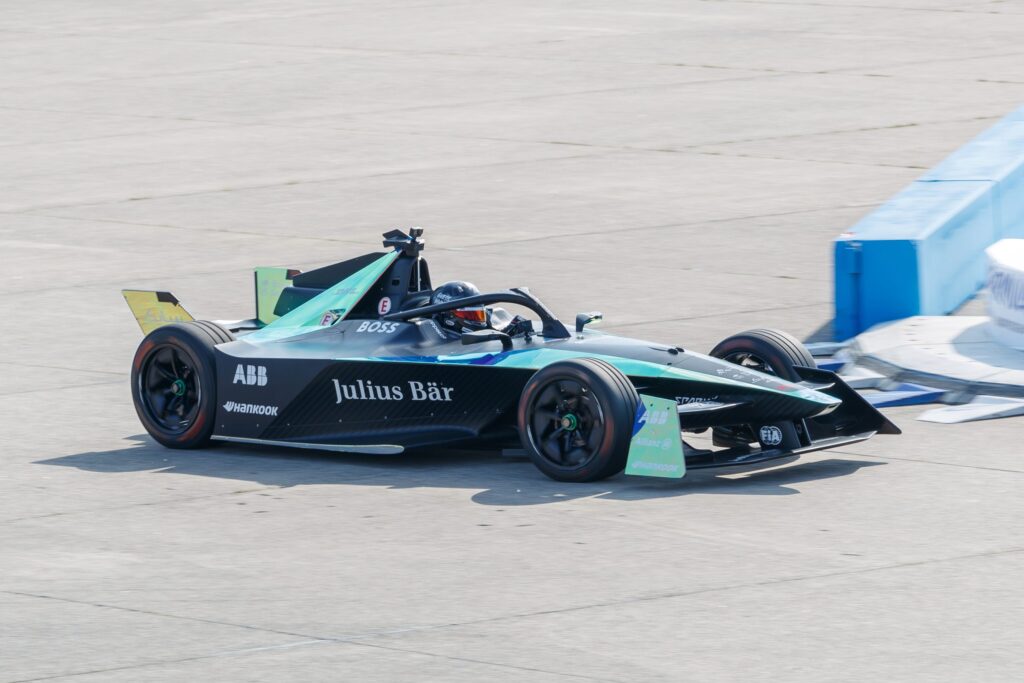
London, October 4 — The shift is clear: Formula E’s Gen3 race cars are pushing electric vehicle technology further than ever before, turning the championship into a high-speed laboratory for the EVs of tomorrow. Introduced for the 2022-2023 season, the Gen3 cars achieve a top speed of 322 km/h and deliver up to 600 kW of power, a substantial increase over the Gen2 limit of 250 kW. These figures come directly from the series’ technical specifications, marking a leap in performance for all-electric single-seaters.
The advanced powertrains are developed by manufacturers including Jaguar, Porsche, Nissan, and Maserati, with energy recovery systems capable of capturing up to 40% of energy used during a race through regenerative braking. This efficiency gain is a key feature of the Gen3 design, helping extend usable energy without increasing battery size.
Formula E has served as a testbed for electric vehicle technology since its inception in 2014, with innovations in battery management, thermal systems, and lightweight materials directly informing road-going EVs. Porsche, for example, has applied lessons from its Formula E program to the Taycan, particularly in 800-volt architecture and fast-charging capabilities. The series operates on temporary street circuits in cities such as London, Berlin, and New York, with races typically lasting 45 minutes plus one lap.
Formula E has committed to net-zero carbon emissions since its inception, using sustainable fuels for transport and recycling battery components. The Gen3 cars are the first formula racing vehicles designed with lifecycle thinking, incorporating recycled carbon fiber and natural fibers in bodywork.
As of the 2022-2023 season, 11 teams and 22 drivers competed, with manufacturers investing hundreds of millions of dollars annually in EV development through racing participation. Technology transfer from Formula E to consumer EVs has been cited by industry analysts as accelerating the adoption of 800-volt systems, silicon carbide inverters, and advanced thermal management in production vehicles. Watch this space — the trend underneath is clear: racing is no longer just about speed, but about shaping the future of electric mobility.




