
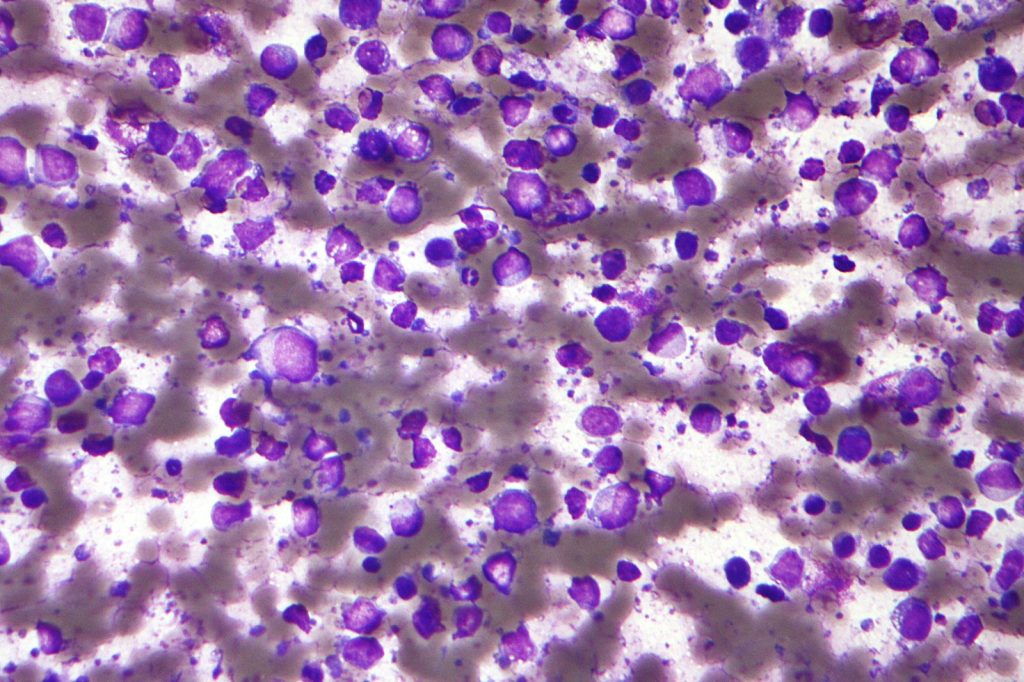
Diffuse large B‑cell lymphoma progresses rapidly and can infiltrate lymph nodes, spleen, liver, and bone marrow. For many patients whose disease returns or resists initial therapy, effective options have been limited, often relying on salvage chemotherapy or stem‑cell transplantation when the individual’s health permits. On May 15, 2023, the United States granted approval to epcoritamab, marketed under the name Epkinly.
The agent is not a conventional chemotherapy; it belongs to the bispecific T‑cell engager (BiTE) class. One molecular arm of the drug attaches to the CD20 antigen present on malignant B cells, while the opposite arm binds the CD3 receptor on T lymphocytes.
This dual binding physically links a cytotoxic T cell to a tumor cell, prompting the T cell to become activated and destroy the lymphoma cell. The development of epcoritamab resulted from a joint effort between AbbVie and Genmab. Rather than one company pursuing the molecule from discovery to market independently, the two firms shared expertise and risk throughout the research and development process.
Their collaboration produced a therapy now available to oncologists treating this aggressive lymphoma. Approval does not equate to a cure.
Epcoritamab is a potent tool that must be administered with care. Like other T‑cell engaging therapies, it carries a risk of cytokine release syndrome, necessitating patient monitoring and institutional safety protocols. The drug does not eradicate the disease directly; instead, it redirects the body’s own immune system to recognize and attack the cancer. The clearance marks a notable shift in the therapeutic landscape for lymphoma.
Over recent years, treatment options have expanded to include CAR‑T cells, antibody‑drug conjugates, and now bispecific engagers. Each class operates via a distinct mechanism and exhibits different patterns of efficacy and failure across patients.
Having an additional agent enables clinicians to sequence therapies, trying one approach before moving to another, which is particularly valuable when the disease is relentless. For the manufacturers, the approval introduces a new revenue stream. For patients, it represents a chance that a T cell, guided by a synthetic protein, will accomplish what the body’s natural defenses have failed to do.
This reflects the broader reality of advanced cancer: when endogenous mechanisms fall short, medical intervention must step in. Epcoritamab is delivered by infusion and requires repeated dosing.
Its action forces a direct confrontation between the immune system and the tumor. Such an encounter can lead to tumor shrinkage and prolonged survival, yet it also poses the potential for serious immune‑related adverse events. Regulators weighed these benefits and risks, relying on clinical trial evidence that demonstrated the drug’s ability to reduce tumor burden in individuals who had exhausted other treatment avenues.
While trial outcomes are expressed in statistics, each percentage point corresponds to a person gaining extra time—time to witness a child’s graduation, to complete a personal project, or simply to live longer. The true stake in this approval is not a molecule, a patent, or a share price, but the gift of time.
For those confronting diffuse large B‑cell lymphoma, time is often the first resource that runs out, and epcoritamab offers a means to extend it.




