
By the time four hours of voting remained, 51.6% of Italians had cast a ballot. That was more than seven points below the figure recorded at the previous election four years earlier, and it was the number analysts kept returning to on a day that could end with the most right-wing government Italy has had since World War Two.
Almost 51 million people were eligible to vote, with polls open until 23:00 local time (21:00 GMT). Long queues built up at some stations in Rome and Milan. In Sicily and Calabria, in the south, the pace was sluggish. First-time voters numbered 2.6 million, and 4.7 million Italians were registered abroad. Exit polls were due at closing, with results a few hours behind.
Meloni and her partners
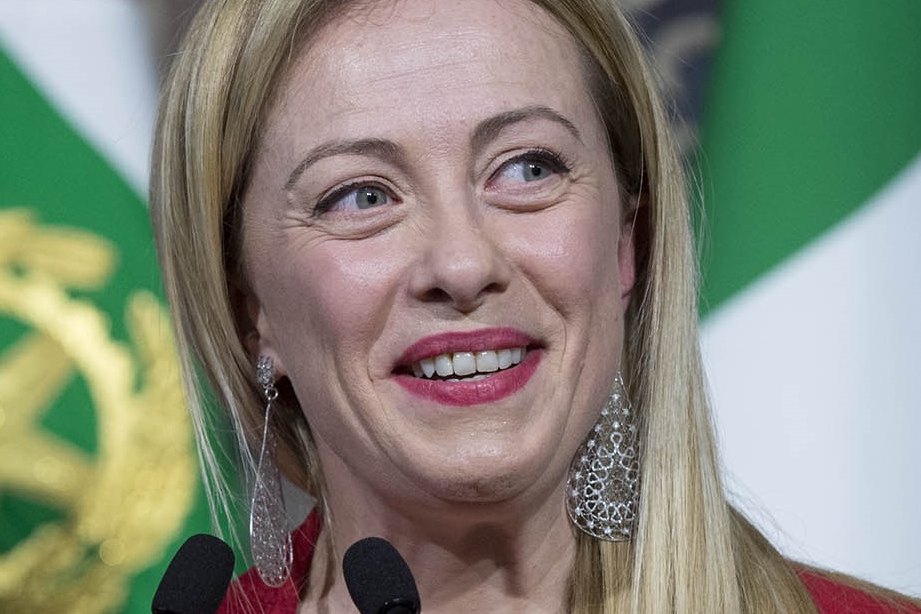
Giorgia Meloni leads Brothers of Italy, a far-right party. Her alliance with two other right-wing parties gives her a shot at becoming the country’s first female prime minister. Matteo Salvini’s League is one partner. The other is Forza Italia, run by former prime minister Silvio Berlusconi, 85.
Meloni has tried to soften her image and bristles at comparisons with Italy’s fascist past. She supports Western sanctions on Russia and has dialled down her language on Europe. Yet she still uses “God, fatherland and family”, a slogan Benito Mussolini’s fascists adopted. She has attacked the “LGBT lobby” and has called for a naval blockade of Libya to stop migrant crossings.
On election day she also put out a TikTok video of herself holding two melons and winking. The BBC called it bizarre.
Bills before geopolitics
Italy’s economy had been recovering from the Covid-19 pandemic when the energy crisis, largely set off by Russia’s invasion of Ukraine, sent prices soaring. Politicians spent recent days arguing over Russia and Europe. Voters, by contrast, mostly worry about paying their bills.
Mario Draghi, the respected former head of the European Central Bank, led a unity government for a year and a half. Meloni was one of the few party leaders who would not join it. The government collapsed by July. Its main job had been delivering reforms tied to €200bn (£178bn) in EU recovery grants and loans, and Meloni wants those reforms revisited because of the energy crisis. She has also spoken of doing more to “defend” Italy’s national interests inside the EU.
No wonder other European leaders were watching.
A divided opposition
The left and centre never assembled a joint challenge. Enrico Letta’s centre left shares several policies with the Five Star Movement under Giuseppe Conte, but the two camps do not agree on much else.
The rules also favor whoever wins. Parliament has shrunk by a third, to 400 seats in the Chamber of Deputies and 200 in the Senate. More than a third of seats are decided in first-past-the-post constituency races and more than 60% by proportional representation. Commentators think an alliance with 40% of the vote could end up holding as many as 60% of the seats. That could clear the way for a headline policy of the right: a directly elected president.
Even a clear majority would not make Meloni prime minister automatically. That decision belongs to President Sergio Mattarella, an impartial figure backed by parliament.
Latina
In Garbatella, the Rome district where Meloni grew up, one voter praised her “strong character”. Another had voted to keep the far right out. “It’s not who I want to win, it’s who I don’t want,” said Emma.
An hour south of Rome, observers believed the far right could take the town of Latina from the left. Mussolini founded it in 1932, and years of underfunding have left it worn. “Meloni speaks to the guts of the people,” said Gianluca Atlante, a journalist at the regional paper Latina Oggi. Behind him stood Palazzo Emme, built in the shape of an M for Mussolini and now home to a finance ministry enforcement office.
Latina had another candidate drawing attention. Gina Lollobrigida, 95, a cinema star of the 1960s, ran for the Senate despite a fractured femur.




