
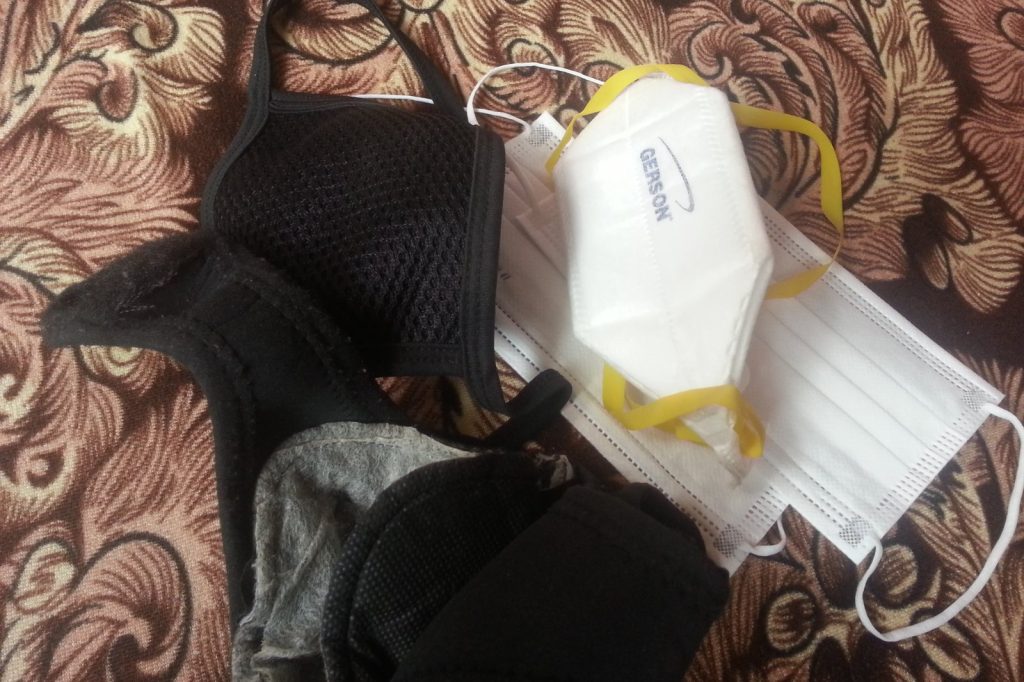
In a recent study published in the Annals of Internal Medicine, it has been demonstrated that masks constructed from multiple layers of cotton fabric can significantly reduce the transmission of airborne particles, including those carrying COVID-19. The research bridges a significant knowledge gap in public health policies by evaluating historical data and recent findings to assess the efficacy of various mask types in both protecting the wearer and minimizing contamination of the environment. While previous evidence regarding mask efficiency outside healthcare settings has been sparse, this study provides compelling support for the use of cloth masks in community settings.
The findings suggest that these masks can effectively block even the smallest aerosols, offering a viable solution to combat the ongoing pandemic. The scientific community has long debated the utility of face coverings, with early studies dating back to the 1960s and 1970s forming the foundation for modern understanding.
These studies showed that a mask constructed from three layers of material, specifically a combination of muslin, flannel, and another layer of muslin, achieved a remarkable ninety-nine percent reduction in surface contamination. Moreover, these early studies demonstrated a ninety-nine percent decrease in total airborne microorganisms and an eighty-eight to ninety-nine percent reduction in bacteria recovered from smaller aerosol particles. Modern commercial masks using four layers of cotton muslin have been shown to reduce all types of particles by ninety-nine percent, performance comparable to contemporary disposable medical masks, which offer filtration rates between ninety-six and ninety-nine percent.
However, the filtration efficiency of cloth materials varies significantly depending on the specific fabric used. Single layers found in common clothing items such as scarves, sweatshirts, or t-shirts may only provide between ten and forty percent filtration.
Increasing the number of layers significantly boosts efficiency, with specific combinations of fabrics, such as cotton and flannel, blocking more than ninety percent of particles. Effective mask usage primarily focuses on bidirectional protection.
Catherine Clase, an associate professor of medicine at McMaster University and a nephrologist at St. Joseph’s Healthcare Hamilton, explained, “The goal is not merely to prevent all particles from entering the face but rather to stop particles from exiting the wearer, thereby protecting others.” Clase’s international research team reviewed over a century of evidence to understand how masks function and found that while direct proof regarding transmission reduction in non-healthcare settings has been lacking, the ability of cloth to block particles supports existing safety guidelines.
While increasing the number of layers improves filtration efficiency, it also creates resistance that makes breathing more difficult. Clase noted that this trade-off is a significant factor in mask design and usage recommendations. More layers provide greater protection both inward and outward but can become uncomfortable or restrictive for some users.
Consequently, health officials do not recommend masks for children under two years of age or for individuals with existing breathing difficulties. “Our work is just one part of a complex puzzle,” said Clase.
She explained that while more layers yield better protection, the physical act of wearing them must be sustainable for the individual. This balance is essential for compliance and long-term effectiveness. The study suggests that even a modest reduction in transmission rates offers significant public health benefits that outweigh potential harms associated with wearing masks. In light of the pandemic’s ongoing challenge to global health systems, there is a growing need for better guidance on how community members can manufacture their own protective gear.
Clase indicated that further research is necessary to determine the optimal materials and designs for cloth masks. This information would assist individuals who are sewing masks to protect their neighbors and friends.
The variability in fabric performance means that not all homemade masks will perform equally well, and standardized advice could help prevent the spread of misinformation regarding which fabrics are most effective.
Health News
Keywords: cloth masks covid, mask efficacy study, cotton fabric layers, aerosol filtration, public health policy, historical mask data, disease transmission, community settings, droplet containment




