
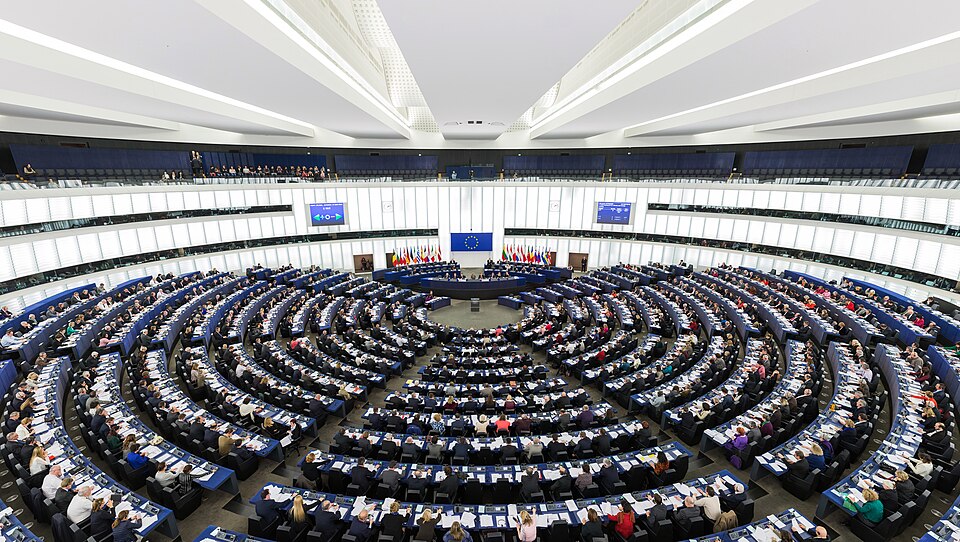
“I would like to work with you on opening the door for Canada to be the first associate member of the EU.” Ursula von der Leyen said that to Canadian Prime Minister Mark Carney, who sat in the chamber as she gave her annual State of the Union address to the European Parliament in Strasbourg on Wednesday, Sept. 16.
The Commission president said the EU and Canada would seek to move their relationship beyond the Comprehensive Economic and Trade Agreement, known as CETA, toward what she called an “Alliance for the Future.” She listed manufacturing, technology, defense, the Arctic, energy, critical minerals and artificial intelligence as areas it would cover. “We see the world with the same eyes: from AI to climate change, from the Arctic to geopolitics,” she said, adding that she wants the relationship at “the highest level possible.”
She gave no detail on what associate membership would mean in practice.
Security proposals in the same speech
Von der Leyen also floated what she called “Europe’s own Article 4,” modeled on the consultation mechanism in NATO. Under it, EU member states would convene when one of them faces a serious security incident that falls short of armed aggression.
She proposed a European Security Council as well, bringing together EU leaders and partners including Canada, Norway, Ukraine and Britain. The speech set out her priorities for the coming year, and she paired the security measures with plans for tighter migration controls and stricter bans on children’s social media use. It was the centerpiece of the Parliament’s four-day plenary session, which had opened on Monday.




