
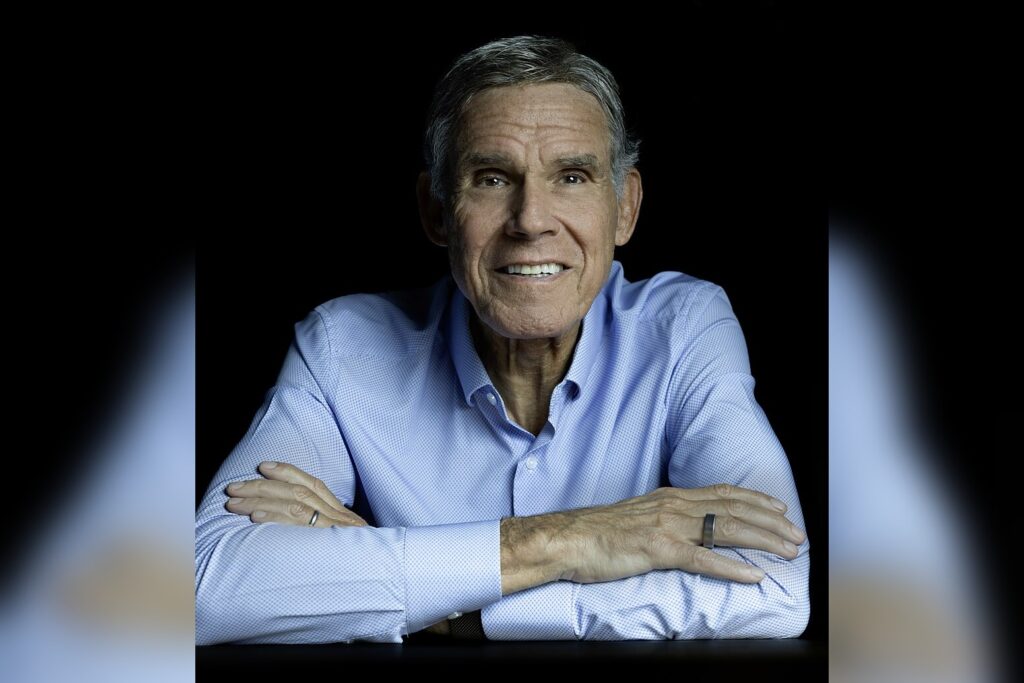
At 36, Eric Topol ran the cardiovascular department in Cleveland. He kept the job for 13 years, and by the end U.S. News & World Report had ranked the programme number one for more than a decade. It is an odd starting point for a man now best known for arguing that medicine must go digital.
The route there was conventional enough. He was born on 26 June 1954. A bachelor’s degree in biomedicine came from Virginia in 1975 and a medical degree from Rochester in 1979. Three years of internal medicine residency in San Francisco followed, then a cardiology fellowship at Johns Hopkins that ended in 1985. Before Cleveland he held a tenured post at Michigan for six years.
From heart trials to a medical school
His early reputation rested on large clinical trials. Starting with the GUSTO series, he led studies across more than 40 countries that enrolled over 200,000 patients, and he is credited with helping to pioneer drugs such as t-PA, Plavix, Angiomax and ReoPro. In 2002 he founded the clinic’s own medical school, the Lerner College, which was billed as the first newly founded one in the country for 20 years. Its first students arrived in 2004.
The same year he wrote an opinion piece for The New York Times on drug safety, rooted in his public stance on the heart risks of Vioxx. The Times and Bloomberg News later examined the tensions around his departure from the clinic, which came in 2006.
Scripps and the digital turn
Scripps recruited him late in 2006, through both its health system and its research institute, to build an institute for individualized medicine. It is now the Scripps Research Translational Institute in La Jolla, California, and Topol directs it. In 2009 he teamed up with Gary and Mary West on what became the West Health Institute, an effort to bring digital tools into research and practice.
Funding followed the idea. The National Institutes of Health gave him $207 million in 2016 to lead a large part of its All of Us programme, and renewed that in 2023 with $282 million spread over five years. His group has also drawn Clinical and Translational Science Awards money since 2008, most recently $46.8 million in 2023 for a seven-year term. Between 2018 and 2019 the UK asked him to plan the future workforce of the National Health Service, with genomics, digital medicine and AI all part of the brief.
The books
Four of his books on medicine’s future have been bestsellers: The Creative Destruction of Medicine came in 2010. The Patient Will See You Now followed in 2015, Deep Medicine in 2019 and Super Agers in 2025. Deep Medicine appeared in March 2019 and argues that AI can restore what the clinic has lost. “The greatest opportunity offered by AI is not reducing errors or workloads, or even curing cancer,” the book states; it is the chance to rebuild trust between patient and doctor, the human touch.
The publication list counts over 1,300 papers in peer-reviewed journals. Others have cited his work more than 400,000 times, and more than 30 books carry his name as editor.




