
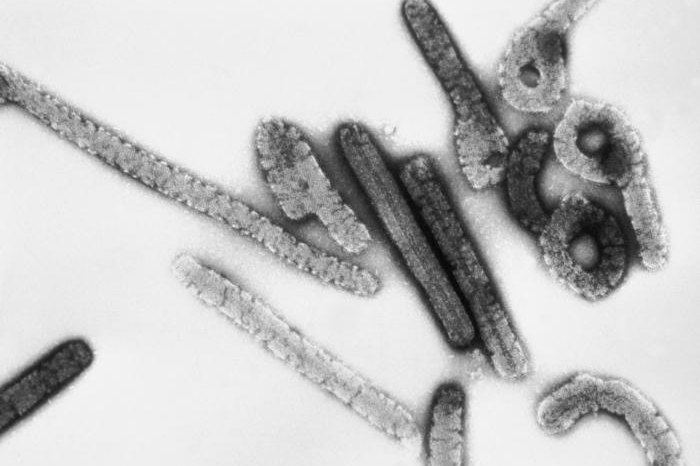
The first sign was a cluster of deaths in two villages in eastern Equatorial Guinea. On February 7, 2023, the health ministry reported at least eight deaths between January 7 and February 7 in two villages in Nsock Nsomo district, in Kie-Ntem province. Patients had a fever, then weakness, vomiting and blood-stained diarrhoea. Two also had skin lesions and bleeding from the ear.
Nobody knew what it was. Samples from contacts were sent to a lab in Gabon on February 9 and came back negative for both Ebola and Marburg. On February 12 a second batch went to the Institute Pasteur lab in Dakar, Senegal, and one of them, taken from a suspected case, tested positive for Marburg virus. That patient had developed fever, non-bloody vomiting, bloody diarrhoea and convulsions, and died on February 10 at Ebebiyin District Hospital.
First outbreak in the country
The World Health Organization said on Monday, February 13, that Equatorial Guinea had confirmed its first outbreak of Marburg virus disease, a deadly illness similar to Ebola. At that point there were at least nine deaths and 16 suspected cases, according to Al Jazeera. Health minister Mitoha Ondo’o Ayekaba said a funeral ceremony in Nsok-Nsomo district had been tentatively tied to the deaths.
The authorities moved fast. The week before, the country had put more than 200 people in quarantine and restricted movement in Kie-Ntem, and neighbouring Cameroon limited movement along its border over fears of contagion. Dr Matshidiso Moeti, the WHO’s regional director for Africa, praised “the rapid and decisive action by the Equatorial Guinean authorities in confirming the disease.”
By February 21, WHO counted nine cases: one confirmed, four probable and four suspected. All nine had died: eight in the community, one in a health facility. No healthcare workers were infected, and 34 contacts were being followed. WHO rated the risk as high nationally, moderate regionally and low globally.
What Marburg is
The disease kills up to 88% of the people it infects, a case-fatality ratio WHO cites. It was first detected in 1967, when outbreaks struck at the same time in Marburg and Frankfurt, Germany, and in Belgrade, Serbia. Fruit bats of the species Rousettus aegyptiacus are considered the natural hosts. People pass it on through direct contact with the blood or body fluids of an infected person, or with contaminated bedding and clothing, and burial ceremonies that involve touching the body can also spread it.
Illness begins suddenly with a high temperature, a severe headache and malaise, and heavy bleeding appears five to seven days in. There are no approved vaccines or antiviral treatments. Rehydration and care for individual symptoms improve survival. The most recent outbreak before this was in Ghana in 2022, with three confirmed cases.
Sources
- Marburg virus disease – Equatorial Guinea (WHO Disease Outbreak News)
- Equatorial Guinea confirms first Marburg virus disease outbreak (Al Jazeera)
Sources
- Marburg virus disease – Equatorial Guinea
- 2023 Equatorial Guinea Marburg virus disease outbreak – Wikipedia




