
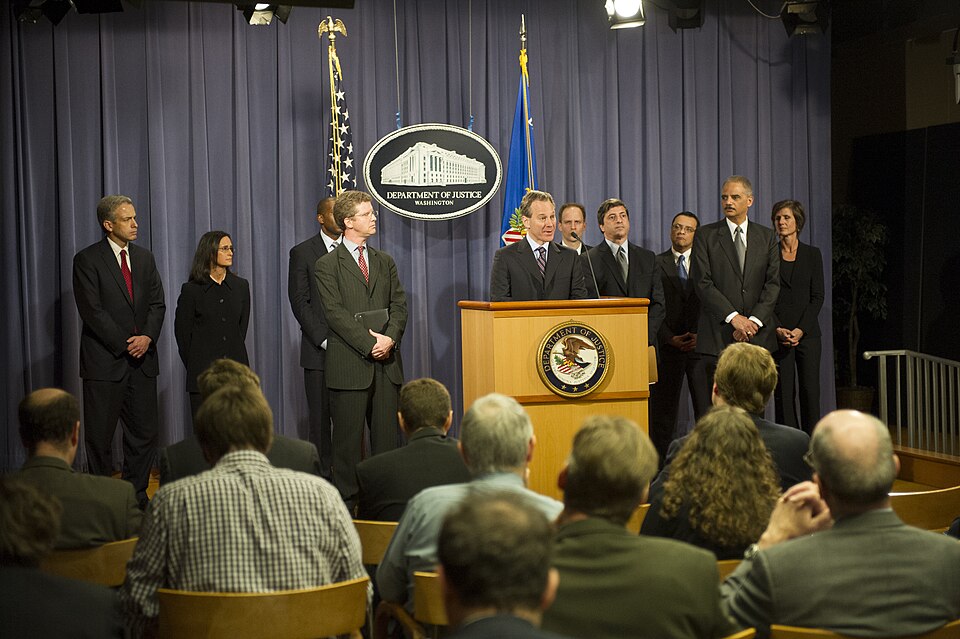
WASHINGTON, October 14 — The Department of Justice has reinforced its commitment to combating global trade fraud with a follow-up directive issued on October 1, 2026, that formalizes how trade and customs fraud will be investigated and prosecuted. By the numbers, the National Fraud Enforcement Division created under the DOJ’s August 2026 memo and rule has already surpassed $1 billion in recoveries and charged losses within its first year of operation.
The division’s priority areas include illicit transshipment schemes, country-of-origin fraud, undervaluation of imported goods, sanctions evasion, and foreign forced labor schemes — all core components of international trade abuse that distort markets and undercut lawful competitors. Investors will note the DOJ has reorganized substantial resources into the NFED, with plans to employ approximately 500 attorneys and staff by late August 2026, signaling a sustained enforcement push rather than a temporary surge.
The NFED operates as a centralized unit within the DOJ’s Criminal Division, consolidating expertise previously scattered across U.S. Attorneys’ offices and federal agencies to build stronger cases against complex, cross-border fraud networks. This structure mirrors past DOJ efforts to combat financial crime, such as the creation of the Foreign Corrupt Practices Act unit, but focuses specifically on trade violations that violate customs laws, sanctions regimes, and labor provisions embedded in trade agreements.
By centralizing prosecutorial authority, the NFED aims to reduce jurisdictional friction and increase coordination with U.S. Customs and Border Protection, Immigration and Customs Enforcement, and the Department of Commerce — agencies that provide critical data and investigative support in trade fraud matters. Looking ahead, market participants should watch for the first major indictments under the NFED’s formalized framework, particularly those involving country-of-origin labeling in sectors like steel, textiles, and electronics, where undervaluation and transshipment have historically been prevalent.
The bottom line: the DOJ is institutionalizing its fight against trade fraud, transforming an annual initiative into a permanent fixture of federal enforcement with clear metrics, dedicated personnel, and a defined jurisdictional scope. Investors will note that while the $1 billion recovery figure marks a significant early milestone, the division’s long-term impact will depend on its ability to sustain case volume, secure convictions, and deter future violations through consistent prosecution.
As of the writing date, no public announcements have indicated changes to the NFED’s leadership or budget beyond the previously stated hiring target, leaving the division’s operational trajectory dependent on internal DOJ execution and interagency cooperation. The figure that matters remains the division’s capacity to convert investigative resources into measurable outcomes — recoveries, charges, and deterrent effects — in a global trade environment where fraud continues to evolve in complexity and scale.
With the sitting administration in place — President Donald Trump, Vice President JD Vance, and Secretary of State Marco Rubio — the DOJ’s enforcement priorities reflect a broader emphasis on economic security and supply chain integrity, particularly as geopolitical tensions heighten scrutiny of imports from sanctioned or high-risk jurisdictions. Until the NFED releases its first annual report or announces a landmark prosecution, analysts and compliance officers will continue to monitor court filings and agency statements for signs of how the division’s mandate is being applied in practice.
For now, the directive issued on October 1, 2026, stands as the clearest signal yet that trade fraud is no longer treated as a peripheral concern but as a central focus of federal criminal enforcement. The bottom line: businesses engaged in international trade should expect heightened scrutiny of valuation practices, supply chain documentation, and end-use certifications as the NFED ramps up its oversight of high-risk import streams.
What follows will depend on whether the division can maintain momentum past its initial surge — turning early recoveries into a lasting shift in corporate behavior across global supply chains.




