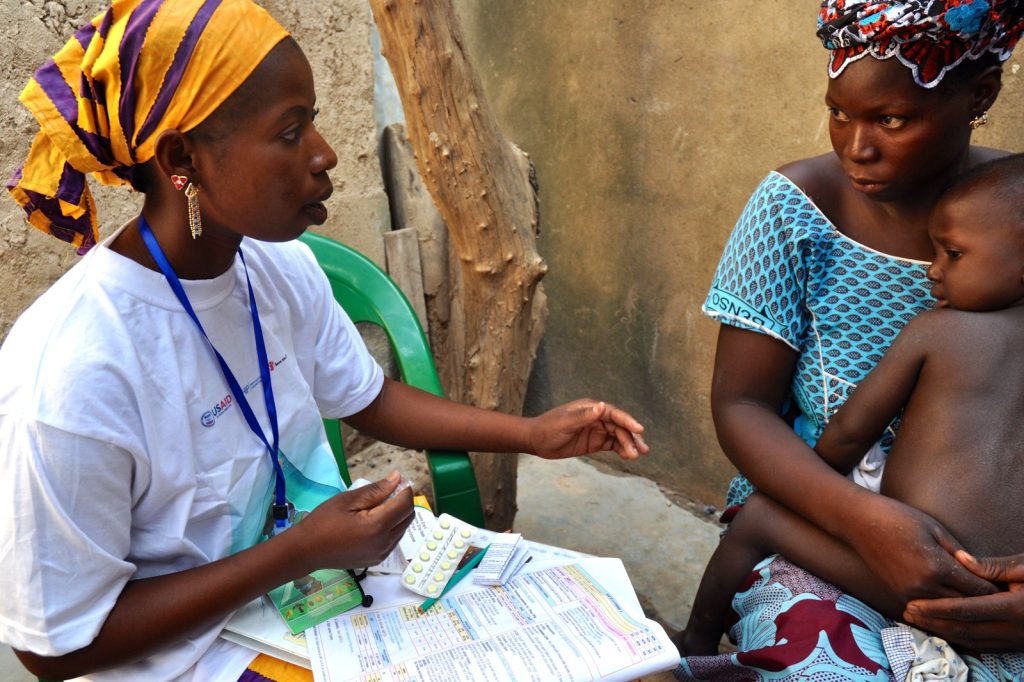
The paper went online in PLOS One on 23 June 2026, after the journal had received it on 17 April 2024. Its subject is narrow and practical: could the volunteers who already work in Cambodian villages help manage type-2 diabetes and hypertension?
The need is recorded. A 2016 STEPS survey estimated that 3.3% of Cambodians aged 40 to 69 had type-2 diabetes and 23.5% had hypertension. The government and donors have set up non-communicable disease clinics at referral hospitals, a World Health Organization package of essential interventions in health centres, and a community peer educator network. Scale-up has been held back, the authors write, by weak governance, limited money and especially a shortage of people.
Who was surveyed
Savina Chham and colleagues surveyed community health workers in six operational districts spread across the country, picked to reflect different diabetes and hypertension services. They drew 75 villages at random and invited every available worker there. Of 160 invited, 153 took part, a response rate of 96%. The team also held interviews with key informants, among them policymakers and programme implementers, about what stands in the way.
The workers had spent an average of 8.6 years in the role. Most held more than one: 44.5% had a single job, 30.5% two and 24.8% three. In policy terms they are Village Health Support Group members, described as volunteers at health centres, and many also work for malaria, tuberculosis, HIV or maternal and child health programmes.
What they knew
General knowledge was strong. Around 90% answered correctly on non-communicable diseases, risk factors and prevention, and 90.2% agreed that such diseases do not spread directly between people. The gaps were specific. Only around 20 to 40% got the questions right on whether family history or smoking counts as a risk. On one question about smoking, 74.5% believed a false statement.
Attitudes were positive. Some 98.7% saw on-time treatment of type-2 diabetes as important. In practice, 83.0% had at some point urged people over 40 to get their blood sugar tested, and 85.6% had urged blood pressure checks.
What stands in the way
Respondents named two needs: financial support and non-financial support such as training, supervision and supplies. They noted that other disease programmes pay incentives, including monthly payments, case-based incentives, transport and mobile phone top-up, and that limited government backing leaves the work dependent on outside donors. A further obstacle is how the job is organised. Employment arrangements differ from region to region, depending on which national disease programmes operate there, and roles and responsibilities are poorly defined. Respondents asked for those roles to be redefined and for needs and workload to be assessed.
The six districts were picked on purpose rather than at random. The paper’s conclusion is that community health workers in Cambodia have shown potential in managing both conditions, provided a strategy with technical training, defined roles and a strong support structure is in place.
Sources
- Exploring the potential of community health workers in type-2 diabetes and hypertension management in Cambodia | PLOS One
- Exploring the Potential of Community Health Workers in Type-2 Diabetes and Hypertension Management in Cambodia | CHW Central
Sources
- JMIR mHealth and uHealth – Facilitators and Barriers to Chronic…
- Self-care and health seeking for diabetes and hypertension in…