
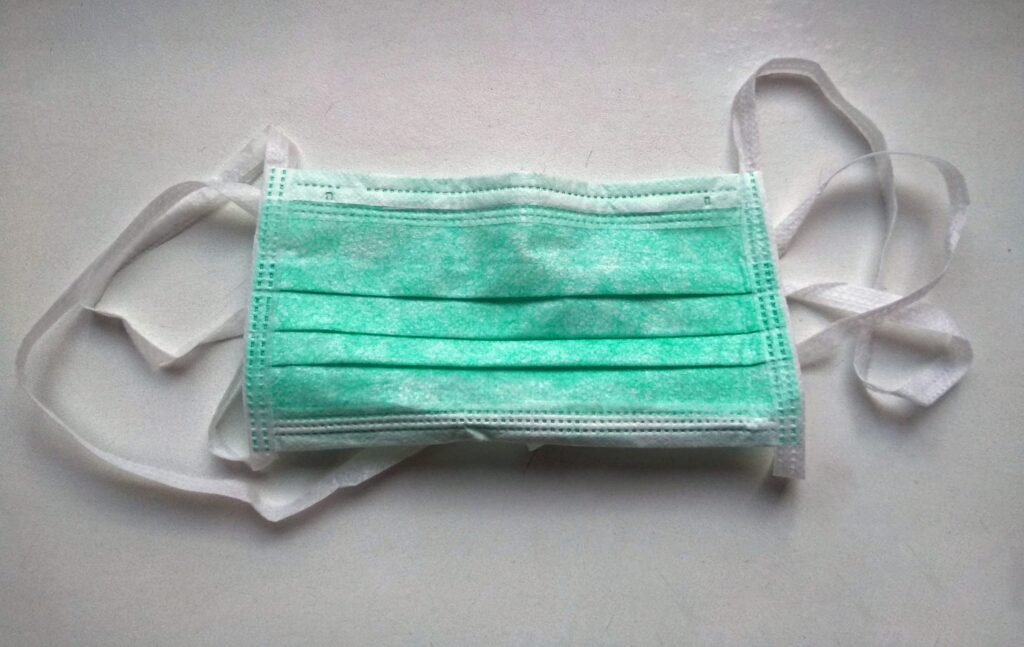
There is no trial proving that a face mask stops anyone catching SARS-CoV-2. There will not be one either. “We have no direct proof that face masks reduce the transmission of SARS-CoV-2, as this would require a randomized clinical trial that would be unethical to conduct,” said Juan Jesus Carrero, a professor of epidemiology at Karolinska Institutet and the corresponding author of a new review.
The catch is what he does next. Carrero’s group, working with McMaster University in Canada, went through the lab literature on cloth and found 25 published articles on how well cloth or cloth masks filter particles. The review ran in Mayo Clinic Proceedings. On closer reading, the conclusion is narrower than the headline suggests, but it is firm: certain cloth masks keep particles from reaching the room around the wearer and reduce what the wearer breathes in.
What the studies measured
Comparing them was hard. The tests used different methods, and few followed the medical standards used to certify protective equipment for healthcare. Despite that, the authors judged the pattern convincing. “It may seem counterintuitive that woven cloth, with space between threads that are visible to the naked eye, can block fine particles in the aerosol size range, but the data show unequivocally that this is the case,” Carrero said.
The mechanics here favour layers. A single layer stops some particles, and several stop more. The best materials were muslin, a type of unfinished cotton, plus cotton and flannel, best in three or four layers with a weave of 100 threads per inch or tighter. A historic surgical mask of four muslin layers cleaned the air as well as disposable medical masks did, even for fine aerosol-sized particles.
A companion piece from McMaster adds numbers from older work. In studies from the 1960s and 1970s, a three-layer muslin-flannel-muslin mask cut surface contamination by 99 per cent. A commercial four-layer muslin mask removed 99 per cent of all particles, where the disposable medical masks of the day managed between 96 and 99 per cent. A lone scarf, sweatshirt or T-shirt layer may catch only 10 to 40 per cent, but pairings such as cotton and flannel stop over 90 per cent.
The trade-off and the supply question
More layers mean harder breathing. Catherine Clase, the McMaster nephrologist who led that team, says that is why she advises against masks for children under two and for anyone who struggles to breathe. For everyone else she makes a cost-benefit case. The pandemic is severe and hard to control, so a small drop in transmission probably outweighs any harm.
There is a supply angle, too. Carrero noted that many people cannot afford or reach disposable or medical masks, and that community use of disposable masks threatens the stock available to health workers and other high-risk staff. The researchers have published hand-sewing patterns and washing instructions on the website clothmasks.ca.
Carrero’s verdict: the evidence “should be more than sufficient to recommend their use, particularly given the difficulty in controlling the ongoing pandemic.”
Sources
- Cloth face masks can reduce the spread of the new coronavirus, shows research (Nordic Life Science)
- Evidence shows cloth masks may help against COVID-19 (McMaster Health Sciences)
- Homemade cloth masks can reduce COVID-19 spread: study (DT Next)




