
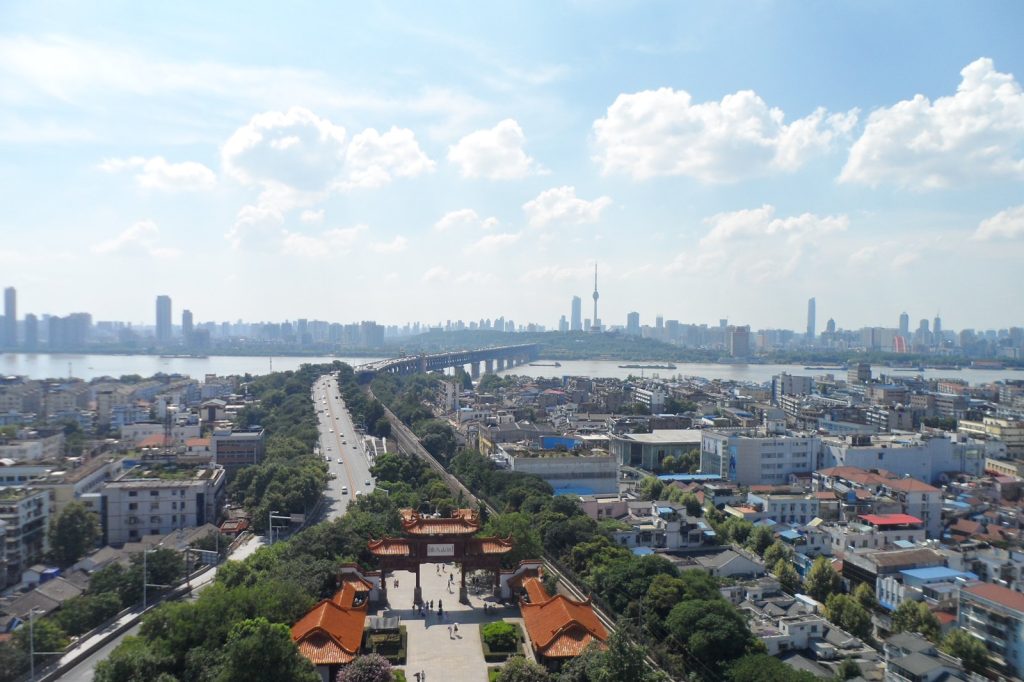
A city of more than 11 million people was effectively closed off on Thursday, January 23. From 10 a.m. local time, Wuhan stopped outgoing flights and trains and shut down buses, ferries and the rest of its public transport. China’s National Health Commission put the toll from the new coronavirus at 17 dead.
The city’s coronavirus command center announced the plan only hours ahead, through state media. Authorities said the steps were meant to “effectively cut off the transmission of the virus, resolutely curb the spread of the epidemic, and ensure the safety and health of the people.” The word used for the airport and rail closures was “temporarily,” but no end date was given. One would be announced later, officials said. Residents were urged not to leave unless they had special reasons. People had already been seen at a train station on Wednesday, trying to buy tickets out.
What the numbers said
The commission reported 571 confirmed cases and 17 deaths as of the end of Wednesday, plus another 393 suspected cases. All the deaths were in Hubei, the province of which Wuhan is the capital. Beyond mainland China, cases had turned up in Macao and Taiwan, and Thailand had confirmed four. The United States, South Korea and Japan had one each.
The American patient was a man in his 30s in Washington state, held for observation at Providence Regional Medical Center Everett. Dr. Chris Spitters of the Snohomish Health District said at least 16 close contacts had been identified. “The risk to the general public remains low,” he said.
Researchers were less certain about the real size of the outbreak. British researchers had estimated about 1,700 infections in Wuhan alone, and Imperial College London put the figure at 4,000 as of January 18. Fifteen of the confirmed patients were medical workers. In one case, 14 doctors and nurses who operated on a patient nobody knew was infected all caught the virus, and Chinese officials confirmed that it passes from person to person.
A hub, and a holiday
Wuhan is central China’s main industrial and commercial center. Air traffic data suggest about 30,000 people fly out of it on an average day, and its international airport links it to more than 60 overseas destinations. Tom Inglesby, director of the Johns Hopkins Center for Health Security, told The New York Times that a city this size has “tens of thousands of connections with the outside world that are coming and going all the time, bringing food and medicine.” He warned that “the complexity and downside cost of (the lockdown) will be potentially very high.”
The timing could hardly be worse. The Lunar New Year travel period, the largest annual human migration on Earth, had begun in mid-January, and hundreds of millions of people were about to go by train and plane. On Tuesday China had adopted Class A prevention and control measures, the category normally reserved for outbreaks like plague and cholera, which hand health officials sweeping powers to seal off areas and quarantine patients.
Li Bin, China’s national health commissioner, said around 2,200 people had been identified as close contacts of known carriers. Of the suspected cases, 715 patients had been discharged and more than 300 remained under medical watch. He told the public to avoid crowds and called on Wuhan and Hubei authorities to tighten rules on farm markets and wild animals. The virus has been linked to a Wuhan market that sold seafood and live animals, including wild species. Vice Premier Sun Chunlan, visiting Wuhan, said officials needed to be open about the spread.
The world responds
At the World Health Organization in Geneva, the emergency committee met Wednesday and decided it needed more information before declaring a “public health emergency of international concern.” It was due to take the question up again on Thursday. Director-General Tedros Adhanom Ghebreyesus called China’s actions so far “very strong” but asked Beijing for “more and significant measures to limit or minimize the international spread.”
Airports across Asia stepped up temperature screening, as did New York, San Francisco and Los Angeles. Seattle-Tacoma airport put up signs telling travelers from Wuhan to watch for symptoms. Screening has limits, though. Brendan Murphy, Australia’s chief medical officer, said: “You cannot absolutely prevent entry into the country of a disease like this. The incubation period is probably a week.” A patient in South Korea had developed a fever and muscle pains and been given cold medicine by a doctor in Wuhan, and was found to have the virus only after a check in Seoul.
Murphy also noted that early evidence pointed to a disease less severe than SARS or MERS. Nine deaths among more than 400 confirmed cases in China was a rate of 2.25% at the time of the CNN count, against roughly 10% for SARS, and almost all the dead were elderly people with preexisting conditions. The new virus belongs to the same family as SARS, which broke out in China in 2002 and 2003 and killed nearly 800 people.
Markets reacted at once. Hong Kong and Shanghai each fell about 1.5 per cent, and the yuan sank to a two-week low. China Airlines of Taiwan suspended its Wuhan and Hong Kong flights, and Britain joined Australia in advising against all but essential travel to Wuhan. The NIH said a vaccine would take more than a year.
Sources
- Wuhan coronavirus death toll rises, as city imposes transport lockdown | CNN
- Wuhan goes into lockdown as coronavirus death toll hits 17 | TTGmice
- China locks down Wuhan as coronavirus death toll reaches 17; around 600 affected




