
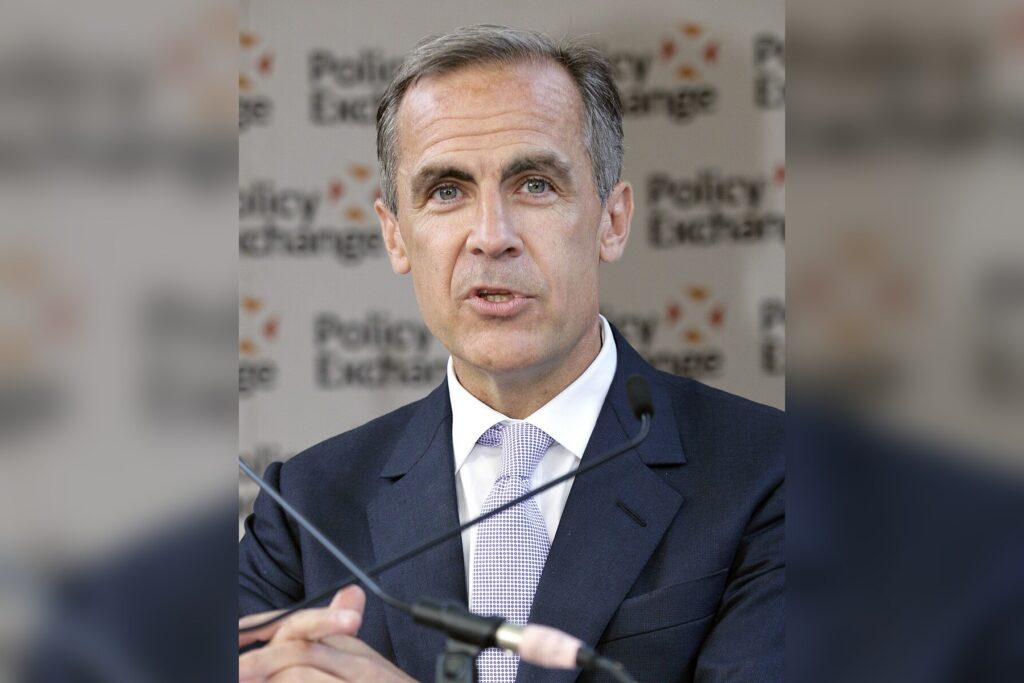
TORONTO, September 19 — The luxury hotel ballroom is being readied, the private dinner list is set, and by Monday night Mark Carney will be working a room unlike any he has worked before. Canada’s prime minister opens a two-day summit in Toronto on Monday and Tuesday aimed at pulling in more than 100 global investors who together oversee assets worth over C$100tn (about US$72tn; £53tn).
The guest list runs from sovereign wealth funds — the United Arab Emirates and Norway among them — to the chief executives of major finance houses, including BlackRock’s Larry Fink and Blackstone president Jon Gray. Carney, a former central banker who began his career at Goldman Sachs, will open the summit Monday with a private dinner and deliver a keynote address the following morning.
Closing the conference will be Stephen Harper, the former prime minister who appointed Carney to lead Canada’s central bank.
A pitch built on relationships
Over roughly 24 hours, Carney hopes to sell investors on Canada’s energy and resource sectors and on the country’s political stability, with an eye toward securing money for AI, defence, transportation and infrastructure projects across the country. The strategy is part of an effort to build what he has called a “more independent, more resilient economy” in the wake of the tariff war with the United States, which has escalated in recent weeks.
Carney’s personal relationships from his time in the top tiers of global finance are seen as central to the pitch. Goldy Hyder, president and chief executive of the Business Council of Canada, said: “These were personal invites in many cases, literally.
It’s not a group of politicians inviting financiers, it’s a group of former financiers and investment people inviting their former buddies.” Miville Tremblay, who worked with Carney for several years at the Bank of Canada and saw his skills during the 2008 global financial crisis, said: “He was way above everyone.
He understands finance very deeply. [He] would know when they are bluffing and when the understatement meant that something really bad was happening.” Speaking Sunday at a gala ahead of the summit, the prime minister said the investors “will come to ‘peer into our shop window’ because the world is looking at Canada differently.”
An 18-month-old rupture
The summit lands a little over 18 months after Carney said Canada’s relationship with the United States — built on more than a century of tight economic and military cooperation — was “over.” Since then, trade talks have collapsed, tariffs have gone back and forth, and President Donald Trump has talked of making Canada a “51st state.” Tremblay added that for the past 25 years, Canada’s trade ministers used its proximity to the US as a selling point, pitching that foreign investors should “invest in Canada because you’ve got an easy access to the US market.” He said: “This line doesn’t work anymore.” While the US-Canada trade war rumbles on, Bradley Saunders, North America economist for Capital Economics, said securing the future of the trade deal was the “really important thing” for Carney.
The Canada Pension Plan Investment Board, which will co-host the summit, recently cautioned that the scale and depth of investible opportunity is the country’s greatest weakness. “Global capital is looking for opportunity, but opportunity alone does not make a market investible,” said Naomi Powell, director of the CPP Investments Insight Institute.
Challenges also include a track record in Canada of lengthy approvals for projects. There is no guarantee the deep-pocketed investors will be easily sold, and Canada stands to lose the most from any permanent divorce with the US, the world’s largest economy. What to watch next: whether the private dinner and the keynote convert into commitments on AI, defence, transportation and infrastructure — and whether the trade file with Washington moves at all while the ballroom empties.




