
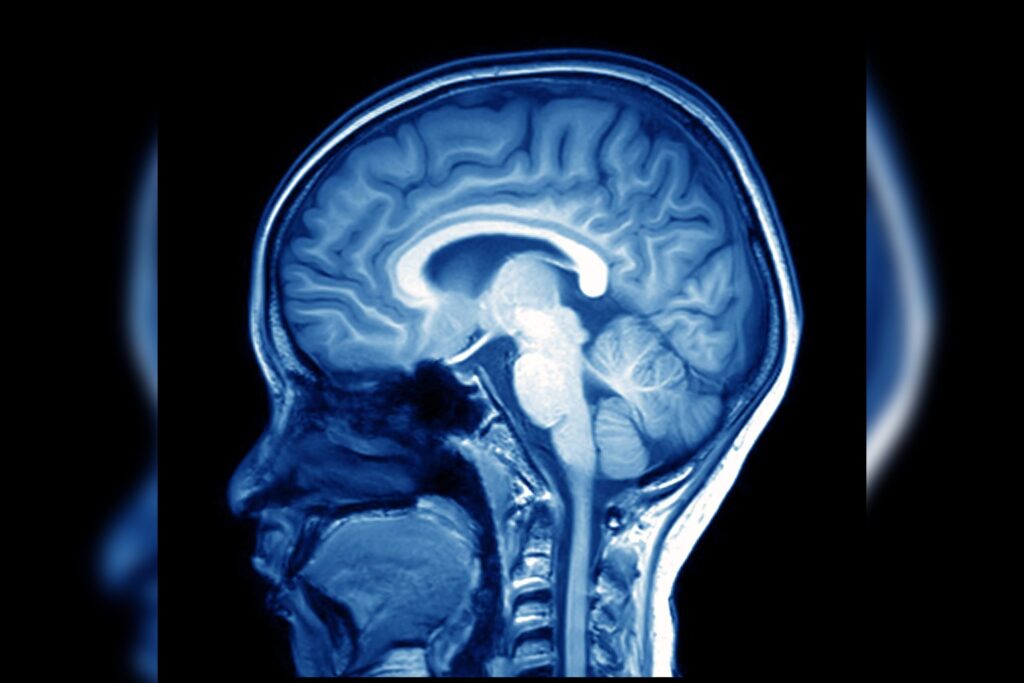
Eight percent. That is how much lower choline-containing compounds ran in the brains of people with anxiety disorders, compared with people without them, in a pooled analysis from UC Davis Health. The finding is a correlation, and the authors say so themselves.
The team combined 25 earlier brain imaging studies and compared 370 people with anxiety disorders against 342 without. All used proton magnetic resonance spectroscopy, an MRI-based method that reads the chemical makeup of brain tissue instead of producing a picture. The results appeared in Molecular Psychiatry.
Where the gap showed up
The drop was clearest in the prefrontal cortex, a region tied to planning, decision-making and emotional regulation. It appeared across generalized anxiety disorder, panic disorder and social anxiety disorder, which hints at a shared feature rather than something unique to one diagnosis. Other brain chemicals measured changed very little.
“This is the first meta-analysis to show a chemical pattern in the brain in anxiety disorders,” said co-author Jason Smucny, an assistant professor of psychiatry and behavioral sciences.
Richard Maddock, the senior author, had earlier found low choline in patients with panic disorder, which is why the larger analysis was run. He still expected less than what came back. “An 8% lower amount doesn’t sound like that much, but in the brain it’s significant,” he said.
Why choline matters
Choline supports cell membranes and brain functions including memory, mood and muscle control. The body makes only a little, so most has to come from food: egg yolks, beef liver, beef, chicken, fish, soybeans and milk. The team suggests that the constant fight-or-flight activity of anxiety could raise the brain’s demand for choline and draw down what is available.
Anxiety disorders affect about 30 percent of adults in the United States, Maddock noted, and many people do not get adequate treatment.
What patients should and should not do
Early findings suggest diet is worth a look, but nobody has shown that adding choline eases anxiety. “We don’t know yet if increasing choline in the diet will help reduce anxiety. More research will be needed,” Maddock said. He warned against trying to manage anxiety with large doses of choline supplements. Anyone considering a change should talk to a doctor first.
The encouraging part is how ordinary the first step is. Maddock suggested people with an anxiety disorder check whether they reach the recommended daily amount of choline, since previous research found most people in the U.S., children included, fall short. He added that some forms of omega-3 fatty acids, like those in salmon, may be especially good for getting choline to the brain.
Sources
- Meta-Analysis Links Low Brain Choline Levels to Anxiety Disorders
- Scientists find hidden brain nutrient drop that may fuel anxiety




