
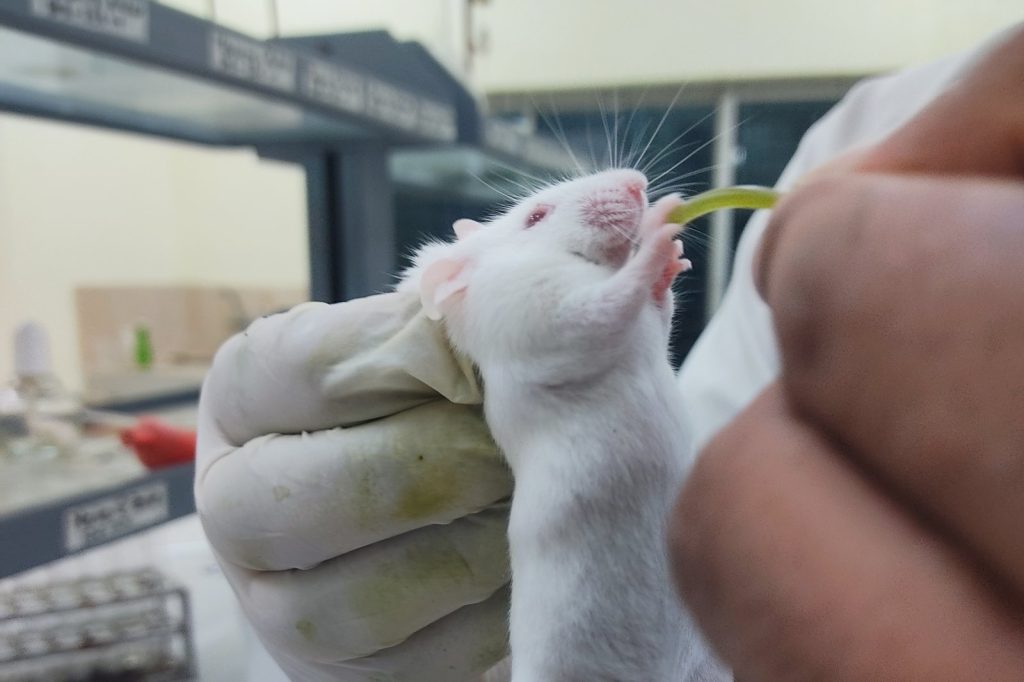
Three hundred compressions per session, two a second, five days a week. That was the routine researchers in China gave to the shinbones of mice and miniature pigs that had suffered brain injuries. The animals that got it did better.
It sounds like the wrong end of the body to treat. But the idea began with a clinical oddity. Doctors have long noticed that fractures can mend unusually fast in some people with serious brain injuries, and bone sometimes grows in soft tissue where it has no business being. An injured brain, in other words, can send messages that change bone. The team asked the reverse question: could bone send helpful messages back?
What happened in the mice
A device pressed gently and precisely on each animal’s shinbone. Treated mice finished movement tests faster and did better in a water maze that asked them to remember where a hidden platform sat. More of them survived severe injuries. Their damaged brain areas were smaller, more nerve cells stayed alive, and long-term inflammation dropped. Signs of new nerve cell formation rose too. The same treatment also helped mice recover after a stroke.
There was an obvious catch. Pressure on a leg touches muscle, nerves and circulation as well as bone, so how could anyone say the bone was responsible?
Cells that feel the squeeze
Bone is living tissue. Its cells sense force and release chemical messengers. The researchers zeroed in on a pressure sensor in those cells called PIEZO1, and when they switched it off in mice, compressing the shinbone no longer protected the brain in the same way.
A second test pointed the same direction. The team drew serum, the liquid part of blood, from mice whose bones had been compressed and gave it to injured mice that had not had the procedure. Those animals lost fewer neurons than controls. So the benefit was not just mechanical. Signals were travelling through the blood.
Several substances tied to nerve protection, lower inflammation and tissue repair rose after treatment. No single one seemed to do the job alone; they appeared to work together.
Pigs, and the limits
Mouse brains are small and simple, so the team moved to four-month-old miniature pigs, whose larger brains are a closer stand-in for a human one. Six injured pigs had their shinbones compressed and six did not. The treated group survived longer, scored better on behavioral tests, had smaller damaged areas and more surviving nerve cells, and showed more protective and repair-linked substances in their blood. Four weeks on, the shinbones, knee joints and cartilage showed no obvious damage.
The caveats are real. Only six pigs sat in each injured group. Every mouse and pig was male, so females may respond differently. The injuries were made under controlled laboratory conditions, while human brain injuries vary enormously in location and severity. Nobody yet knows how soon the pressure must start, how long the benefit lasts, or which blood signals matter most.
The researchers are clear that this does not mean anyone should squeeze a leg after a head injury. Traumatic brain injury is a medical emergency that needs professional care. If later studies confirm the link, scientists might look at devices that stimulate bone safely or at drugs built on the protective substances. Neither is ready for patients. The work appeared in Nature Neuroscience.




