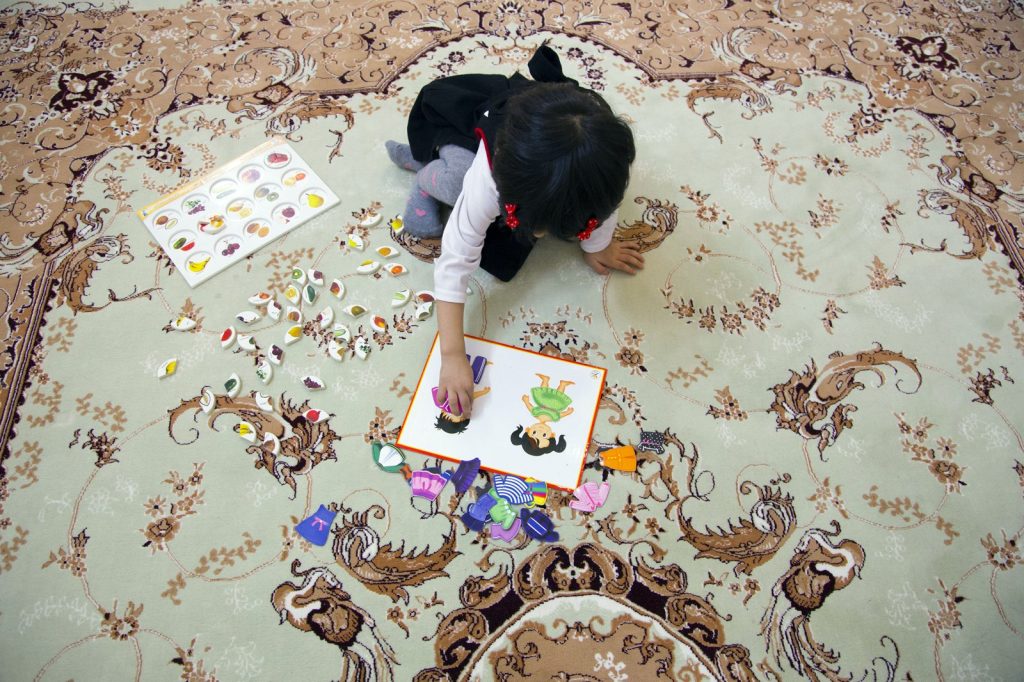
Imagine a girl who sits through a full autism assessment, does everything asked of her, and walks out without a diagnosis. For families, that is not a hypothetical. It is the human side of a problem researchers have been measuring for years.
The test at the centre of it is the Autism Diagnostic Observation Schedule, Second Edition, or ADOS-2, published in 2012 by Catherine Lord, Michael Rutter, Pamela DiLavore, Susan Risi, Katherine Gotham and Somer Bishop. It is a semi-structured, standardised assessment. Clinicians watch how a person communicates and interacts, how they play, and what restricted or repetitive behaviours show up. Each person is given only one of five modules, chosen by expressive language and age: a toddler module for children from 12 to 30 months, then Modules 1 to 4, running up to verbally fluent adults. A session takes 40 to 60 minutes. The publisher describes the revision as improving an instrument already viewed as “the gold standard”.
Where the test falls short
The trouble is who the instruments were first built around. Gina Rippon, a retired neuroimaging professor at Aston University’s brain centre in Birmingham, told CNN that until recently researchers took autism to be a condition of boys, and the diagnostic industry that grew up around that idea looked only at behaviour typical of them. “I like to say the diagnostic dice were loaded from the start,” she said. There is no biomarker, she pointed out, so everything rests on behaviours first catalogued in boys.
The numbers she cited are stark. A 2020 review found that referrals for an autism assessment go to boys ten times as often as to girls. A 2023 study suggested that as many as 80% of girls and women are first given another label, such as social anxiety, an eating disorder or borderline personality disorder, before anyone recognises them as autistic. Rippon’s own 2024 review of more than 120 studies found nearly 70% tested only men or included very few women, and women made up under a tenth of the 4,000 participants.
The ADOS itself was examined in San Francisco in 2017, at the International Meeting for Autism Research. Michael Sweeney, who works in Somer Bishop’s lab at UCSF, compared scores for 85 girls and 396 boys who already had a diagnosis. Among the girls, 15 percent fell short of the test’s threshold, against 6 percent of the boys. Age and verbal ability did not explain it. “Girls are scoring differently on the ADOS because of their sex,” Sweeney said.
Girls scored lower on restricted interests and repetitive behaviours, but not on social difficulties. Sweeney said the study could not tell whether girls truly show fewer of those behaviours or whether the test misses them.
A checklist for what the test overlooks
A second study pointed toward the second explanation. David Skuse and William Mandy, both of University College London, built an 18-item checklist, the Gendered Autism Behaviour Scale, for behaviours that may mark female presentations. They watched recordings of ADOS sessions with 22 boys and 22 girls aged 9 to 15. The girls said they were more affected by social acceptance and rejection, showed more anxiety and depression, and were likelier to talk about their interests in terms of relationships, particularly with animals. The boys tended to talk about puzzles or computer games.
“There’s a female phenotype that is quite different, even in the ADOS,” said Laura Hull, a graduate student in Mandy’s lab.
Girls also tend to internalise distress, and teachers can read the same behaviour differently. In experiments Rippon described, teachers shown identical scenarios were more likely to suggest a child was autistic and needed support when the child was called Jack than when she was called Chloe.
The authors of the 2017 studies drew one practical conclusion: clinicians should not rely on the ADOS alone, and the tests need adjusting to catch girls better.
Sources
- Autism Diagnostic Observation Schedule – Second Edition (ADOS-2) (NZCER)
- Diagnostic tests miss autism features in girls (The Transmitter)
- Why autism isn't diagnosed in girls and women (CNN)