
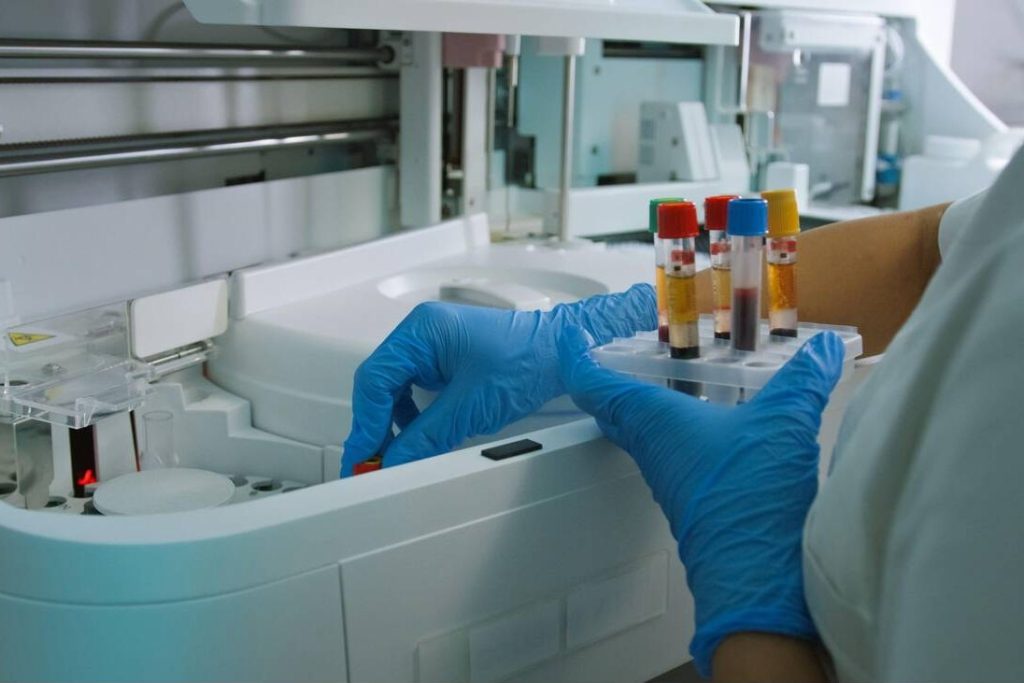
A blood draw in a doctor’s office now counts as colorectal cancer screening under American Cancer Society guidelines. The catch, spelled out in the same document, is that it counts only for people who turn down everything else.
The society released its updated guideline on May 27, in CA: A Cancer Journal for Clinicians. It keeps the start age of 45 for average-risk adults and continues screening through 75 for those with a life expectancy beyond 10 years. People at increased or high risk may need to begin earlier, be screened more often, or get specific tests. Over 85, screening should stop.
The blood test and its limits
The blood test, sold as Shield, looks for tumor DNA circulating in the blood. The guideline recommends it only for people who decline or do not complete the preferred tests. Against established stool tests, it showed lower sensitivity for both advanced precancerous lesions and stage I cancers, and studies predict it would do less to reduce colorectal cancer cases and deaths.
Colonoscopy stays the gold standard. And for any stool or blood test, a positive result needs a colonoscopy to finish the job, preferably within six months.
Two stool tests join the list
The update also covers two at-home options. One is the next-generation version of Cologuard, a multi-target stool DNA test that checks for specific DNA markers and hemoglobin. The other is ColoSense, a new multi-target test that looks for RNA markers and hemoglobin. Both show high sensitivity for colorectal cancer and moderate sensitivity for advanced precancerous lesions, and both are recommended every three years.
The rest of the menu is unchanged: high-sensitivity guaiac tests or FIT tests every year, flexible sigmoidoscopy or CT colonography every five years, and colonoscopy.
What the society said
“We need to increase our emphasis on colorectal cancer as a highly preventable disease as much as a treatable one,” said Dr. Robert Smith, the society’s senior vice president for early cancer detection science and senior author of the report. More tools, he said, should help “close the screening gap and catch more cancers at an earlier, treatable stage.”
The gap is large. More than 20 million Americans eligible for screening have not been tested as recommended, about 1 in 3 adults. The society also cites its own research showing colorectal cancer is now the top cancer killer of adults under 50. Detected early, the disease carries five-year survival of more than 90% in the US.
Dr. William Dahut, chief scientific officer, said: “No matter which test you choose, what’s most important is to get screened, and that includes underserved, rural, and minority populations.”
Lisa A. Lacasse, president of the society’s advocacy affiliate ACS CAN, added a practical warning. “Expanding screening options only matters if people can actually access them,” she said, and coverage and affordability remain among the biggest factors. ACS CAN will keep pressing for policies that remove out-of-pocket costs.
The authors repeat a line from earlier guidelines: the most effective test is the one the patient completes. The report comes with a patient page, and Dr. Deana Baptiste and Tyler Kratzer contributed to it.
Sources
- American Cancer Society Updates Colorectal Cancer Screening Guideline: Major Changes Emphasize Blood-Based and At-Home Stool Testing
- American Cancer Society updates colorectal cancer screening guidelines, adds blood test option | AHA News
- American Cancer Society adds blood test option to colorectal cancer screening guidelines




