
On 3 November 1906, a hall of psychiatrists in Tübingen heard the case of a woman who had entered the psychiatric hospital in Frankfurt five years before. Her name was Auguste Deter. She had lost her memory, and more besides.
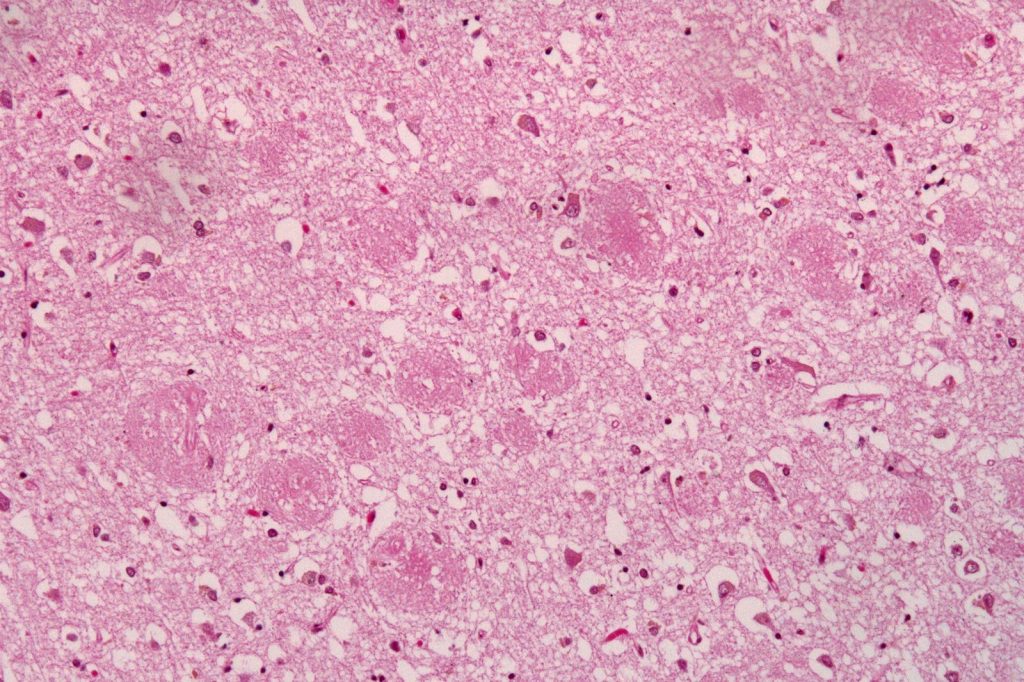
The physician who presented her, Alois Alzheimer, had examined her brain after her death. Ars Technica puts her age at death at 55, young for dementia. He found two things: plaques, already known from other dementia patients, and tangles of nerve fibres, which had not. His name stuck to the disease. And then, for roughly eighty years, almost nothing more was learned.
Amyloid takes centre stage
The next stage came from chemistry. In 1984 the peptide that makes up the plaques, amyloid-β, was identified. The link to Down’s syndrome gave it a push: people with that condition carry an extra copy of chromosome 21, which holds the gene for amyloid’s precursor protein, and they often develop similar plaques and later dementia. Three years later, in 1987, a mutation in the same gene turned up in patients with an inherited form of the disease. Tau, the protein at the core of the tangles, was characterised soon after.
The story that followed seemed obvious. Something cut amyloid-β from its precursor and it clumped; stop the clumping or clear the deposits, and you stop the disease. As the century turned, that amyloid hypothesis had real momentum. In 1999 Elan Pharmaceuticals in California, with Dale Schenk leading the researchers, showed that antibodies raised against amyloid-β could strip plaques out of mouse brains. A paper in Nature in 2006 seemed to add a specific toxic form of the peptide to the case.
Where it broke down
Mice, however, are not people. Elan tried its vaccine in patients with mild to moderate disease and had to halt the trial of 360 patients when a number developed brain inflammation. Ars Technica describes what came after as trial after trial that failed to stop or reverse the illness, whichever part of the amyloid pathway was targeted, often with serious side effects.
The doubts are now sharper. Matthew Schrag, a neuroscientist at Vanderbilt University, is the researcher who found doctored images in that 2006 Nature paper. He notes that amyloid is everywhere in the diseased brain, yet many patients carry heavy deposits and have normal cognition. “Biology is trying to tell you that there’s clearly more to the story,” he told STAT. Alberto Espay of the University of Cincinnati looked at 51 anti-amyloid trials run from 2002 to 2022 and found that in 80% of them the drug did reduce amyloid-beta deposits. Only one drug, Aduhelm, ever beat placebo, and STAT calls even that a dubious case.
Zaven Khachaturian, who once directed Alzheimer’s research at the US National Institute on Aging, described how the idea hardened into dogma. “It became gradually an infallible belief system,” he said in 2019. Critics argue it left alternative lines of research starved of grants.
Today the disease can be diagnosed in the living, through PET scanners and blood biomarkers, something Alzheimer himself could never have done.
Sources
- The history of Alzheimer's disease (Nature Milestones)
- What's the deal with Alzheimer's disease and amyloid? (Ars Technica)
- How the 'amyloid mafia' took over Alzheimer's research (STAT)




