
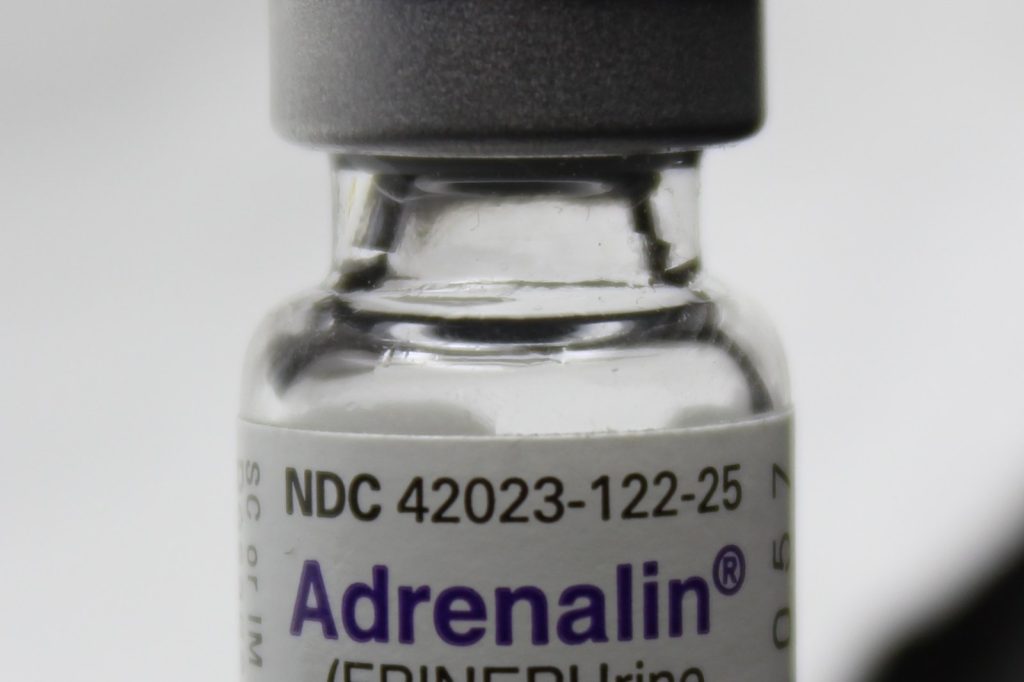
Picture a parent whose child has just eaten something that sets off a severe allergic reaction. Breathing gets hard, the throat starts to swell. The next five minutes can decide the outcome, and the thing that helps most is a hormone the body already makes.
Australia’s healthdirect service says the rule is simple. If anaphylaxis is suspected, reach for an adrenaline autoinjector straight away and ring triple zero (000) for an ambulance. The injection goes into the large muscle of the thigh. It works by quickly reducing swelling in the throat and keeping blood pressure from falling too low. If the person still cannot breathe easily 5 minutes later, a second injection from a new packet is advised.
The patient is not finished after that. Anyone treated at home or outside a hospital should still go to one, even when they feel much better, because doctors will monitor them for at least 4 hours.
The body’s own alarm
Epinephrine, which most of the English-speaking world calls adrenaline, is a hormone and a neurotransmitter. Cleveland Clinic explains that the adrenal glands, the hat-shaped glands on top of each kidney, make and release it. Its main job is as a hormone. The nerves make very little of it.
When the brain senses danger, it sets off what doctors call the acute stress response, better known as fight-or-flight. The pupils widen. Skin turns pale as blood is diverted toward the muscles. The heart pumps harder and faster, and blood pressure rises. The liver converts stored glycogen into glucose for energy, and breathing becomes deeper and faster. Cleveland Clinic’s example of a trigger is escaping a growling dog, or just giving a speech at school or work.
The effects arrive within minutes, healthdirect notes. Pain is dulled, so a person can keep running even when hurt. Once the danger has passed, the glands stop releasing the hormone, but trembling, a fast heartbeat or a pale face may linger for around 20 minutes.
As a medicine
Synthetic epinephrine treats more than allergies. Cleveland Clinic lists cardiac arrest and CPR, where it stimulates the heart, along with septic shock, where it raises blood pressure. It also opens the airways in asthma, and helps keep the pupils dilated during eye surgery. For anaphylaxis, the clinic calls it the first-response treatment.
People who live with both asthma and allergies face a particular risk. Healthdirect says asthma raises the chance of anaphylaxis, and that someone with both who suddenly has trouble breathing should use the autoinjector first. Devices such as EpiPen or Anapen carry an expiry date, and it pays to replace them in time.
Too much of a good thing
Excess is dangerous. Cleveland Clinic warns that an overdose of epinephrine can end in stroke or death, with high blood pressure on the way. Over time, persistently high adrenaline raises the chance of a heart attack or stroke, healthdirect says. Too little is rare, but it would leave the body unable to react properly under stress.




