MIAMI, November 16, 2026 — The Food and Drug Administration has declined to approve ivonescimab, a first-of-its-kind bispecific antibody, for patients with EGFR-mutated non-small cell lung cancer. The agency concluded that the drug’s ability to delay disease progression, without a statistically significant improvement in overall survival, did not support a favorable benefit-risk profile for approval.
A Single Molecule With Two Targets
Ivonescimab is a novel bispecific antibody engineered to bind two distinct pathways in a single tetravalent molecule. It targets PD-1, a checkpoint protein that cancer cells exploit to evade the immune system, and VEGF, a protein that tumors hijack to build the blood vessels they need to grow. By combining immunotherapy and anti-angiogenesis in one agent, the drug is designed to attack the tumor on two fronts simultaneously: releasing the brakes on T-cells while starving the malignancy of its blood supply.
No PD-1 x VEGF bispecific antibody has been approved in the United States. The drug was invented in China by Akeso Biopharma and brought to the U.S. market by Summit Therapeutics, a Florida-based company that acquired the rights outside of China in 2022. Ivonescimab has been available to patients in China through Akeso since 2024 for this same indication.
How the Dual Mechanism Works Against Cancer
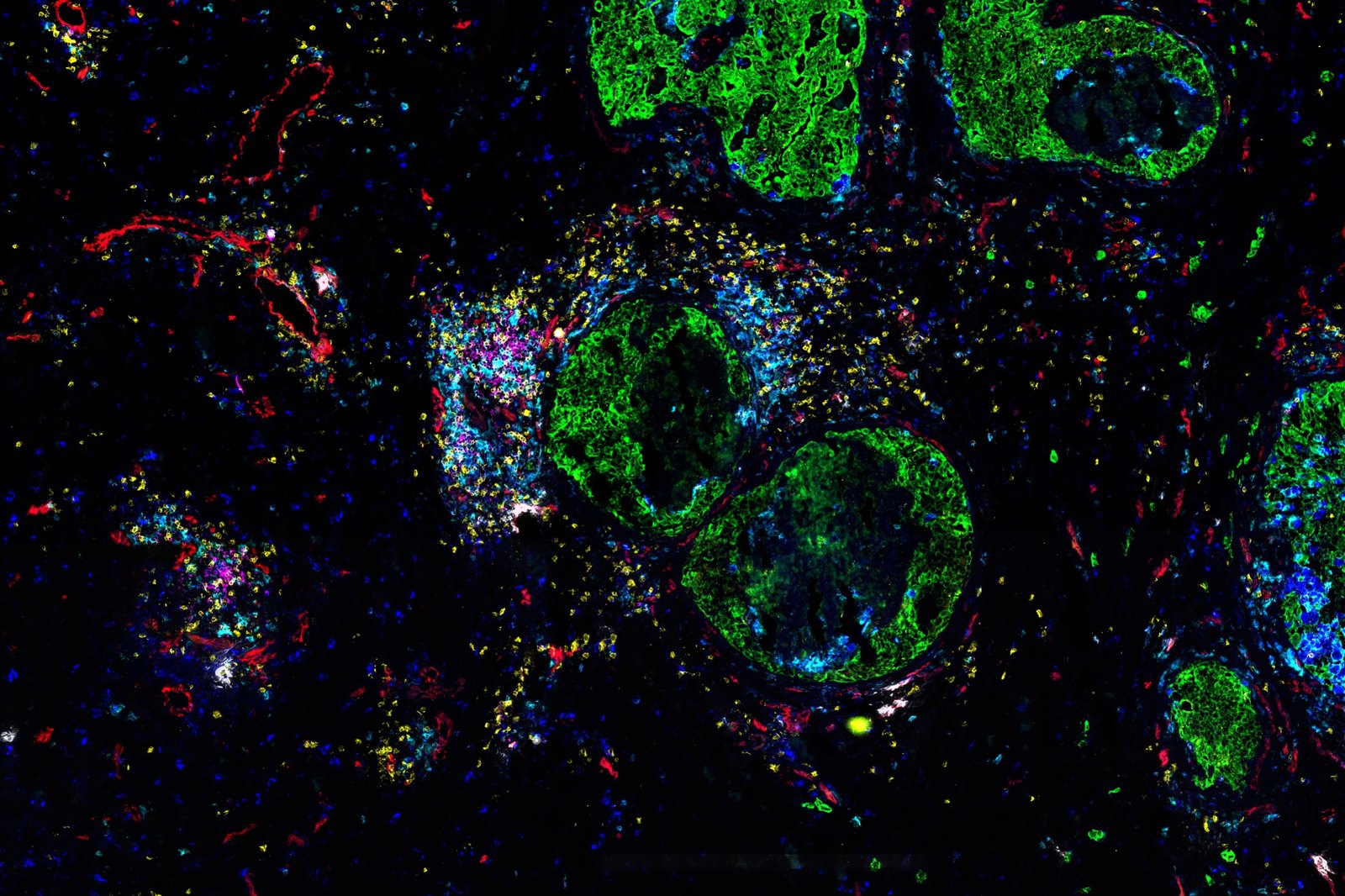
The scientific rationale rests on the interplay between the immune system and the tumor’s vasculature. Tumors that grow unchecked often create a chaotic, leaky network of blood vessels. This abnormal vasculature can act as a physical barrier, preventing immune cells from reaching the cancer. By inhibiting VEGF, ivonescimab aims to “normalize” these vessels, potentially allowing T-cells — unleashed by the PD-1 blockade — to infiltrate the tumor more effectively. The hypothesis is that the combination works better together than either approach alone, a synergy the bispecific format is built to deliver.
From Chinese Labs to a Global Trial
The development path reflects a shifting landscape in oncology drug development. After its invention at Akeso, the drug moved into global testing under Summit’s stewardship. The pivotal evidence came from the HARMONi trial, a randomized, double-blind Phase 3 study that enrolled 438 adults across 114 centers in North America, Europe, and Asia. Patients had unresectable, locally advanced or metastatic nonsquamous NSCLC with an EGFR sensitizing mutation. All had seen their disease progress on a third-generation EGFR tyrosine kinase inhibitor, a standard targeted therapy, and carried an ECOG performance status of 0 or 1, meaning they were generally active and able to care for themselves.
Participants were assigned 1:1 to receive either ivonescimab at 20 mg/kg or a placebo, both in combination with carboplatin and pemetrexed chemotherapy, administered every three weeks for four cycles. The trial design allowed enrollment regardless of PD-L1 expression levels, a biomarker often used to predict response to immunotherapy alone.
The Numbers Behind the Decision
The trial met its primary endpoint for progression-free survival with a result that turned heads. Median PFS by independent review reached 6.8 months for the ivonescimab combination versus 4.4 months for chemotherapy alone. The hazard ratio stood at 0.52 with a 95% confidence interval of 0.41 to 0.66 and a P-value of less than .0001. The combination also showed a higher objective response rate and a longer duration of response.
However, the overall survival data at the primary analysis did not reach statistical significance. The FDA’s complete response letter stated that substantial evidence of effectiveness was not established without a statistically significant OS improvement. The agency determined that the PFS benefit, in the absence of that survival advantage, did not support a positive benefit-risk profile.
What the Setback Means for Patients and the Pipeline
For families navigating EGFR-mutated lung cancer after a TKI failure, the news closes a door that many hoped would open. Summit’s leadership, including Chairman Robert Duggan and Co-CEO Dr. Maky Zanganeh, expressed disappointment for patients awaiting additional options. Dr. Zanganeh, a cancer survivor herself, framed the mission as deeply personal, emphasizing that behind every diagnosis is a person and a family hoping for more time.
Summit argued that the OS result reflected study enrollment factors rather than a lack of efficacy, noting that no FDA-approved regimens have demonstrated a statistically significant OS benefit in this specific setting. The company pointed to post-hoc analyses showing a consistent OS trend with a hazard ratio of 0.76 across the full population, Asian patients, and Western patients with longer follow-up. Summit pledged to continue developing ivonescimab across multiple indications, including several other types of NSCLC, though it did not outline specific next steps for the EGFR-mutated indication in its Sunday release. Ivonescimab remains investigational in the United States and Europe.
Talk to your oncologist about the treatment options available for your specific situation.
Sources
- FDA Does Not Approve Ivonescimab for EGFR-Mutant NSCLC | Targeted Onc – Immunotherapy, Biomarkers, and Cancer Pathways
- FDA rejects lung cancer treatment ivonescimab from Summit Therapeutics
- Summit Therapeutics Provides Update Regarding Ivonescimab Biologics License Application
- Summit's PD-1xVEGF rejected by FDA in lung cancer
- F.D.A. Rejects Closely Watched Lung Cancer Drug From China
Photo: Yulia Kolosova (CC BY 4.0)