
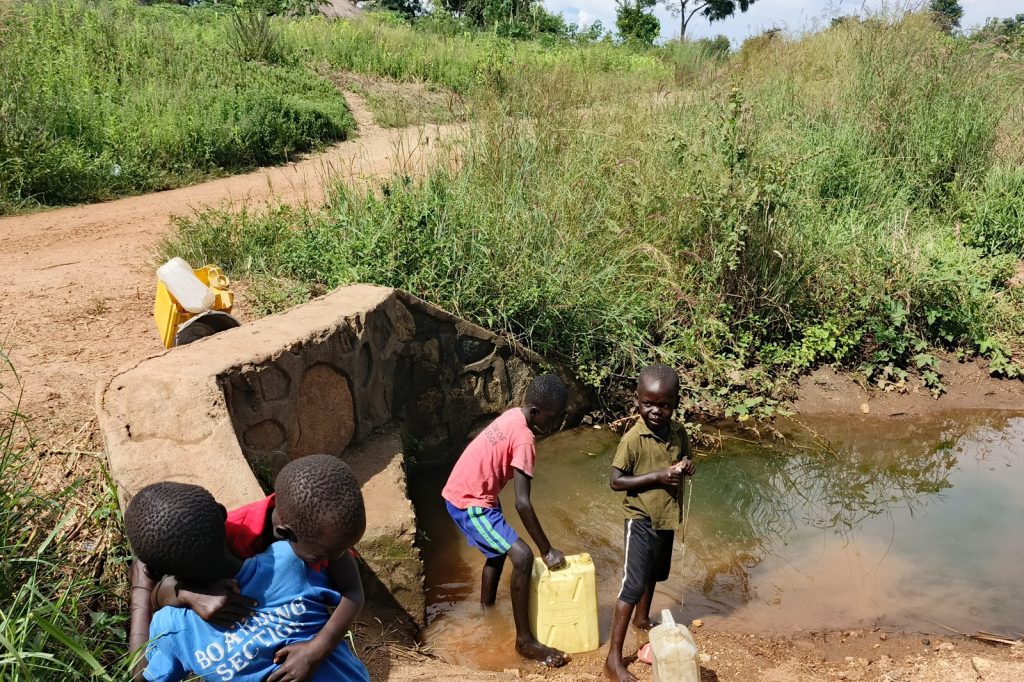
Picture a girl walking to a stand pipe with a bucket, again, before school. For 2.2 billion people, that kind of daily errand is the reality of water, according to the World Health Organization’s latest count. That is how many people in 2022 had no safely managed drinking-water service, meaning water on their own premises, available when needed and free from contamination.
The other 6 billion did. The gap is not one big failure but a ladder of smaller ones. WHO breaks the 2.2 billion down: 1.5 billion have a basic service, an improved source within a round trip of 30 minutes. Another 292 million have a source that takes longer than that to reach. 296 million draw from unprotected wells and springs. And 115 million collect untreated water straight from lakes, ponds, rivers and streams.
What dirty water does to a family
At least 1.7 billion people in 2022 used a drinking-water source contaminated with faeces, WHO says, and that contamination poses the greatest risk to water safety. The diseases it carries include diarrhoea, cholera, dysentery, typhoid and polio. WHO estimates that contaminated water causes roughly 505 000 diarrhoeal deaths each year. Counting poor sanitation and hand hygiene too, some 1 million people die annually from diarrhoea, and the deaths of 395 000 children under 5 could be avoided each year if those risks were addressed.
Where water is hard to get, handwashing slips down the list of priorities, which makes illness more likely. Insects that carry dengue fever can breed in household drinking-water containers, WHO notes, and the simple step of covering them can reduce that breeding and some contamination at home.
The burden falls on women and children first. UNICEF points out that they are often the ones sent to collect water, and when the source is further away the trip eats time that would otherwise go to school. Girls in particular lose out when schools themselves have no water. UNICEF also warns that when water is scarce, sewage systems can fail and the threat of cholera surges, while water itself becomes more expensive.
A shortage that is growing
UNICEF puts it in scale. Four billion people, almost two thirds of the world, face severe water scarcity for at least one month each year. Over two billion live in countries where supply is inadequate. By 2040, roughly 1 in 4 children worldwide will be living in areas of extremely high water stress, and some 700 million people could be displaced by intense water scarcity by 2030.
The same shortage hits livelihoods. The World Bank notes that water-dependent sectors such as agriculture, energy and industry support around 1.7 billion jobs worldwide. Cape Town’s 2018 drought cost 20,000 agricultural workers their livelihoods. In the other direction, the bank says every dollar spent on water supply and sanitation in Africa generates a $7 return, and that meeting the water and sanitation Sustainable Development Goals requires $131-$140 billion annually, nearly double current public funding levels.
A new coalition, Water Forward, was launched at the 2026 World Bank Group Spring Meetings. It brings together governments, development banks, private companies and philanthropies around a goal of water security for over one billion people by 2030.
Sources
- Drinking-water (fact sheet)
- Water scarcity: Addressing the growing lack of available water to meet children's needs
- Water Resources overview




