
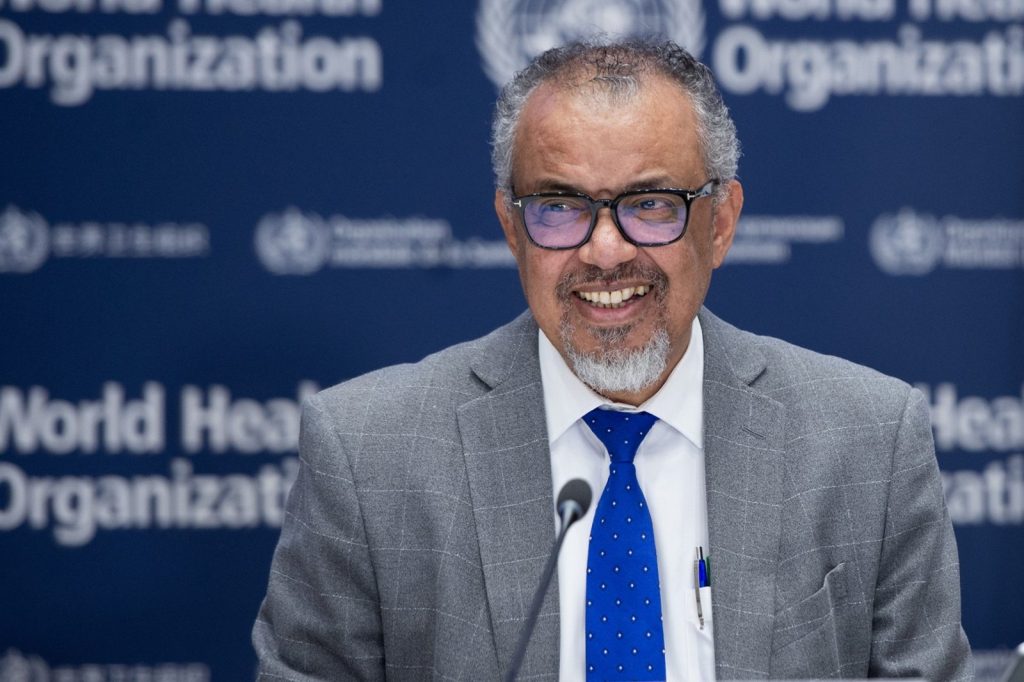
Mpox is again the subject of a global health emergency. On a Wednesday, WHO Director-General Tedros Adhanom Ghebreyesus announced the declaration, the highest level of alarm under international health law.
The trigger was clade Ib, a deadlier strain that had been confined to the Democratic Republic of Congo. It had reached four previously unaffected countries in Africa, and the WHO convened its emergency committee. Independent experts met virtually and advised Tedros on how severe the outbreak had become.
“The detection and rapid spread of a new clade of mpox in eastern DRC, its detection in neighboring countries that had not previously reported mpox and the potential for further spread within Africa and beyond is very worrying,” he said. “The emergency committee met and advised me that the situation constitutes a public health emergency of international concern. I have accepted that advice.”
What the label means
A public health emergency of international concern, or PHEIC, is the WHO’s status for “extraordinary events” that pose a risk to other countries through international spread and may need a coordinated international response.
The committee chair, Dimie Ogoina, said the vote was unanimous. “What we have in Africa is the tip of the iceberg,” he said. “We are not recognizing, or we don’t have the full picture of, this burden of mpox.”
A day earlier, the Africa Centres for Disease Control and Prevention had declared a public health emergency of continental security. It was the first such declaration since the agency began in 2017.
The numbers
Since the start of the year, more than 17,000 mpox cases and more than 500 deaths have been reported across 13 African countries, the Africa CDC said, rating the outbreak a “very high risk event”. The DRC has more than 14,000 of those cases and accounted for 96% of confirmed cases this month.
The WHO first declared mpox a global emergency in July 2022, when the disease began spreading in Europe and North America, and ended that declaration in May 2023. Clade II caused the 2022 outbreak. Clade Ib causes more severe disease. Tedros pointed out that the world faces “several outbreaks of different clades in different countries with different modes of transmission and different levels of risk”.
Money, vaccines and the US
The WHO has approved the Emergency Use Listing process for both mpox vaccines and drawn up a regional response plan that needs $15 million. It has released $1.5 million from its Contingency Fund for Emergencies. Tim Nguyen of the WHO Health Emergencies Program said half a million vaccine doses are in stock, with another 2.4 million possible by the end of the year. The DRC and Nigeria will receive them first, according to Dr. Abdou Salam Gueye, the African regional emergency director.
In the United States, the CDC says no clade I case has been found. It is monitoring the situation, and Washington has offered funding, help and vaccines to the WHO and the DRC. Last week the agency advised Americans exposed to mpox or at high risk to get vaccinated.
Vaccines are only part of the answer, the WHO said; stopping spread also takes surveillance, diagnostics and research to close “gaps in understanding”. Dr. Maria Van Kerkhove, who directs the WHO’s Department of Epidemic and Pandemic Preparedness and Prevention, said: “We can stop transmission of mpox with a concerted effort using multiple approaches.”




