
From Park to No-Go Zone and Back
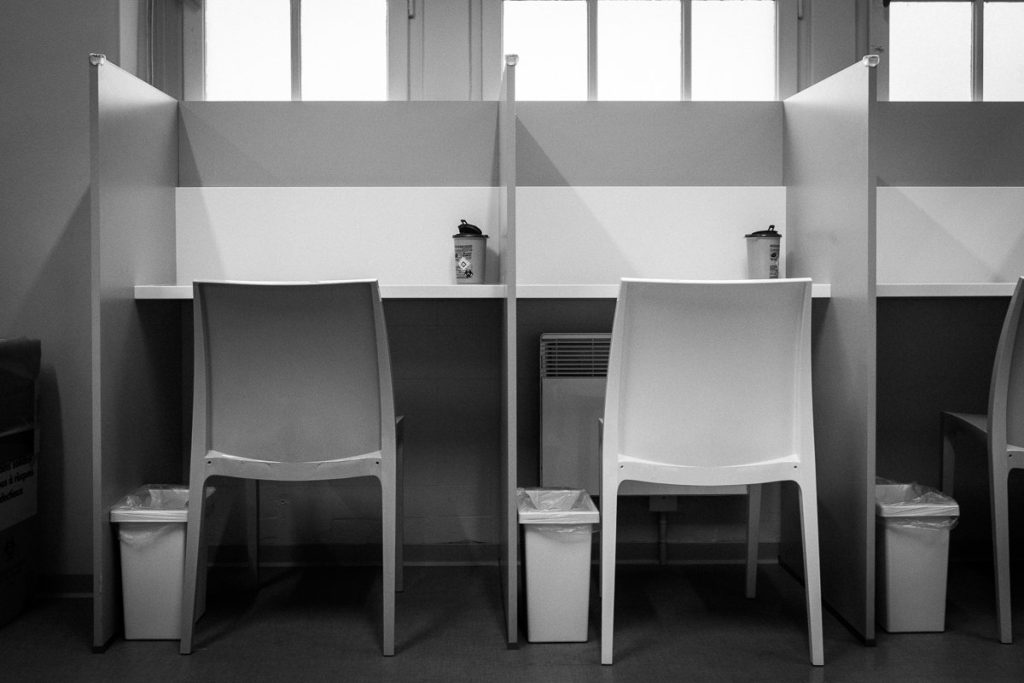
Supervised consumption sites emerged in Canada as a public health response to a deadly overdose crisis that began in the mid-2010s. Vancouver opened the country’s first such facility in 2003 under a federal exemption. By the late 2010s, cities including Calgary had established their own sites, arguing they prevented overdose deaths and connected drug users to health services. A supervised consumption site is a legally sanctioned health facility where people use pre-obtained drugs under the watch of trained staff who can intervene if an overdose occurs. The harm reduction model prioritizes keeping users alive long enough to seek treatment, rather than requiring abstinence as a condition of service.
In Alberta, these sites became a political flashpoint. Residents in neighborhoods near such facilities reported a surge in public drug use, discarded syringes, theft, and other disorder. They pleaded with city council for action, while advocates maintained that the problems predated the facilities and that closing them would push addiction deeper into the shadows.
A Political Battle Over Harm Reduction
The provincial government under Premier Danielle Smith shifted course, favoring a recovery-oriented model that funds treatment beds and outreach teams over supervised consumption. This closure marks a concrete outcome of that policy shift. Rick Wilson, the Alberta government’s point man on the addiction file, sees the change differently from critics of the old approach. “I think we are moving totally in the right direction. I’m confident we’re on the right track,” Wilson said. “I’ve seen with my own eyes if you get these people the right help they can turn their lives around.” He says he does not want to enable addicts in a death spiral but wants to help them get out of a life of despair and off drugs.
Lots of effort and money is now going to places where people can get clean and stay that way, one day at a time. Teams will also go out to deal with addicts on the streets. Without the drug consumption site, Wilson believes the neighborhood will recover much of what it lost.
For a community that has endured more losses than wins, and more to rail against than applaud, the closure is good news they will grab while it lasts. Wilson is feeling good about the direction. A local scribbler who chronicled the chaos from Day One agrees.
The Road to Recovery
What this means for families across the region is a chance to reclaim public spaces that had become no-go zones. Closer to home, it means kids can play without counting syringes, and folks can sit in the park and eat their lunch in the sun again. But the neighborhood has been through enough false starts. What to watch next is whether the promised recovery teams and treatment options actually reach the people who need them. The debate over how best to balance public order with public health is far from settled. For others, the closure raises the question of where people who use drugs will go and whether the province’s treatment network can meet the need. On this day, however, there is a sense that the right track has finally been found.




