
Two of the biggest players in AI policy stayed out of the Paris summit’s final text. The United States and the United Kingdom declined to sign a declaration that more than 60 countries put their names to on Tuesday.
The statement, signed by France, China and India among others, pledges an “open”, “inclusive” and “ethical” approach to developing the technology. TechCentral counted 61 signatories, including Japan, Australia and Canada. Semafor reported that the European Union signed as well. The text commits to narrowing digital divides by making AI more accessible, and to keeping it “transparent”, “safe” and “secure and trustworthy”. It lists sustainability for people and the planet as a further priority, and records that, for the first time at one of these summits, AI’s appetite for energy was on the agenda.
Why London and Washington held back
Downing Street said the UK “hadn’t been able to agree all parts of the leaders’ declaration” and would “only ever sign up to initiatives that are in UK national interests”. A spokesperson added that talks were “pretty live”, and described the French, who had been closely involved with London throughout, as one of its closest partners on AI.
The American position was set out earlier in the day by Vice President JD Vance. Too much regulation, he told delegates, could “kill a transformative industry just as it’s taking off”. He called AI “an opportunity that the Trump administration will not squander” and said pro-growth policies should take priority over safety. Europe’s leaders, he suggested, should look at the technology “with optimism, rather than trepidation”. Semafor noted that he attacked what he called “excessive regulation” by the EU.
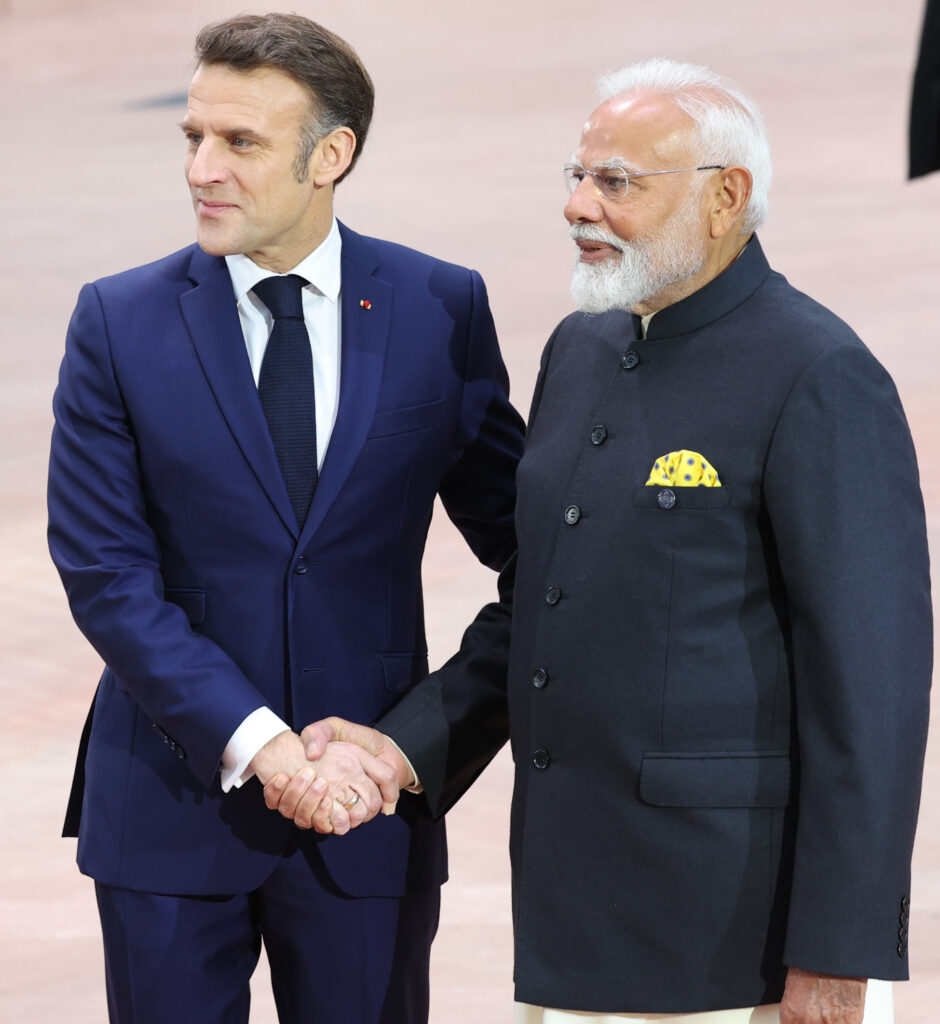
The host disagreed in public. “We need these rules for AI to move forward,” President Emmanuel Macron said. Two days before, in a televised interview, he had warned that heavy regulation without matching investment would weaken Europe in the AI race, adding: “We should not be afraid of innovation.” He also said that he and Indian Prime Minister Narendra Modi, the summit’s co-host, wanted to work with China and the US “but also not depend on anyone”.
Money and a change of tone
The gathering opened on Monday at the Grand Palais, a day after Macron announced that France would invest €109 billion ($112.59 billion) in AI over the coming years. An Elysee adviser also pointed to a planned foundation with a budget of about €2.5 billion, funded by governments, businesses and philanthropy, though the adviser did not confirm the size. Google’s Sundar Pichai and OpenAI’s Sam Altman were among the executives due to speak, and China sent Vice Premier Zhang Guoqing.
This was the third meeting in the series. The earlier ones, in the UK and South Korea, centred on security threats and scientific cooperation. In Paris, according to TechCentral, political and industry figures spent more time on bureaucratic obstacles and big infrastructure bets. Anne Bouverot, Macron’s AI envoy, put it in her opening speech as a need to move “from science fiction to the real world of applications of AI”.
Not everyone accepted the British decision. Andrew Dudfield, head of AI at the fact-checking group Full Fact, said that by refusing, the government “risks undercutting its hard-won credibility as a world leader for safe, ethical and trustworthy AI innovation”. London had hosted the first AI Safety Summit under then prime minister Rishi Sunak in November 2023.
Sources
- UK and US refuse to sign international AI declaration (BBC)
- High-stakes AI summit begins in Paris as countries compete for influence (The National)
- More than 60 countries sign AI declaration at Paris summit (TechCentral)
- US, UK refuse to sign AI safety declaration at international summit (Semafor)




