The United States officially lost its measles elimination status on November 17, 2026, after the Pan American Health Organization determined the virus had circulated continuously for more than a year. For unvaccinated Americans, that designation changes the daily calculus of risk: in any outbreak, more than 90 percent of exposed, unvaccinated people will contract the disease.
How Measles Spreads and Why the Unvaccinated Are Now at Extreme Risk
Measles moves through the air on droplets from a cough or a sneeze. An infected person is contagious four days before the telltale rash appears and remains so for four days after it fades. That window of silent spread makes it one of the most transmissible pathogens known. According to the World Health Organization, nine out of ten unvaccinated people who share a room with an infected person will come down with the illness. With the virus now circulating in 46 states and Washington, D.C., the odds of that exposure have risen sharply for families in undervaccinated communities.
Symptoms, Complications, and Why Measles Is Deadlier Than Most Realize
The illness begins 10 to 12 days after exposure with a high fever that can top 104 degrees Fahrenheit, a hacking cough, runny nose, and inflamed eyes. Tiny white lesions called Koplik spots appear inside the mouth before a rash spreads from the face downward. But the misery of the acute phase is only part of the story. The virus attacks the immune system itself, leaving patients vulnerable to secondary infections. Six percent of cases develop pneumonia, the most common cause of death in young children. Diarrhea strikes 8 percent, and ear infections affect 7 percent. In roughly one in 1,000 infected children, the virus triggers brain inflammation that can lead to permanent neurological damage or death. Before the vaccine arrived in 1963, the United States saw four million cases a year, 48,000 hospitalizations, and 400 to 500 deaths annually.
The Science of Herd Immunity—and Why U.S. Vaccination Rates Have Collapsed
Measles requires a community vaccination rate above 95 percent to interrupt transmission. That threshold held for decades after elimination was declared in 2000. But the national MMR rate among school-age children fell to 92.4 percent in the 2025–2026 school year, according to the CDC, with 39 states reporting coverage below the herd-immunity line. The erosion accelerated after the COVID-19 pandemic, fueled by vaccine misinformation amplified on social media and by political figures. HHS Secretary Robert F. Kennedy Jr., a longtime vaccine skeptic, has been cited by public health leaders and by PAHO as a driver of that hesitancy. Dr. Bruce Farber of Northwell Health called the loss of elimination status a “failure of public health” rooted in the spread of misinformation about a safe, effective vaccine.
Current Outbreak Numbers: 5,400+ Cases, 10 Deaths, and a 35-Year High
As of November 12, the CDC had confirmed 5,412 cases in 2026—19 times the 285 cases reported in all of 2024 and the highest annual total since 1991. Forty-three separate outbreaks have been documented. State health departments have reported 10 deaths this year, including a child in New York and seven in Pennsylvania; the CDC has confirmed six measles-related deaths. New York alone has recorded 281 cases, up from 48 in 2025. The Pan American Health Organization’s Regional Monitoring Commission found that the same measles genotype had circulated uninterrupted for more than 12 months, meeting the definition of endemic transmission. Bolivia and Mexico lost their elimination status at the same time, signaling a regional crisis driven by similar immunization gaps.
What Unvaccinated Individuals Should Do Now to Protect Themselves
The MMR vaccine remains the only way to acquire immunity without risking the disease. It is typically given in two doses, the first between 9 and 18 months of age. For unvaccinated adults and children exposed to a known case, public health authorities can offer post-exposure prophylaxis within 72 hours, but the window is narrow. Because the virus induces prolonged immunosuppression, survivors face heightened susceptibility to other infections for months afterward. There is no specific antiviral treatment; care focuses on hydration, fever control, and treating secondary bacterial infections. PAHO praised U.S. surveillance and outbreak response but stressed that closing vaccination gaps is the critical step to regain elimination status.
The Role of Misinformation and Public Health Failures in This Resurgence
The PAHO commission tied the resurgence directly to vaccine misinformation, noting the influence of federal health leadership that has downplayed measles risks and sent mixed messages on vaccination. Funding cuts to state and local health departments under the Trump administration have weakened outbreak response capacity. Michael Bloomberg, the former New York City mayor and public health philanthropist, called the loss of status a “damning indictment of federal health leadership.” HHS Secretary Kennedy said Tuesday he continues to recommend MMR vaccination as the most effective prevention and that HHS would stop the outbreaks. Dr. Paul Offit of Children’s Hospital of Philadelphia put it plainly: “Measles has now established a foothold in this country. It’s endemic.”
Sources
- Measles
- The U.S. Lost Its Measles Elimination Status, Marking A Step Back for Public Health
- PAHO urges countries to step up efforts to stop measles outbreaks and move towards elimination in the Americas
- Measles no longer considered eliminated in U.S., health agency says, after two-year surge in cases – Newsday
- US Loses Measles Elimination Status as Michael Bloomberg Slams Trump Admin – Newsweek
- The U.S. Has Lost its Measles-Elimination Status. Here's What That Means
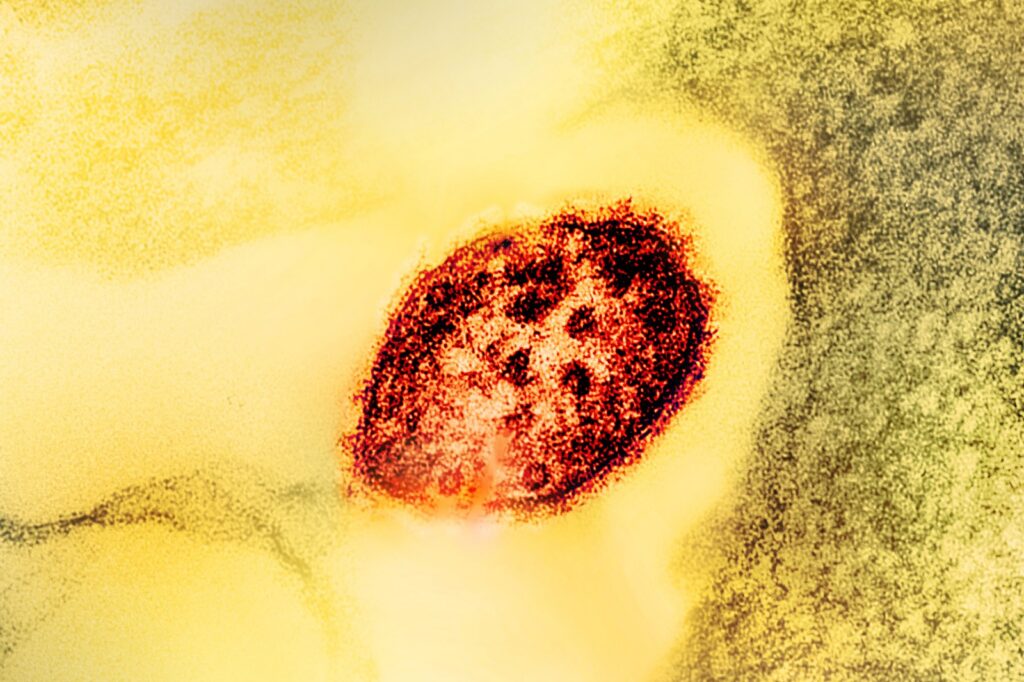
Photo: NIAID (CC BY 2.0)