
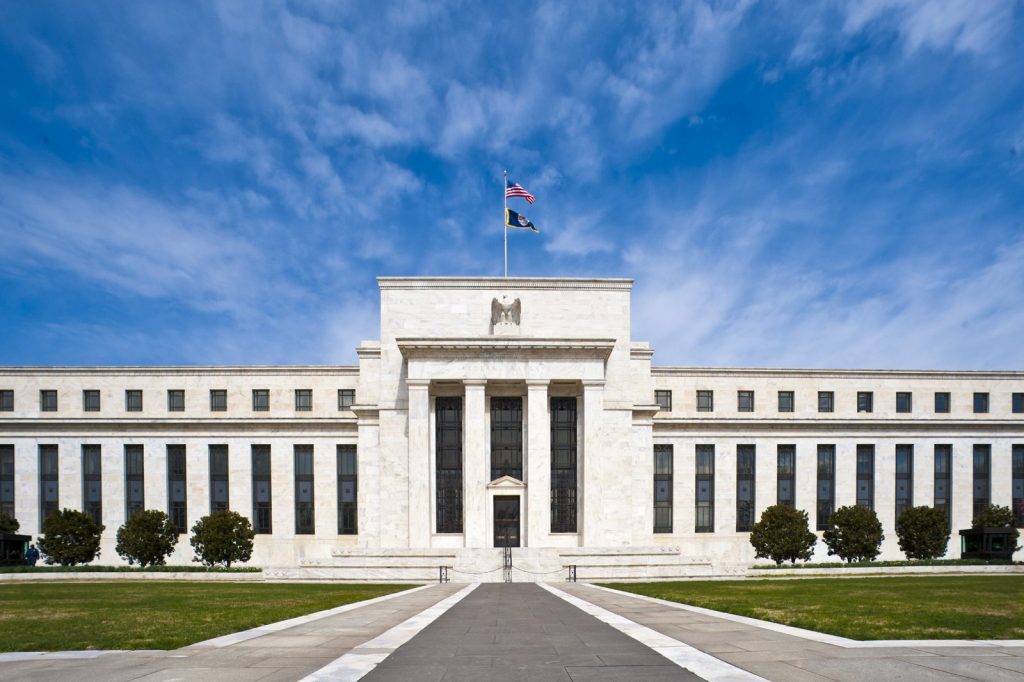
In April 2022 one currency appeared on a side of 88% of all foreign exchange trades: the US dollar. The Bank for International Settlements, in its 2022 Triennial Survey, said that share was unchanged over the past decade. Total FX trading that month averaged $7.5 trillion a day, up 14% from 2019.
The runner-up was far behind. The euro, second most actively traded, slipped marginally to 31%. The renminbi rose to 7%, making it fifth, a climb from the eighth rank it held three years earlier. The dollar also sat on one side of 44% of global turnover in interest rate derivatives, where average daily dollar turnover was $2.3 trillion.
What a reserve currency is for
The Council on Foreign Relations defines a reserve currency as foreign money held by a country’s central bank or treasury as part of its official reserves. Governments hold it to absorb shocks, buy imports, meet debt payments and steady the value of their own currency. Many cannot borrow or buy abroad in their own money, because so much trade is still settled in dollars. A central bank can also step in to support its currency. The CFR’s example is Brazil’s central bank using reserves to bid up a falling real.
The dollar leads that field. The IMF recognizes eight major reserve currencies, and the dollar is the one held most often. Per the CFR, it accounts for 59 percent of the world’s foreign exchange reserves. The CFR’s July 2023 tally put China far ahead with more than $3 trillion, and Japan second with around $1.1 trillion. The United States itself held roughly $244 billion in reserve assets.
Reserves tend to sit in government bonds. The US treasury market is by far the world’s largest and most liquid, which means holders can sell out of it in a moment of need. Brad W. Setser of the CFR put it this way: “It’s more helpful to think of U.S. treasuries as the world’s leading reserve asset.” The market for US debt totals roughly $22.5 trillion, and, as Setser noted, no other country has anything comparable.
How it got here
The status dates to the years after World War II. At the 1944 Bretton Woods Conference, forty-four countries agreed to found both the International Monetary Fund and the World Bank, and currencies were tied to the dollar, which was itself convertible to gold at $35 per ounce. By the 1960s the United States lacked the gold to cover the dollars circulating abroad. President Richard Nixon suspended gold convertibility in August 1971. A few months later ten leading developed countries struck the Smithsonian Agreement to salvage the system, but it was short-lived, and by 1973 mostly floating exchange rates were in place.
The dollar survived the change. The CFR credits a steady value, the sheer size of the US economy and American geopolitical heft, and notes that oil and other major commodities are mostly bought and sold in dollars. Some major economies, Saudi Arabia among them, still peg their currencies to it.
The strain is real. Sanctions are part of the reason. The CFR explains that dollar trades are handled by correspondent banks that hold accounts at the Fed, so cutting a country off from the dollar makes business hard. After Russia invaded Ukraine in 2022, US sanctions froze $300 billion of Russian central bank holdings. Some countries have since sought other currencies, a drift called de-dollarization. Yet the CFR’s assessment is that few serious contenders have emerged, so no replacement looks likely soon.
Sources
- Triennial Survey shows global foreign exchange trading averaged $7.5 trillion a day in April 2022, OTC interest rate derivatives $5.2 trillion | Bank for International Settlements
- The Dollar: The World’s Reserve Currency | Council on Foreign Relations




