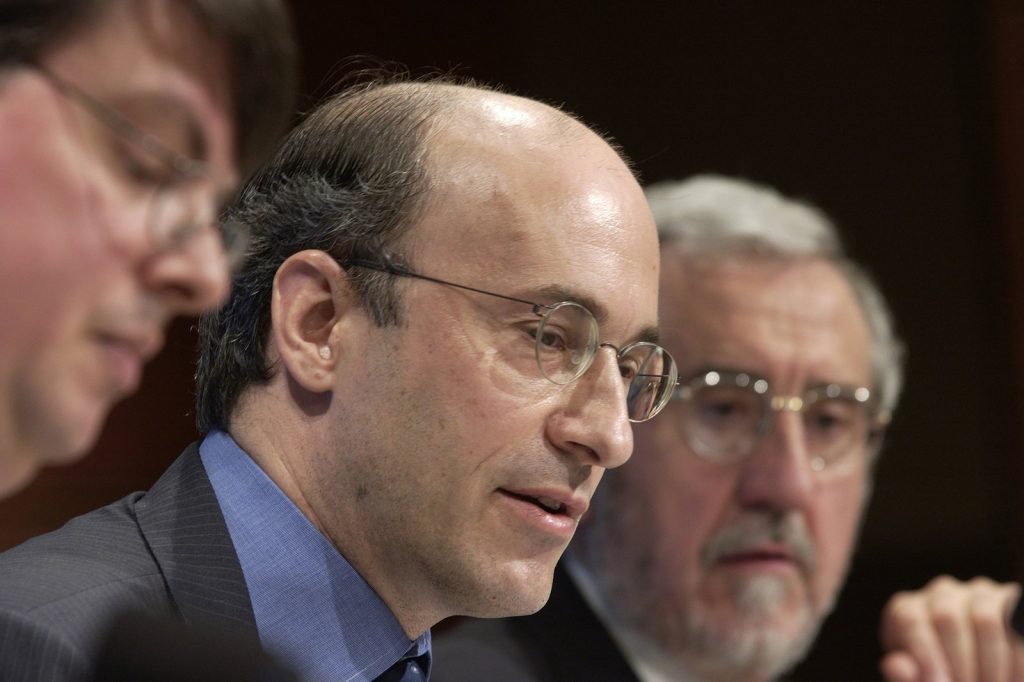
The deficit is running at 6% to 7% of GDP in peacetime, and nobody in Washington is building a coalition to shrink it. That is Kenneth Rogoff’s starting point. The Harvard economist, a former chief economist at the International Monetary Fund, spoke to CNBC from Jackson Hole on August 28, and he did not soften the forecast.
“I think we will have some kind of debt crisis, financial repression, inflation, maybe something more dramatic,” he said. “We might not be the only ones the U.K., France, Belgium. But yeah, I think it’s coming not because it has to happen, but that’s true about every debt crisis.”
The bottom line, in his telling: the bill lands on higher earners. “The lower income people don’t have anything to worry about,” Rogoff said. “And the higher income people added to your tax bill.”
Where the money would come from
Rogoff pointed to two levers. Life expectancy is up, and the United States is one of the few countries that has not adjusted its old-age benefits. “The low hanging fruit is life expectancies are longer,” he said. He also expects higher taxes to be part of the fix, because, as he put it, American taxes “aren’t that high compared to the rest of the world.”
The threat, he argued, comes from home. “The biggest threat over, say, the next 5 to 10 years is from the inside, that we just aren’t prepared to balance our budget. We’re rich. We were always rich. We could afford to.”
He cited Argentina’s 2001 default as proof that fiscal outcomes are political. In 247Wall St.’s account, the default came because the political cost of adjusting outweighed the cost of breaking the contract.
What the bond market says
By the numbers, investors are already charging for the risk. The 10-year Treasury yield sits near 4.7% and the 30-year is above 5.2%. The 30-year TIPS yield is near 3%. Rogoff named the AI buildout, geopolitical tension and global populism as forces pushing yields up, and said the Treasury’s debt buyback program shifts long-term debt management from the Fed toward the Treasury.
He also took a swipe at the academic consensus. At the conference, he said, there was “an overwhelming thrust” toward the idea of permanently low rates, including a paper arguing real rates will keep falling. He thinks that view has aged badly.
Financial repression, as 247Wall St. explains it, means the government holds interest rates below inflation so that the real value of its debt shrinks while savers and bondholders absorb the loss. Real yields are still positive, with the 10-year real yield at 2.4%, so the analysis concluded the country is not in that regime yet.
The Fed funds upper target sits at 3.75%. Real GDP growth was 1.5% in the second quarter of 2026, after 2.1% in the first, hardly a pace that closes a deficit of 6% to 7% on its own.
Sources
- A Harvard Economist Says the Debt Reckoning Is Coming and Names Who Pays for It
- A Harvard Economist Says the Debt Reckoning Is Coming and Names Who Pays for It