
LONDON, July 10 — The story of money is, at its heart, a story about trust. For those involved in the long arc of human trade, from a farmer in ancient Mesopotamia to a trader in a modern cryptocurrency exchange, the question has always been the same: What can I hand over today that someone else will accept tomorrow? What unfolded across millennia is a steady evolution, each stage driven by the same practical pressures.
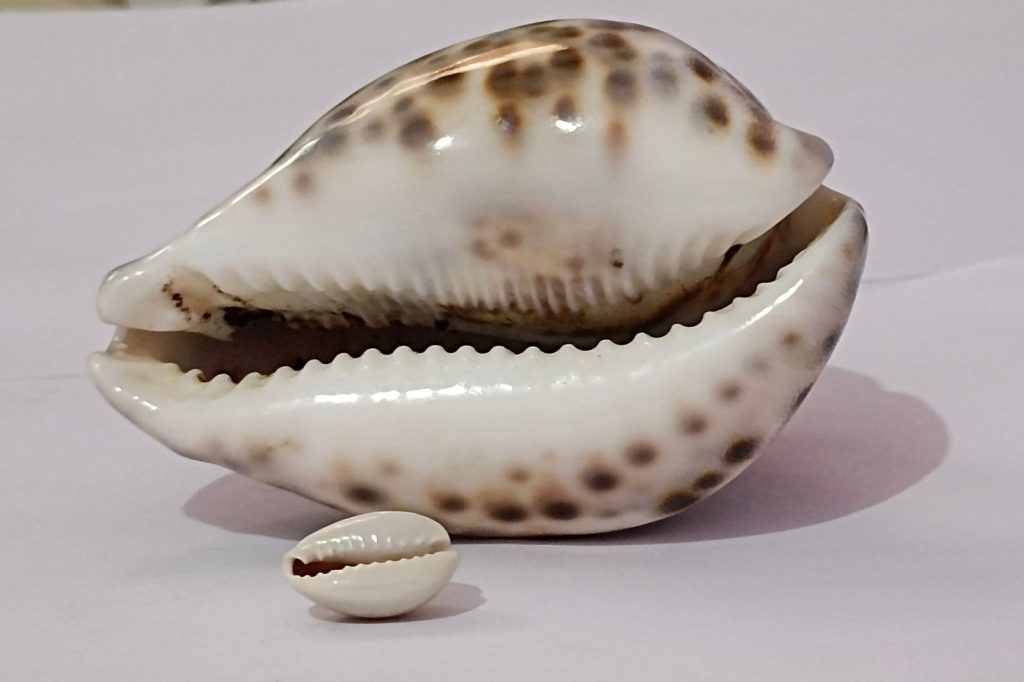
The earliest forms of money were commodities—objects that held intrinsic value. Cowrie shells, used in Africa and Asia as early as 1200 BCE, were small, durable, and difficult to counterfeit.
In ancient Mesopotamia, cattle and grain served the same purpose, though a cow, for all its worth, was not easy to carry to market or make change from. The first great leap came around 600 BCE in the kingdom of Lydia, in what is now western Turkey. There, metallic money—gold and silver coins—emerged.
These were a revolution in portability and divisibility. A coin could be stamped with an official mark, guaranteeing its weight and purity, and it could be split into smaller units for smaller transactions.
For the first time, a medium of exchange carried the authority of a state. Centuries later, in China during the Tang Dynasty, which ruled from 618 to 907 CE, a new idea took hold: representative money. These were paper certificates that could be redeemed for gold or silver.
A merchant could travel with a slip of paper rather than a heavy chest of coins, and the trust was placed not in the paper itself but in the promise that it could be exchanged for something real. That promise eventually gave way to fiat money. By 1971, the world had largely abandoned the gold standard, and governments began issuing currency backed by nothing but their own decree.
The US dollar, the British pound, the euro—these are fiat currencies. They work because people believe they will work.
They are, in a very real sense, an act of collective faith. The most recent chapter is digital money. Electronic bank transfers have been routine for decades, but the first consumer credit card, introduced by Diners Club in 1950, marked the beginning of a shift away from physical cash.
Then came Bitcoin in 2009—a cryptocurrency that exists only in code, with no central bank or government behind it. It is the purest expression yet of money as a system of trust, because there is nothing to hold but a digital signature.
Each of these stages—commodity, metallic, representative, fiat, digital—aimed to solve the same set of problems. A medium of exchange must be portable enough to carry, divisible enough for any transaction, durable enough to last, and trusted enough that both buyer and seller accept it. The forms have changed dramatically, from cowrie shells to computer code, but the function remains constant.
For those involved in the everyday act of buying and selling, the evolution of money is not an abstract history lesson. It is the story of how a farmer’s grain became a trader’s coin, which became a banker’s note, which became a digital entry on a screen. Each step made exchange easier, faster, and more efficient—but each step also required a new kind of trust.
As of July 2026, that evolution continues. The question that now hangs over the medium of exchange is whether digital currencies, both government-issued and decentralized, will become as trusted as the gold coins of Lydia or the paper notes of the Tang Dynasty.
The answer will not come from any single innovation, but from the slow, collective judgment of millions of people deciding what they are willing to accept in trade.




