
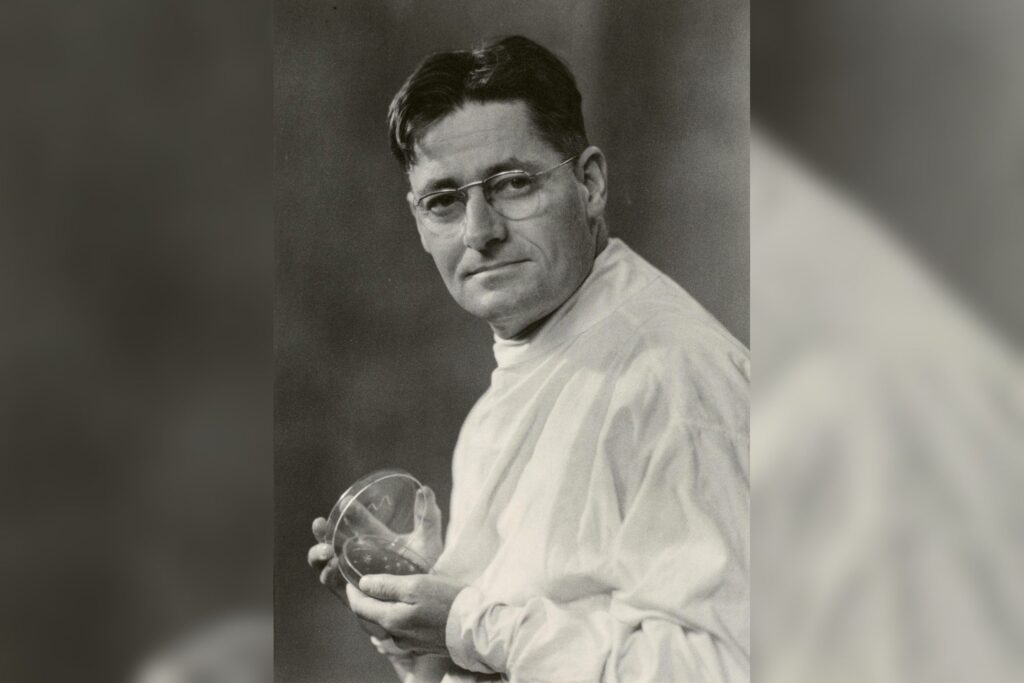
LONDON, July 11 — Ernst Boris Chain, the German-born biochemist who developed the extraction process for penicillin, remains a pivotal figure in the history of antimicrobial therapy, according to the historical record. Chain, who lived from 1906 to 1979, shared the 1945 Nobel Prize for his work on the antibiotic. He was part of the Oxford team led by Australian pathologist Howard Florey that purified penicillin, which had been discovered by Alexander Fleming in 1928.
Fleming was knighted in 1944; Florey was made Baron Florey in 1965. The record shows that Chain’s specific contribution was the extraction process that made penicillin viable for medical use.
A fellow biochemist, Norman Heatley, devised the continuous extraction method and was later awarded an honorary doctorate by Oxford in 1990. Heatley lived from 1911 to 2004.
Broader context of antibiotic development
The development of penicillin sits within a wider strategic context of antimicrobial research. Selman Waksman, a Ukrainian-born American biochemist who lived from 1888 to 1973, coined the term “antibiotic.” Waksman discovered streptomycin in 1943 and earned the 1952 Nobel Prize for that work. His graduate student, Albert Schatz, who lived from 1920 to 2005, was the co-discoverer of streptomycin but later disputed credit for the discovery.
Officials have confirmed that the dispute over attribution remains a noted episode in the history of antibiotic research. These scientists, according to the statement of historical fact, laid the foundation for modern antimicrobial therapy.
The work of Chain and his contemporaries established the principles that still guide the development of infection-fighting drugs today.
Legacy and ongoing relevance
Chain’s extraction process was the technical breakthrough that turned Fleming’s laboratory observation into a practical medicine. Without that process, penicillin would have remained a scientific curiosity rather than becoming the first widely used antibiotic. The strategic significance of this work became evident during the Second World War, when penicillin production was scaled up to treat wounded soldiers.
The development of streptomycin by Waksman and Schatz followed shortly after, expanding the range of treatable bacterial infections. The record shows that these discoveries created the foundation for modern antimicrobial therapy.
Researchers continue to build on the methods Chain developed for isolating and purifying biologically active compounds. The challenge of antibiotic resistance has renewed interest in the history of these discoveries. Understanding how Chain and his colleagues solved the problem of extraction and purification may offer lessons for researchers seeking to develop new classes of antibiotics. Consult your doctor for medical advice.




