
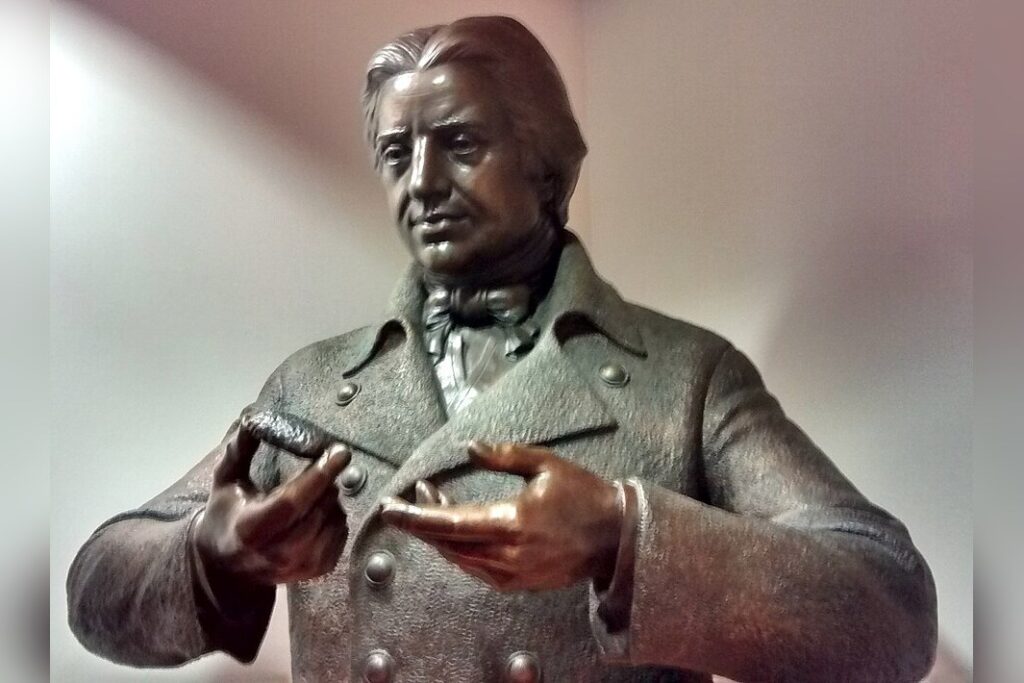
On 14 May 1796, Edward Jenner made two small cuts in the arm of James Phipps, the eight-year-old son of his gardener, and rubbed in pus scraped from a cowpox blister. The boy ran a fever and felt uneasy. He did not get sick with the real thing.
The blisters had come from the hands of Sarah Nelmes, a milkmaid who had caught cowpox from a cow named Blossom. Her hide now hangs on the wall of the St George’s Medical School library in Tooting, London. On 1 July, Jenner injected Phipps with variolous material, the routine method of immunisation then, and again no disease followed.
Proof, not just a hunch
Others had noticed the link before him. A Dorset farmer, Benjamin Jesty, vaccinated his wife and two children with cowpox during the 1774 smallpox epidemic. Jenner’s contribution, as the American physician Donald Hopkins put it, was that he “then proved that they were immune to smallpox.” He also showed the protective pus could pass from person to person, not just from cattle. He tested the idea on 23 more subjects, including his own 11-month-old son Robert.
The old story that he got the idea from milkmaids’ clear complexions is still widely repeated, though it appears to be a myth.
In 1798 he published his Inquiry into the Variolae vaccinae known as the Cow Pox. The words vaccine and vaccination come from Variolae vaccinae, “pustules of the cow,” his term for cowpox. Smallpox was brutal in his day. It killed around 10% of the global population, and as many as 20% in towns and cities where it spread more easily.
Slow acceptance
The medical establishment deliberated at length before accepting his findings. In 1802 Parliament granted him 10,000 pounds, and five years later another 20,000 after the Royal College of Physicians confirmed that vaccination worked widely. In 1840 the British government banned variolation, the use of smallpox itself to induce immunity, and offered cowpox vaccination free.
The Spanish Balmis Expedition, from 1803 to 1806, carried the vaccine to the Americas, the Philippines, Macao and China. Jenner wrote that he could not imagine “an example of philanthropy so noble, so extensive.” Napoleon, at war with Britain, had his French troops vaccinated, awarded Jenner a medal and, at his request, freed two English prisoners of war.
The man behind it
Jenner, born in Berkeley, Gloucestershire, in 1749, was apprenticed to a surgeon at 13 and later trained under John Hunter at St George’s Hospital in London. He earned his MD from the University of St Andrews in 1792. His study of the nesting cuckoo, which showed that the newly hatched chick pushes the host’s eggs out of the nest, won him election to the Royal Society in 1788. In 2002 the BBC named him among its 100 Greatest Britons. He died in 1823.
Vaccines remain one of medicine’s most carefully studied tools. If you have questions about vaccination for yourself or your children, talk to your doctor, who can advise you based on your own health. Consult your doctor for medical advice.




