
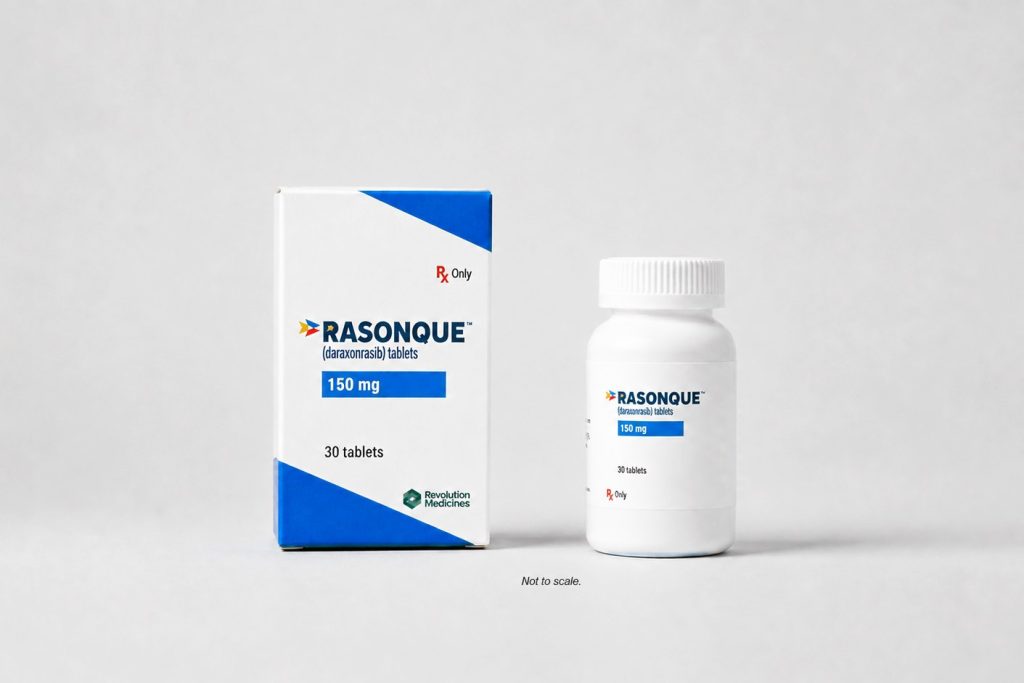
Daraxonrasib roughly doubled overall survival against chemotherapy in a Phase 3 trial: 13.2 months versus 6.7. In August 2026 the FDA approved the once-daily pill, sold as Rasonque, for adults with metastatic pancreatic adenocarcinoma. Eligible patients have had at least one prior systemic therapy or are not candidates for multiagent treatment.
The trial numbers
The study, RASolute 302, randomly assigned 248 patients to daraxonrasib and 252 to chemotherapy. It met all primary and key secondary endpoints. The hazard ratio for death was 0.40, a 60% reduction in risk. Progression-free survival also improved, at 7.2 months against 3.6. Results were presented at the American Society of Clinical Oncology meeting and published May 31 in the New England Journal of Medicine.
The Pancreatic Cancer Action Network (PanCAN) called the results “jaw-dropping.” Its chief scientific and medical officer, Anna Berkenblit, said they represent “the most significant advance we have ever seen in pancreatic cancer.” More than 91% of trial patients had a KRAS mutation. Too few lacked one to say whether the drug works for them, so PanCAN says more study is needed there.
How it works
RAS proteins are GTPases that switch on when bound to GTP and normally switch off again. Mutations can lock them on, driving uncontrolled growth. A mutated RAS protein appears in about 90% of pancreatic ductal adenocarcinomas, which is why the target matters here. For decades RAS was considered undruggable.
Daraxonrasib, developed by Revolution Medicines, inhibits all three key RAS proteins: KRAS, HRAS and NRAS. It first binds a chaperone molecule, cyclophilin A. That creates a surface able to grip active RAS, forming a tri-complex that blocks signaling and limits cancer growth.
Side effects
Rash is the main one. About 86% of trial patients reported it, and roughly 14% of those cases were severe. Stomatitis, or mouth sores, came second at 54%, with 12% severe. Other effects include diarrhea, fatigue, nausea and split fingertips. Only about 1% of patients on daraxonrasib stopped treatment over severe side effects, compared with roughly 11% on chemotherapy. The company also reported that pain and quality of life deteriorated later for patients on the drug.
What is next
Before approval, the drug was available through an expanded access program for eligible adults who had no satisfactory alternative and could not join a trial. It had a breakthrough therapy designation in 2025, and the FDA reviewed it under the Commissioner’s National Priority Voucher program. Further Phase 3 studies are testing it as a first treatment for metastatic disease, including with gemcitabine and nab-paclitaxel, and after surgery for resectable cancer.
PanCAN recommends biomarker testing for all pancreatic cancer patients, since the results can point to other treatments and open the door to trials. Anyone considering the drug should talk with their oncologist.
Sources
- Daraxonrasib – Wikipedia
- First RAS Inhibitor Extends Survival in Previously Treated Metastatic Pancreatic Adenocarcinoma: What You Need to Know




