
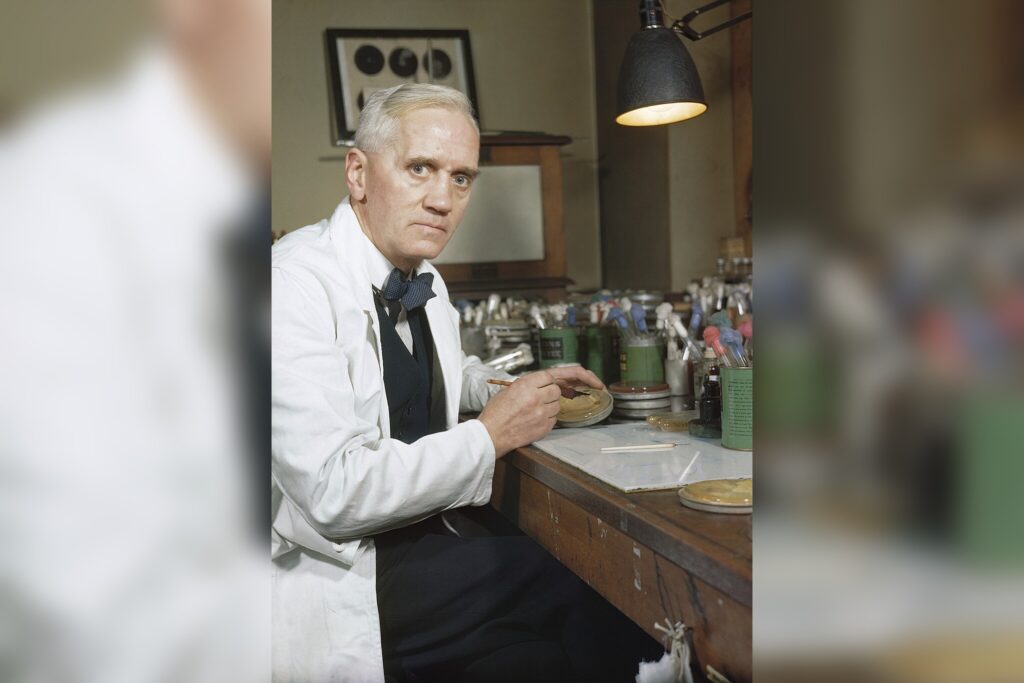
LONDON, July 11 — In the corridors of medical history, few discoveries have altered the trajectory of human survival as profoundly as the moment a Scottish bacteriologist noticed a mold killing bacteria on a forgotten Petri dish. Against this backdrop of serendipity and scientific rigour, the story of antibiotics begins. It was 1928 at St. Mary’s Hospital in London when Alexander Fleming observed that a mold, Penicillium notatum, had inhibited the growth of Staphylococcus bacteria on a contaminated culture plate.
He published his findings the following year, yet the path from observation to medicine proved arduous. Fleming struggled to isolate and purify the active substance, and for more than a decade, his discovery remained a laboratory curiosity.
The wider picture shifted dramatically in 1940. A team at the University of Oxford—Howard Florey, Ernst Boris Chain, and Norman Heatley—developed methods for mass-producing penicillin. By 1941, the first human use of the drug occurred.
Within two years, penicillin was being used extensively for Allied troops during World War II, reducing infection-related deaths on the battlefield and beyond. It became the first mass-produced antibiotic, saving millions of lives.
In 1945, Fleming, Florey, and Chain shared the Nobel Prize in Physiology or Medicine.
An Expanding Arsenal
The antibiotic era did not stop with penicillin. Subsequent discoveries included streptomycin in 1943, identified by Selman Waksman, followed by tetracyclines in 1948 and methicillin in 1959. Each new class of drugs extended the reach of modern medicine, enabling treatments that today are taken for granted—surgeries, cancer chemotherapy, and organ transplants all rely on the ability to control bacterial infection.
Yet what is at stake now is the very foundation of that achievement. Overuse and misuse of antibiotics have driven the emergence of antimicrobial resistance, or AMR.
According to a 2022 study published in The Lancet, an estimated 1.27 million deaths globally in 2019 were directly attributable to AMR. The World Health Organization declared AMR one of the top 10 global public health threats in 2020.
A Global Response
In the corridors of international health governance, the response has been building. The WHO adopted a Global Action Plan on Antimicrobial Resistance in 2015, followed by a high-level meeting on AMR at the United Nations General Assembly in 2016. These efforts aim to coordinate stewardship, surveillance, and the development of new antibiotics, but the challenge remains vast.
The discovery of penicillin stands as a reminder of what scientific observation can achieve. Against this backdrop of rising resistance, the question is whether the next breakthrough will come from a contaminated Petri dish—or from a concerted global effort to preserve what Fleming began. Consult your doctor for medical advice.




