
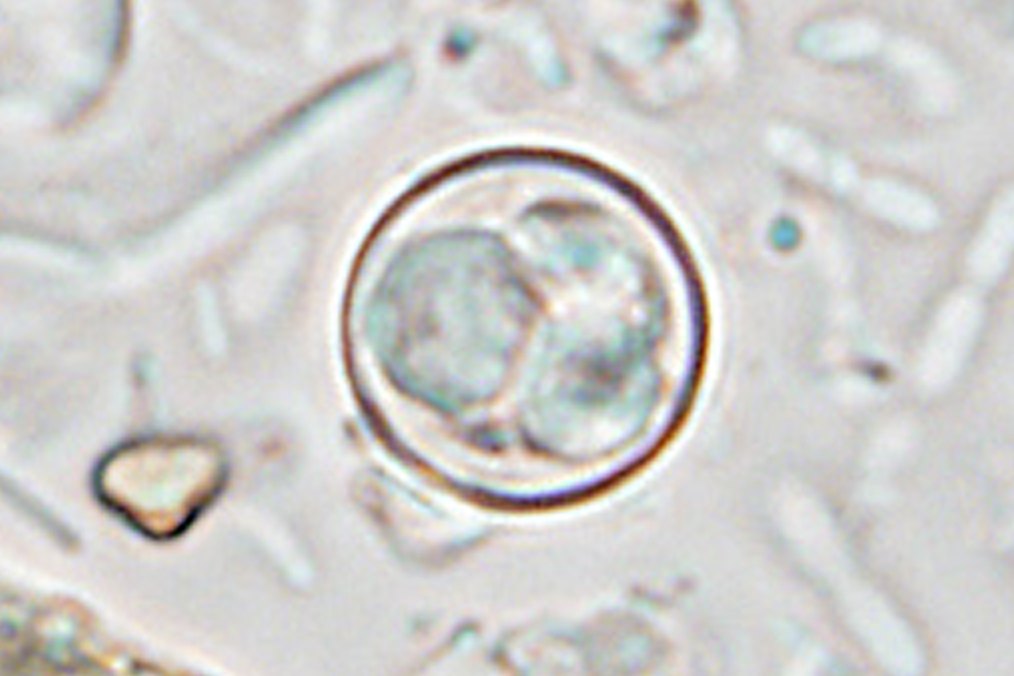
LIMA, July 18 — Under the microscope, the threat is tiny — spherical, just 7.5 to 10 micrometres across, wrapped in a 50-nanometre-thick wall with an outer thread-like coat. But for the people who ingest it, Cyclospora cayetanensis means days or weeks of debilitating diarrhoea. First identified in humans back in 1979, this coccidian parasite has since emerged as a persistent cause of diarrheal illness in tropical countries and a recurring public-health concern in developed nations.
The parasite that causes cyclosporiasis was not instantly recognised for what it was. In the 1980s, a scientist perceived its probable coccidial nature but did not publish.
In 1989, a similar organism from Peruvian patients with chronic diarrhoea was reported and called Cryptosporidium muris–like. That label stuck only briefly. Because the unsporulated oocysts resembled cyanobacteria, researchers began referring to them as “cyanobacterium-like bodies”.
The scientific community eventually placed the species in the genus Cyclospora, a name that nods to the spherical shape of its sporocysts. The specific name cayetanensis honours Cayetano Heredia University in Lima, Peru, where early investigative work was carried out.
Inside the Infection
Inside its human host — and humans are the only confirmed hosts — the parasite lives intracellularly, burrowing into the epithelial cells lining the gastrointestinal tract, particularly the jejunum. Once a person swallows contaminated food or water, the oocysts excyst in the small intestine, releasing sporozoites that invade the mucosa. The incubation period runs about one week.
In a study of patients, inflammation of the lamina propria and increased plasma in the tissue were observed. The infection is transmitted via the faecal-oral route.
Oocysts passed in stool are not immediately infectious; sporulation takes one to several weeks, which makes direct person-to-person transmission unlikely. The oocyst formula describes the structure: one oocyst contains two sporocysts, each holding two sporozoites.
From Tropics to Supermarket Shelves
For decades, Cyclospora was considered an endemic problem in tropical countries, a cause of travellers’ diarrhoea that international visitors brought home. In recent years, it has also become a food-borne threat in developed nations, linked to fecally contaminated imported produce. The pattern is familiar: outbreaks in developed nations have been traced back to shipments of fresh produce from countries where the parasite circulates.
Because the oocysts must sporulate before they become infectious, contamination often happens before the produce leaves the farm, meaning prevention must occur at the source. In Lima, researchers at the university that gave the parasite its name continue to study its biology, aiming to find better ways to detect it and stop its spread.
By nightfall, the parasite remains what it has always been: a quiet, persistent threat hiding in food and water, waiting for a chance to infect its next host. The challenge for public-health authorities is to tighten surveillance of imported produce and to fund research into detection methods that can catch the oocysts before they reach the dinner plate. As global food-supply chains grow more complex, a parasite that thrives in warm, tropical conditions will keep finding new routes into kitchens far from where it first emerged.
Sources
{“@context”: “https://schema.org”, “@type”: “NewsArticle”, “headline”: “Cyclospora cayetanensis causes global produce-borne illnesses”, “description”: “LIMA, July 18 — Under the microscope, the threat is tiny — spherical, just 7.5 to 10 micrometres across, wrapped in a 50-nanometre-thick wall with…”, “datePublished”: “2026-07-18T09:30:00+00:00”, “author”: {“@type”: “Person”, “name”: “Isabella Moore”}, “publisher”: {“@type”: “Organization”, “name”: “InfoPulse Today”, “url”: “https://newsfeed.infopulsetoday.com/”}, “citation”: [{“@type”: “CreativeWork”, “url”: “https://en.wikipedia.org/wiki/Cyclospora_cayetanensis”}]}




