
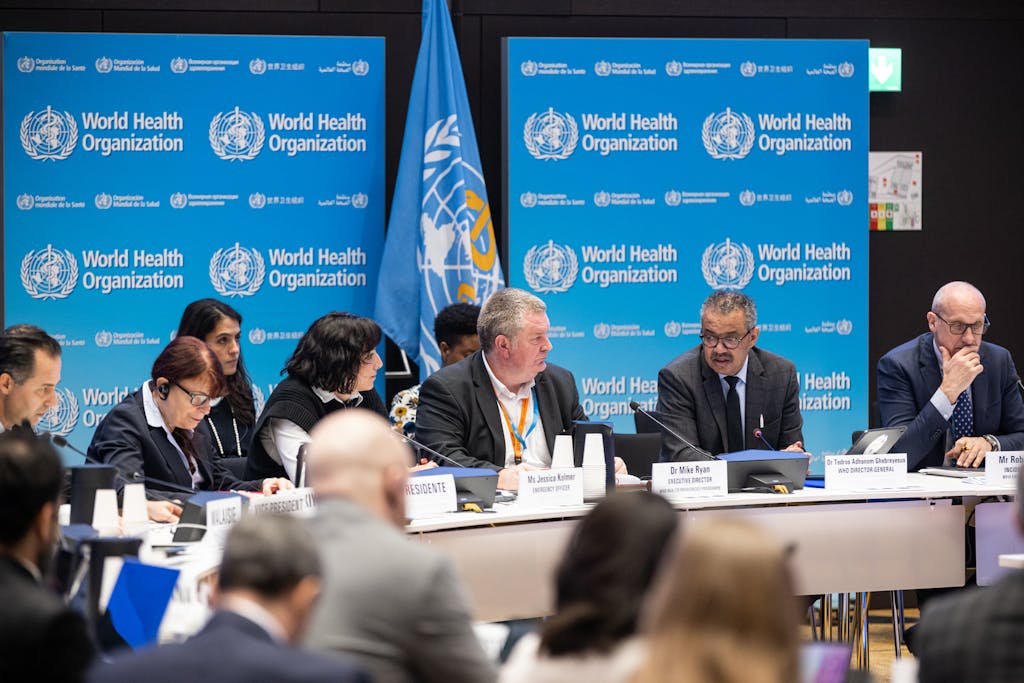
GENEVA, July 21 — The figure that matters: 196 countries are bound by the International Health Regulations, the only international legal treaty that gives the World Health Organization authority as the world’s primary disease surveillance system. The bottom line: global trade and travel rely on a functioning rulebook for detecting and containing outbreaks before they cross borders. The IHR was adopted by the World Health Assembly in 1969 as a revision of the International Sanitary Regulations (ISR) first issued by the WHO in 1951.
That earlier 1951 framework covered six quarantinable diseases: cholera, plague, relapsing fever, smallpox, typhoid, and yellow fever. By 1969, the list was narrowed to just three—cholera, plague, and yellow fever—and the rules were renamed the International Health Regulations.
Amendments came in 1973, when the Twenty-Sixth World Health Assembly changed the cholera provisions, and in 1981, when the Thirty-Fourth World Health Assembly removed smallpox from the notifiable list after global eradication.
Why the rewrite happened
By 1995, the limitations were clear. The Forty-Eighth World Health Assembly agreed to a full revision. The old IHR had a narrow scope covering only three diseases, depended entirely on official country notification, and lacked a formal internationally coordinated mechanism.
The push came as new infectious agents emerged—Ebola Hemorrhagic Fever in Zaire—and old ones re-emerged, including cholera and plague in South America and India. The 2005 revision followed the 2002–2004 SARS outbreak and came into force in June 2007.
It expanded the framework to allow certain public health incidents beyond traditional diseases to be designated a Public Health Emergency of International Concern (PHEIC) if they posed a significant global threat. The first full application of the 2005 IHR was the response to the 2009 swine flu pandemic.
Investors will note the regulatory weight: the IHR is legally binding on all 196 countries that are WHO members, and its express purpose is to “prevent, protect against, control, and provide a public health response to the international spread of disease in ways that are commensurate with and restricted to public health risks and that avoid unnecessary interference with international traffic and trade.”
Origins in the 19th century
The system traces back to the 1851 Paris sanitary conference, attended by 12 nations—11 European, with three signing the resulting convention. That first international meeting was called to coordinate measures against plague, yellow fever, smallpox, and cholera. The WHO Constitution itself was founded in 1948.
Alongside the operational rules, the 2005 revision included a values statement called “The Principles Embodying the IHR,” which emphasizes respect for dignity, human rights, and fundamental freedoms, guided by the UN Charter and the WHO Constitution. What to watch next: as new pathogens continue to emerge, the IHR remains the single legal mechanism that can trigger a coordinated global response.
Its scope and enforcement will shape how quickly the next PHEIC is contained. Consult your doctor for medical advice.




