
NEW YORK, July 18 — The computer monitor has come a long way from blinking lights on a front panel. For today’s gamers and home entertainment fans, the display is the centerpiece of the experience. But how did we get here?
The story is one of technical breakthroughs and, crucially, what consumers wanted next. Before there were screens, there were lights.
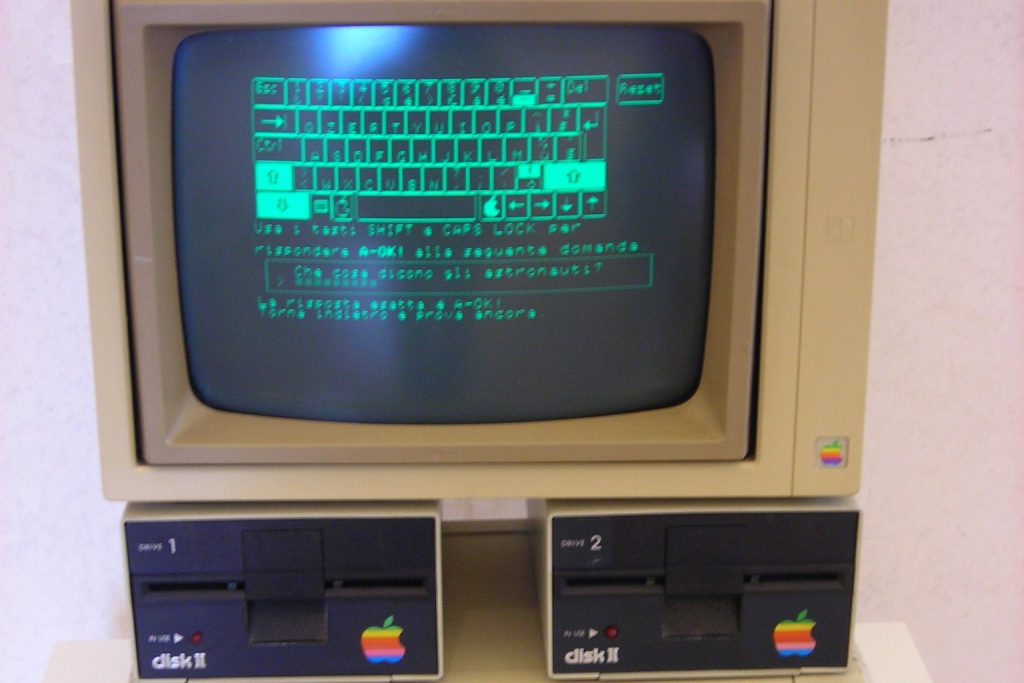
Early electronic computer front panels used simple light bulbs to indicate the state of individual register bits. That gave rise to the term “monitor” — a word we still use today. By the 1970s, cathode ray tube, or CRT, displays became standard.
Early home computers like the TRS-80 and Commodore PET offered only monochrome displays. For families and hobbyists, that meant a single color on a black background.
Then came color. In 1977, the Apple II and the Atari 2600 brought color capability to home computing and gaming. The Atari 8-bit computers, released in 1979, provided even more advanced color output.
The IBM Color Graphics Adapter, introduced in 1981, could display four colors at 320×200 pixels, or 640×200 pixels in monochrome. That may sound primitive by today’s standards, but at the time it was a leap forward.
The CRT Era and Its Limits
High-resolution CRTs were initially too costly for general use. That changed with the affordable Tektronix 4010 terminal in 1972, which brought high-resolution graphics to a broader audience. Throughout the 1980s and 1990s, CRTs dominated the market.
But they were bulky and power-hungry. The human side of that meant desks consumed by heavy glass boxes, and families had to plan around the space a monitor took up.
LCD monitors with CCFL backlighting began to appear. By the 2010s, LCD with LED backlighting had replaced CCFL. That shift meant thinner, lighter, and more energy-efficient screens.
The typical aspect ratio also changed: from the boxy 4:3 to the widescreen 16:9 around 2010. That wasn’t a random corporate decision — it reflected what people were watching and playing.
Gaming Drives the Market
Consumer demand for higher resolution, color accuracy, and faster refresh rates pushed manufacturers to adopt newer technologies. Gaming was a major force behind that push. Players wanted smooth motion and vibrant colors. The history shows that the transition from CRT to LCD, and the shift to widescreen, were key inflection points where consumer preferences actively influenced manufacturer decisions.
Modern monitors commonly use connectors like DisplayPort, HDMI, USB-C, DVI, or VGA. Today, computer monitors are often functionally interchangeable with television sets. Most lack integrated speakers or TV tuners, but the underlying display technology is similar. The gaming monitor market became a powerful force in the broader display industry — a direct result of those early decisions by engineers and the choices made by users.Sources




