
Singapore’s president holds the keys to the nation’s piggy bank but cannot spend a single dollar of it. That is the paradox at the heart of the office, a role designed to be a fiscal watchdog rather than a policy driver. The constitutional framework is precise: the president is elected by popular vote for a six-year term, a system in place since Singapore became an independent republic in 1965.
But the job comes with no authority over government policy, no command of the military, no direction of the civil service. Those levers belong to the prime minister and the cabinet.
The real power, such as it is, lies in two specific custodial duties. The president can veto the appointment of key public service figures — the chief justice, the attorney-general, the chairman of the Public Service Commission. More consequentially, the president can block any government budget that would dip into past national reserves.
This is not a theoretical check. It is a concrete barrier, one that forces the government to justify any drawdown.
But the barrier is not absolute. Parliament can override a presidential veto with a two-thirds majority vote. The system is a balance, not a blockade.
Tharman Shanmugaratnam, elected president in September 2023, put it plainly: “The president’s role is to be a check on the government’s use of reserves, not to run the country.” He called it “a position of moral authority, not political power.” That distinction matters. Moral authority can sway public opinion. It cannot force a policy change.
The president cannot introduce a law, cannot cut a tax, cannot declare war. The office is a brake, not a steering wheel.
What is at stake here is the integrity of Singapore’s financial reserves. The nation has built a substantial nest egg over decades of disciplined budgeting. The president stands guard over that savings account.
If the guard were weak or politically compromised, the reserves could be spent down without a serious check. The two-thirds override provision means the guard can be overruled, but only with a broad consensus.
That is a high bar. It forces the government to build a case, to persuade, to show why spending the past is necessary for the future. Ceremonial duties fill the rest of the calendar.
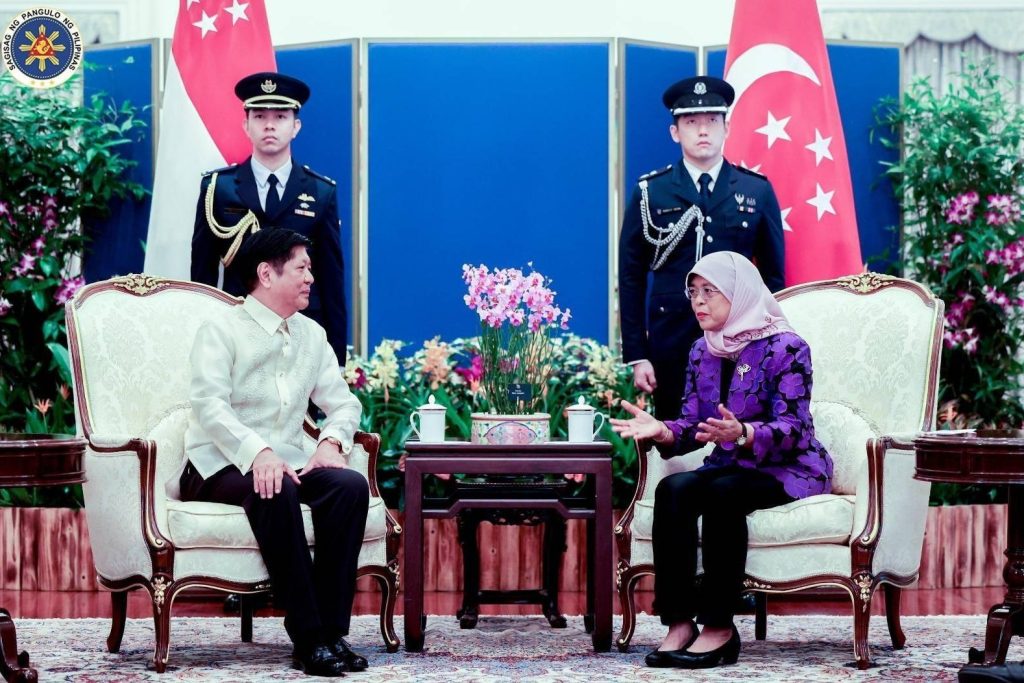
The president receives foreign dignitaries, delivers the opening address at parliament, represents Singapore at international events, and confers national honors and awards. These are not trivial functions. They project stability and continuity.
The president is meant to symbolize national unity, standing above the partisan fray of the cabinet and parliament. That symbolic role carries weight in a multi-ethnic, multi-religious society where a unifying figure can help ease tensions.
The periodic debate about the office’s actual influence is not idle. Some argue the custodial powers are too narrow, that a president should have a broader mandate to check government excess. Others contend the role is already as strong as it needs to be — a focused guardian of reserves, not a second center of political power.
The constitutional design reflects a deliberate choice. Singapore’s founders wanted a strong executive in the prime minister, checked by a president with a specific, limited brief.
That design has held for nearly six decades. The risk of the current arrangement is that the president becomes a rubber stamp. If the two-thirds override is too easy to achieve, the check loses its bite.
If the president is too deferential, the reserves are unprotected. The risk of expanding presidential power is different: it could create gridlock, pitting an elected president against an elected prime minister, each claiming a mandate. The current balance is a compromise, and compromises are always under pressure.
The question is whether the guard is strong enough to do its job without becoming a second government.




