
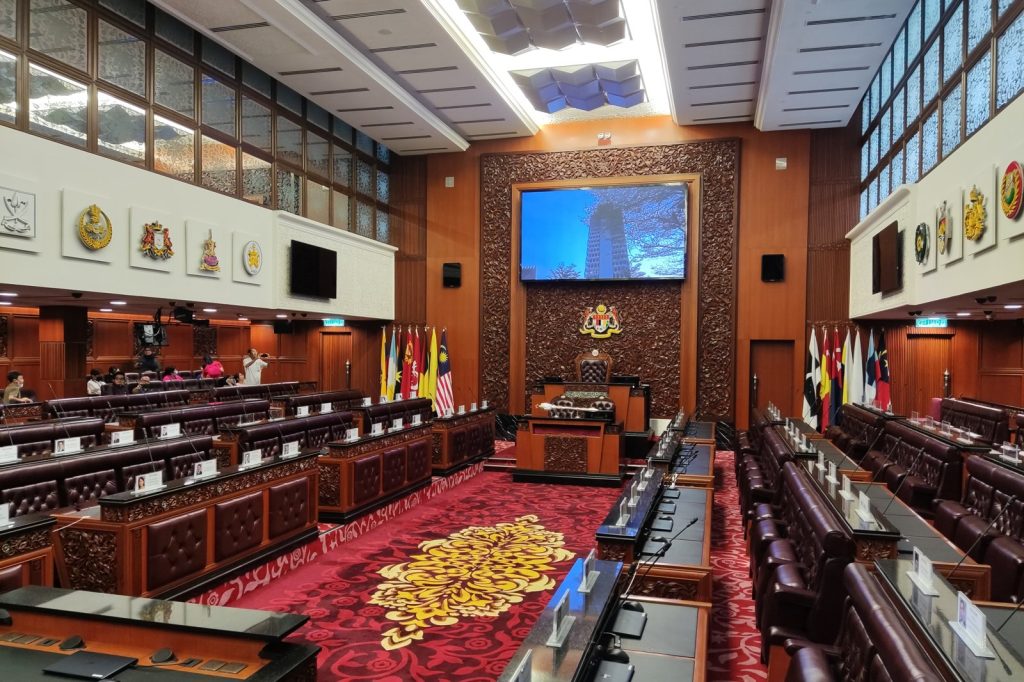
Malaysia Enacts First Binding AI Regulation in Southeast Asia
After a grueling 14‑hour debate that concluded early Thursday, Malaysia’s legislature approved the Artificial Intelligence Regulation Bill 2025. The vote followed a year of private talks involving the Digital Ministry, industry representatives, and overseas legal firms, all working to craft rules for a technology that advances faster than most parliamentary calendars can accommodate.
The resulting statute comprises 92 articles and will take effect on 1 July. It is the inaugural enforceable AI law in the region, governing the full technology stack — from the data‑center infrastructure that trains models to the end‑user applications that deploy them. Legislators deliberately drafted a wide‑reaching framework to leave no regulatory gaps.
Risk‑Based Classification
The law sorts AI systems into four tiers of risk: minimal, limited, high, and unacceptable.
- Minimal risk includes spam filters and simple chatbots; these require only a one‑time registration.
- Limited risk covers applications that pose modest societal impact; they face light transparency obligations.
- High‑risk uses — such as credit‑scoring tools, medical‑imaging diagnostics, and mass‑market generative models — must undergo a conformity assessment, maintain an internal risk register, and allow regulators to inspect training data with 48 hours’ notice.
- Unacceptable risk encompasses real‑time biometric identification in public places, social‑credit scoring, and subliminal manipulation; these practices are prohibited outright.
Obligations for Foreign and Domestic Providers
Foreign AI vendors are not exempt. Any model made available to Malaysian users must be backed by a locally incorporated entity that assumes legal liability. Even cloud providers that merely lease GPU resources must ensure their customers submit the required risk disclosures. Digital Minister Gobind Singh Deo summed up the stance: “If you earn money here, you play by our rules.”
Penalties and Market Reaction
Violations carry steep fines. A first offence can trigger a penalty of RM 50 million or 5 percent of the offender’s local revenue, whichever is greater. Repeated or intentional breaches raise the fine to 8 percent of annual local turnover. The prospect of clear rules buoyed investors; the KL Tech Index reached a record high on the day of the vote, reflecting market appetite for regulatory certainty.
Criticism and Concerns
Civil‑society groups have warned that the bill’s broad national‑security exemptions could create a loophole large enough to undermine oversight. They argue that if a university lab’s work falls under a security carve‑out, the law provides no clarity on what supervision remains, potentially chilling open research.
Regional Context and Implementation Timeline
Malaysia’s move positions it as a frontrunner in the race to become a regional hub for data‑centre and AI infrastructure. Neighbouring nations have yet to adopt binding AI legislation: Singapore offers only voluntary guidelines, Thailand is still studying the issue, and Indonesia has draft rules but no final text.
The law’s success will hinge on enforcement. The Digital Ministry has pledged a dedicated AI regulator, but the agency has not yet been established. With the 1 July start date approaching, companies must register, classify their systems, and set up internal risk registers within weeks rather than months. The 48‑hour notice requirement for training‑data audits is viewed as especially tight for operators of large language models processing millions of documents; some industry observers anticipate a de‑facto grace period, although the statute itself provides none.
Outlook
Malaysia has chosen an ambitious and risky path. The legislation is detailed, the sanctions are substantive, and the timetable is compressed. The rest of Southeast Asia is watching closely. If the framework proves workable, it may inspire similar measures across the region. Should it impede investment or generate a compliance nightmare, the lesson will be equally instructive.




