Lake Michigan averages about 150 reported oil spills a year. Most of them never make the news.
That is one finding from a decade-long tally by researchers at Lake Superior State University, who counted 6,453 spill incidents across the Great Lakes between 2015 and 2024. The work appears in the Journal of Great Lakes Research. Of those, 3,654 were logged in U.S. waters and 2,799 in Canadian waters.
Small spills, big blind spot
About 94 percent of the incidents were small, under 500 liters. Fewer than 6 percent topped that mark, yet those larger releases made up most of the oil that was actually measured. The small ones, though, happen constantly, and nobody has worked out what they add up to.
“We tend to focus on the large spills because of their impacts, but smaller spills happen much more frequently, and their ecological effects remain largely unstudied,” said Cecilia Heuvel, a postdoctoral research associate at the university’s Center for Freshwater Research and Education. She added that these small releases could carry a quieter, long-term effect on the lakes that researchers cannot yet quantify.
Part of the problem is the paperwork. Only 35 percent of U.S. incidents came with a reported volume. Canadian records recorded no volume at all before 2023. Many entries also left out the type of oil. So the real total spilled into the largest body of surface freshwater on Earth stays a guess.
Where the spills happen
The team drew on public records from the U.S. Coast Guard’s National Response Center and the government of Ontario. Ships were the most common source of spills in U.S. waters. In Canada, facilities topped the list.
The busy border rivers stood out. The St. Clair, Detroit and St. Marys rivers had far higher spill densities per unit area than the open lakes. Heuvel pointed to another hole in the science: plenty of research follows big spills at sea, she said, and very little follows freshwater.
Pipelines in the background
The findings land while Enbridge’s Line 5 is back in the news. A flatbed truck struck the pipeline in Wisconsin in August, and Enbridge said about 31,000 barrels of mostly propane and butane escaped into the air over four days. Line 5 also runs under the Straits of Mackinac. Enbridge wants to replace part of it with a tunnel, but the Michigan Supreme Court reversed the state’s approval of that plan in late July and asked for more environmental review.
Liz Kirkwood, strategic partnership officer at Flow Water Advocates, a Great Lakes nonprofit, did not mince words. “Line 5 is a ticking time bomb that must be shut down,” she said. “The entire pipeline is 73 years old.”
The memory of Line 6B still hangs over the region. In 2010 that pipeline ruptured and sent more than 845,000 gallons of heavy hydrocarbons into the Kalamazoo River, which feeds Lake Michigan. Cleanup costs passed $767 million. According to the National Transportation and Safety Board, about 320 people, some of whom had left their homes, reported symptoms consistent with crude oil exposure. The pipeline was renamed Line 78 and still moves more than 500,000 barrels of crude a day.
What the researchers want
The authors are asking the United States and Canada to report spills the same way: the volume, the type of oil and the exact location, every time. With matching records on both sides of the border, they say, risks across the whole basin could finally be assessed together. Collaborators on the project came from Algoma University, the University of Windsor, the University of Michigan, Memorial University of Newfoundland, the Coast Guard’s Great Lakes Oil Spill Center of Expertise and LimnoTech. Natural Resources Canada funded the work.
Sources
- More than 6,400 oil spills occurred in the Great Lakes over a decade, study shows. But the impact is largely unknown.
- The Stream, October 27, 2026: Some 6,400 Spills into the Great Lakes Released an Unknown Volume of Oil in Last Decade, Study Shows
- LSSU-led Study Documents more than 6,400 Oil Spills across the Great Lakes over a decade
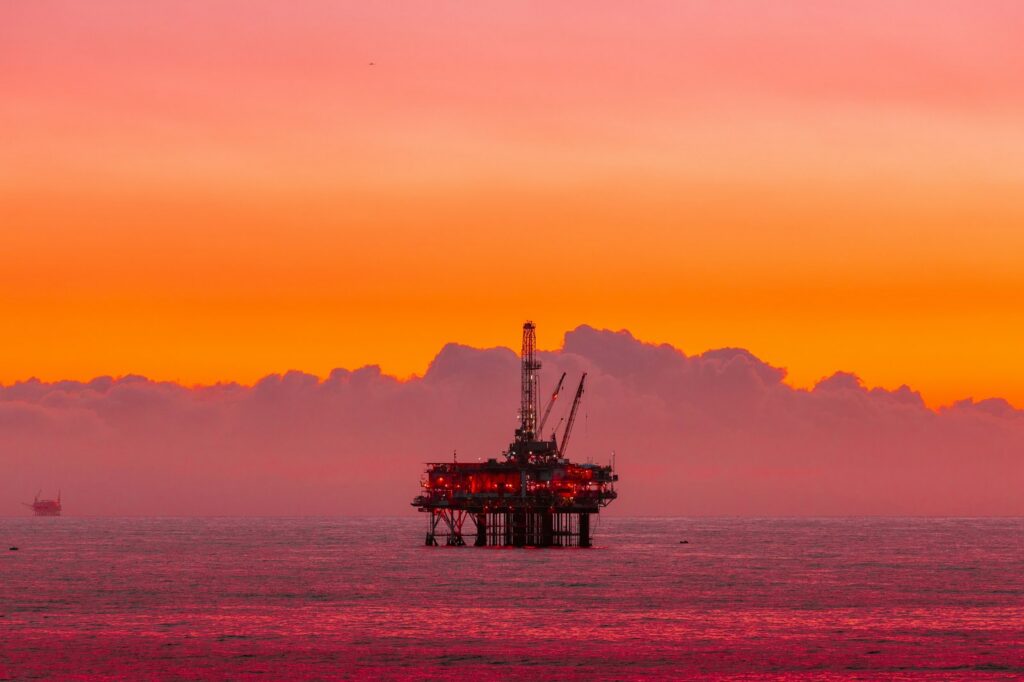
Photo: Arvind Vallabh / Unsplash (Unsplash License)